Algeria
 Egypt
 Libya
 Morocco
 Sudan
 Tunisia
 Benin
 Burkina Faso
 Cabo Verde
 Côte d'Ivoire
 Ghana
 Guinea
 Guinea-Bissau
 Liberia
 Mali
 Mauritania
 Niger
 Nigeria
 Sierra Leone
 The Gambia
 Togo
 Cameroon
 Central African Republic
 Chad
 DR Congo
 Equatorial Guinea
 Gabon
 Republic of the Congo
 São Tomé and Príncipe
 Burundi
 Comoros
 Djibouti
 Eritrea
 Ethiopia
 Kenya
 Madagascar
 Malawi
 Mauritius
 Mozambique
 Rwanda
 Seychelles
 Somalia
 South Sudan
 Tanzania
 Uganda
 Angola
 Botswana
 Eswatini
 Lesotho
 Namibia
 South Africa
 Zambia
 Zimbabwe
When a religious festival becomes a test of the local economy
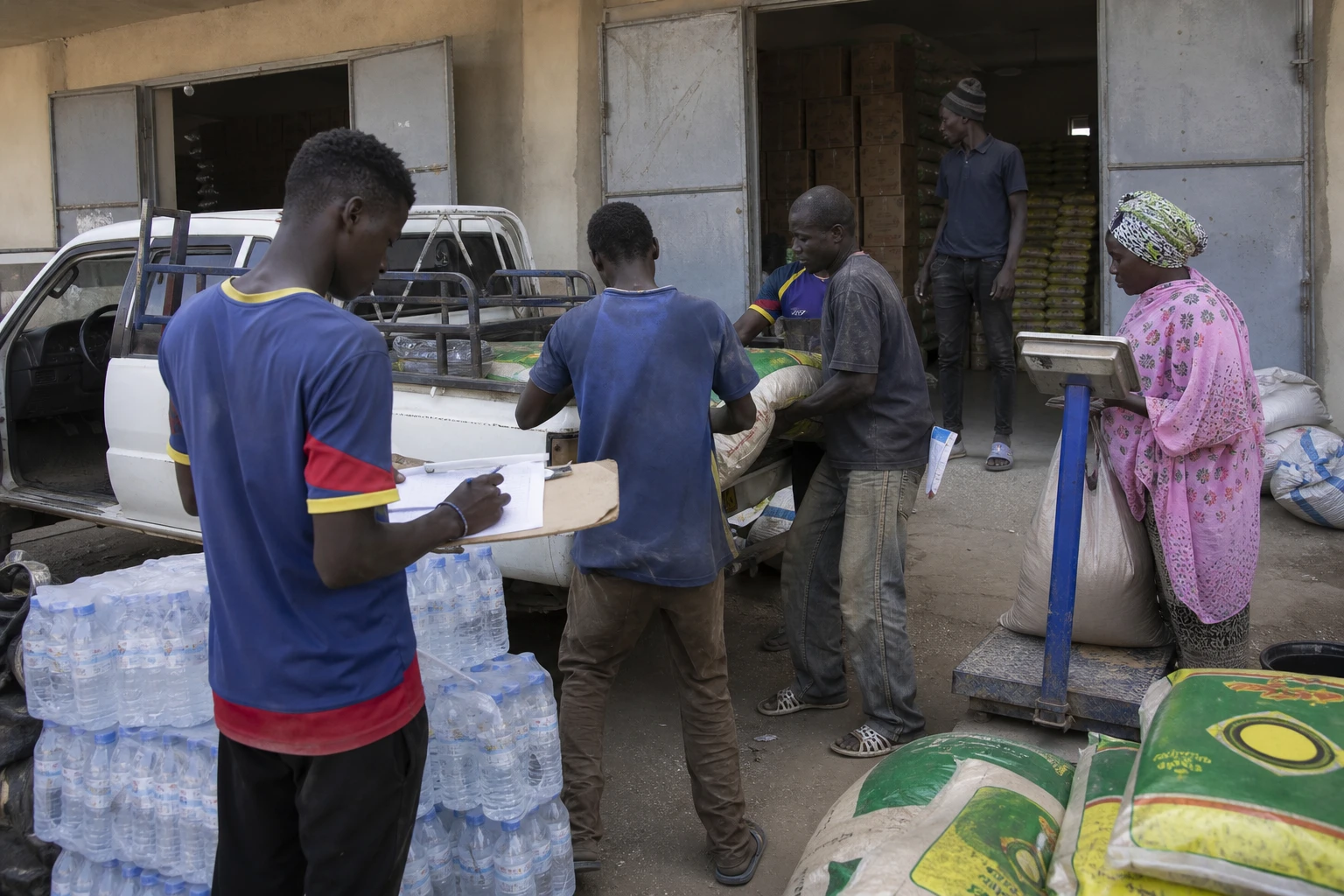
In Touba, the Grand Magal does more than fill the streets. It also fills markets, bus stations, neighbourhood shops and order books. For a few days, the holy city concentrates enormous demand. The real question, however, remains simple: how can this intensity be converted into lasting jobs for the people of Touba, rather than merely the rapid circulation of cash?
The issue extends beyond the city of Touba. In central Senegal, the Magal is part of an economy built around transport, trade, livestock farming, digital services and logistics. At regional level, it also mobilises the diaspora, which feeds commercial networks and solidarity circuits. It is therefore a religious gathering, but also a moment when one can see very concretely what a large concentration of people can generate in a medium-sized West African city.
Billions flow through, but too little value stays behind
Figures presented in late July 2026 by researchers from Cheikh Ahmadoul Khadim University in Touba and Alioune Diop University in Bambey give a measure of the scale of the phenomenon. Their study puts the economic impact of the 2025 Magal at CFAF 629.62 billion, up from CFAF 250 billion in 2017. It breaks this total down into CFAF 375.31 billion in direct effects, CFAF 102.90 billion in indirect effects and CFAF 151.41 billion in induced effects.
The same study shows that food remains the largest spending item, at CFAF 225.52 billion. Livestock farming also benefited from demand, with an estimated impact of nearly CFAF 33 billion, while more than 100,000 ruminants are said to have been slaughtered for the 2025 edition. These orders of magnitude explain why the Magal has such an impact on national supply chains, well beyond Touba’s borders.
Attendance has followed the same pattern of rapid growth. The official Magal website put the number of participants in 2025 at 6.58 million. Other research puts the figure for the same year at 5.1 million. This discrepancy is a reminder that a large religious gathering is not easy to count. The figures should therefore be treated with caution and attributed to their respective counting methods.
The common finding across these studies lies elsewhere: Touba generates a great deal, but still captures too little. A significant share of the goods consumed there comes from other regions of Senegal or even from abroad. In other words, the city creates exceptional demand without yet having a productive base capable of retaining most of the added value.
Touba’s young people: entrepreneurial spirit, but a closed horizon
The diagnosis of young people’s economic integration in Touba is blunt. According to data published around the 2026 edition, 77.4% of the young people surveyed are considering leaving the area. This figure says less about a weakening of social ties than about a lack of local prospects. It points to a mismatch between the city’s energy and the scarcity of formal opportunities.
The same diagnosis, however, qualifies this finding. Nearly 48.2% of working young people say they have set up their own business. Touba is therefore not a city of inertia. It is a city of initiative, where people start businesses early, often alone and almost always in precarious conditions. The problem is not a lack of will. It is the weakness of the structures that could turn individual effort into a stable career path.
More than 90% of these young people work in the informal sector, and nearly 95% have neither a contract nor social protection. Financing remains the main obstacle for 92.2% of them. Only 14.6% say they have received vocational training. These indicators paint a familiar picture in many Senegalese cities: economic activity exists, but it is poorly protected, undercapitalised and rarely linked to a skills pathway.
The authors of the diagnosis nevertheless highlight strong local resources: dahiras, brotherhood networks, the diaspora, tontines and community solidarity. These mechanisms already play a role in financing and mutual support. But they cannot, on their own, replace policies on training, access to credit and light manufacturing. Tanning, leather goods, logistics, digital services and agri-food are cited as credible ways to retain more value in Touba.
A religious event that also calls for a public response
The Grand Magal now requires state involvement on a scale comparable to that needed for a major urban gathering. In 2026, the authorities strengthened security, sanitation and water-supply arrangements. The gendarmerie had already announced the deployment of more than 3,000 personnel for the Magal the previous year, while public services stepped up inspection and security operations ahead of the 2026 edition.
The most urgent needs remain the same: water, drainage, roads, traffic management and sanitation. Senegal’s ministry responsible for water resources made a field visit to Touba on 21 July 2026 to assess the existing infrastructure. ONAS, the national sanitation agency, has for its part begun drainage and desilting work, while water tankers have been announced to secure supplies during the gathering.
This expansion confirms a political reality: Touba has become a place where religious authorities, local government and the central state must negotiate continuously. The khalifa general and his spokesperson have also stressed that the event must remain a time for contemplation and must not lose its sacred character. This principle matters. It prevents the Magal from being reduced to a mere numbers-generating machine.
The human toll is also a reminder that logistics alone are not enough. On 4 August 2026, firefighters reported 528 operations, 792 victims and 25 deaths since the start of the deployment. Road accidents accounted for all the recorded deaths, with mopeds heavily involved. These figures call for a sober assessment: when a city welcomes several million people, road safety becomes a major public health issue.
What Touba says about Senegal and, beyond it, urban Africa
The case of Touba is of interest well beyond Mouridism. It raises a distinctly African question: how can a large, periodic gathering become a lever for local industrialisation, youth training and the upgrading of services? Many cities across the continent experience seasonal peaks, whether religious, cultural or commercial. Few manage to turn these peaks into a continuous economy.
In Senegal, the challenge is all the more tangible because Touba is already one of the country’s major commercial centres. The airport, roads, energy, digital infrastructure and public services must keep pace with this growth. Otherwise, the city will continue to generate visible wealth for a few days, then send its young people off to other cities, other regions and sometimes other countries.
That is the continental significance: a religious event can become a laboratory for local economic sovereignty. But that requires more production, better training and more employment on the ground. The 2026 Magal showed that demand exists. What comes next will show whether Touba can retain a greater share of the value it attracts.