Algeria
 Egypt
 Libya
 Morocco
 Sudan
 Tunisia
 Benin
 Burkina Faso
 Cabo Verde
 Côte d'Ivoire
 Ghana
 Guinea
 Guinea-Bissau
 Liberia
 Mali
 Mauritania
 Niger
 Nigeria
 Senegal
 Sierra Leone
 The Gambia
 Cameroon
 Central African Republic
 Chad
 DR Congo
 Equatorial Guinea
 Gabon
 Republic of the Congo
 São Tomé and Príncipe
 Burundi
 Comoros
 Djibouti
 Eritrea
 Ethiopia
 Kenya
 Madagascar
 Malawi
 Mauritius
 Mozambique
 Rwanda
 Seychelles
 Somalia
 South Sudan
 Tanzania
 Uganda
 Angola
 Botswana
 Eswatini
 Lesotho
 Namibia
 South Africa
 Zambia
 Zimbabwe
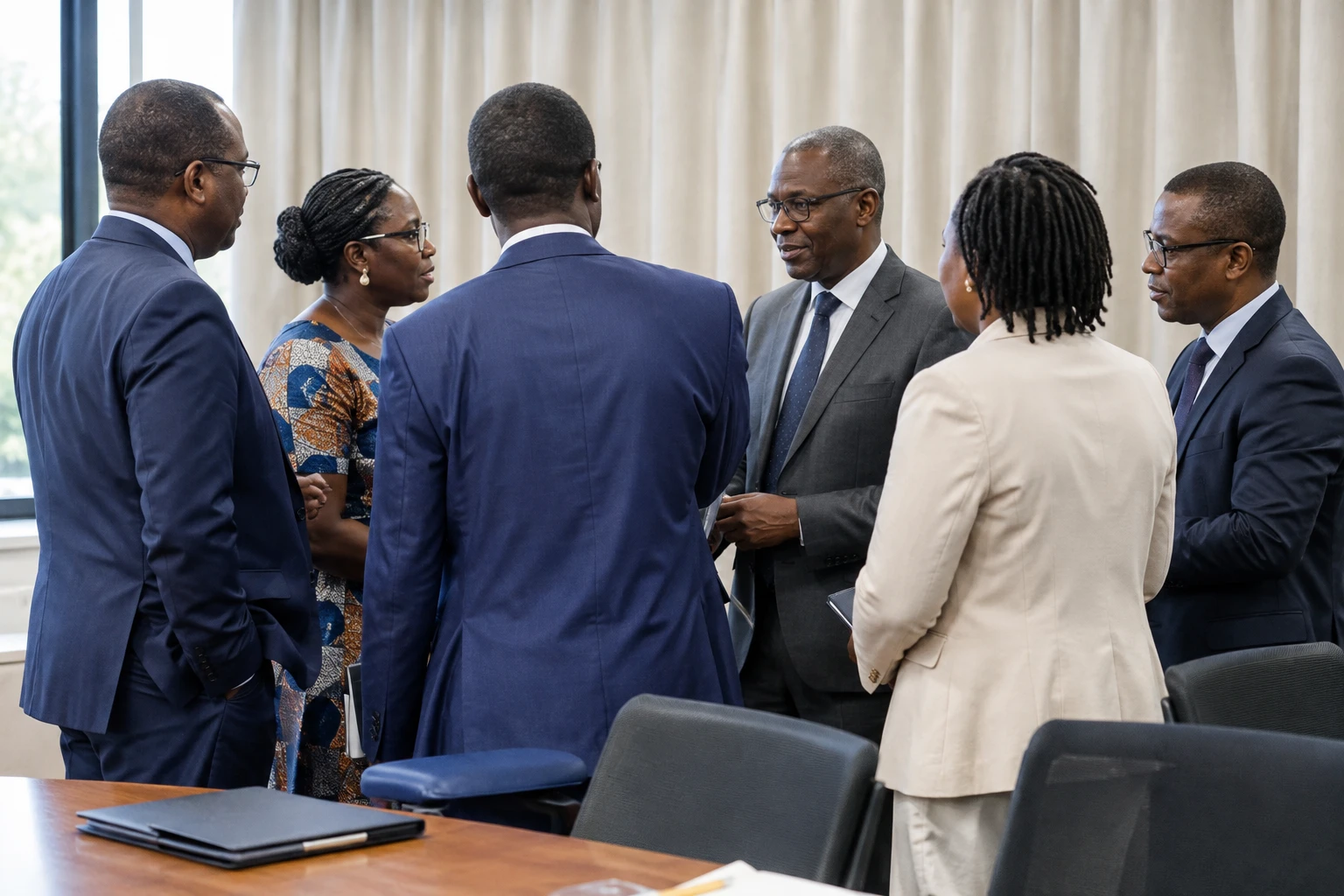
To fund public services and investment without relying as heavily on borrowing or external support, Togo wants to raise more revenue from its economy. The challenge will be to bring more activities into the tax net while avoiding new rules that weigh disproportionately on businesses and households.
A five-year strategy in a West African framework
Approved on 29 September 2026, the Medium-Term Revenue Mobilisation Strategy (SRMT) covers the period 2027-2031. It is intended to coordinate the state’s tax and customs reforms. The document was presented to businesses in Lomé on 6 October at a consultation meeting between the authorities and the private sector. The strategy’s approval text and timetable confirm that it is now a shared planning framework.
Togo belongs to the West African Economic and Monetary Union (WAEMU), which brings together eight countries that share, among other things, the CFA franc and rules on economic convergence. The strategy is also part of a regional effort to strengthen public revenue. The tax-to-GDP ratio threshold of 20%, often cited in debates, serves as a regional benchmark. It does not mean that every country can reach it without taking the structure of its economy into account.
This new roadmap extends work already under way. The programme backed by the International Monetary Fund since 2024 makes domestic revenue mobilisation a lever for fiscal consolidation. The IMF nevertheless notes that the strategy is ambitious and that its targets will depend on concrete reforms and on the administrations’ ability to implement them. Its report on the Togo programme refers in particular to a target of annual revenue increases equivalent to 0.5 percentage points of GDP.
A sharp increase is expected, but a discrepancy in figures needs clarifying
The SRMT targets tax revenue of CFAF 2,109 billion in 2031, up from CFAF 1,043.7 billion in 2026. These figures represent an ambitious five-year trajectory. The announced levers are broadening the tax base, digitising collection, and reducing or rationalising tax expenditure — revenue the state forgoes through exemptions or specific concessions.
One figure, however, should be treated with caution. Information published when the strategy was presented puts the tax-to-GDP ratio at 13.1% in 2025. In its 2026 report, the IMF uses different reference figures and projects a ratio of 13.7% in 2026. The data cover different years and may be based on different assumptions or scopes, so they should not be conflated. The Togolese authorities, for their part, have described the gap between the current level, the regional benchmark and the country’s tax potential as a major challenge.
First-half collections provide a comparison, but do not determine the full-year result. The Togolese Revenue Office (OTR), the administration responsible for taxes and customs, collected CFAF 507.82 billion by the end of June 2026, up 14.3% on a year earlier. This represents 46.3% of an annual target of CFAF 1,338.9 billion, according to Treasury data reported by Togo First. The half-year increase is real, but it is not enough to establish that the year-end target will be met.
Digital tools can simplify processes, but may also shift the burden
The strategy relies on digital tools to better identify transactions and make filing easier. Certified electronic invoicing, provided for under the 2026 Finance Act, is intended in particular to improve traceability and oversight of value-added tax (VAT). In September, the OTR also launched e-TPU, a platform that allows relevant taxpayers to file and pay the single professional tax online, a regime applicable to certain small businesses and activities. The Togolese finance ministry describes the service as accessible at any time by phone.
These measures can reduce travel, queues and repeated administrative data entry. They may also improve the regularity of payments. But their effectiveness will depend on access to the tools, network quality, user support and straightforward procedures. For small businesses, particularly those with little equipment or operating informally, an exclusively digital process could create new costs if support options are not provided.
The reform therefore affects different groups in different ways. A formal business could benefit from greater predictability if procedures are clearer and disputes handled consistently. A small enterprise, by contrast, may fear that broadening the tax base will mean mainly more inspections or paperwork. Additional revenue therefore does not depend only on tax rates: it also depends on trust, understandable rules and fair treatment of taxpayers.
During discussions with the private sector, business leaders welcomed the creation of administrative appeals bodies and mechanisms for resolving customs disputes. These could give businesses a way to challenge a decision without reducing the reform to an enforcement relationship. Their impact, however, will depend on their practical independence, the time taken to reach decisions and how those decisions are implemented.
Results will be judged by implementation
For the state, more regular domestic revenue can support public spending and reduce vulnerability to external financing. For Togolese people, the question is also whether the funds collected actually improve services and infrastructure. The strategy provides for dedicated monitoring and assessments in 2029 and 2031. These reviews will make it possible to compare targets with results and to see who is actually contributing to the tax effort.
The debate extends beyond Togo’s borders. In WAEMU, governments are seeking to fund their priorities while meeting shared budgetary commitments. Togo’s case illustrates a question shared across the region: how can revenue be broadened without placing the adjustment solely on businesses already on the books and formal consumers? The answer will be measured as much by the fairness of the system, the quality of services delivered and the ability of small businesses to join the tax system without being penalised as by revenue growth.