Algeria
 Egypt
 Libya
 Morocco
 Sudan
 Tunisia
 Benin
 Burkina Faso
 Cabo Verde
 Côte d'Ivoire
 Ghana
 Guinea
 Guinea-Bissau
 Liberia
 Mali
 Mauritania
 Niger
 Nigeria
 Senegal
 Sierra Leone
 The Gambia
 Cameroon
 Central African Republic
 Chad
 DR Congo
 Equatorial Guinea
 Gabon
 Republic of the Congo
 São Tomé and Príncipe
 Burundi
 Comoros
 Djibouti
 Eritrea
 Ethiopia
 Kenya
 Madagascar
 Malawi
 Mauritius
 Mozambique
 Rwanda
 Seychelles
 Somalia
 South Sudan
 Tanzania
 Uganda
 Angola
 Botswana
 Eswatini
 Lesotho
 Namibia
 South Africa
 Zambia
 Zimbabwe
In Lomé, a detention that goes beyond a single case
In the Togolese capital, a legal case can quickly take on a diplomatic dimension. When two foreign filmmakers and their local collaborator are arrested, the issue is not just entry or filming formalities. It also touches on national security, the country’s image and the scope for fieldwork in a more tense regional context.
Togo does not exist in a vacuum. For several years, the country’s north has faced security pressure linked to armed groups active in the Sahel belt and along the borders with Burkina Faso and Benin. The Togolese authorities have extended the state of security emergency in the Savanes region, while several Western travel advisory services continue to issue warnings about the area.
What is known about the arrest and release
Gaël Mocaër and Sebastian Perez Pezzani were arrested on 27 July 2026 in northern Togo, while filming an episode of the documentary series Les Routes de l’impossible for France Télévisions. Their Togolese collaborator, Fred Vedomey, was detained with them. The three men were subsequently charged with “false declarations” in immigration procedures, according to consistent sources.
On 1 September 2026, they were notified of a decision granting them provisional release and authorising them to leave Togolese territory. France’s Ministry for Europe and Foreign Affairs confirmed the outcome, and several media outlets reported that they were due to return to France in the following days.
Different explanations have been given for the exact circumstances. The Togolese account, relayed by local and international media, emphasises the absence of a formal application for press accreditation, despite a filming permit issued on 19 June 2026 in the name of the Togolese fixer. The same source also says the case may have been aggravated by the use of a drone in an area considered sensitive from a security standpoint.
A case where security, the press and sovereignty intersect
The case highlights a familiar balancing act in West Africa: distinguishing journalistic work, documentary filming, accreditation rules and security constraints. In Togo, the legal framework for the press and communications is based on specific procedures, and the authorities regularly stress the primacy of national law. At the same time, the country remains attentive to the circulation of images and accounts produced abroad, especially when they concern exposed areas.
The Togolese reading of the case extends beyond Paris and Lomé. At the northern border, the authorities are managing a cross-border threat that has heightened sensitivity around the movement of people, filming and the use of equipment such as drones. In this context, a shoot without a fully compliant set of documents may be seen not as a simple administrative irregularity, but as an internal security issue. This is precisely what gives the case greater significance than an ordinary consular dispute.
For Togolese professionals in the cultural and audiovisual sector, the stakes are tangible. An overly rigid framework can hamper productions, jobs and income in the regions. But an unclear framework also puts local crews at risk, as they are often the first to face the consequences of a check, summons or detention. The fixer, an indispensable mediator between foreign crews, authorities and communities, is then at the centre of every vulnerability.
What this episode says about Togo and West Africa
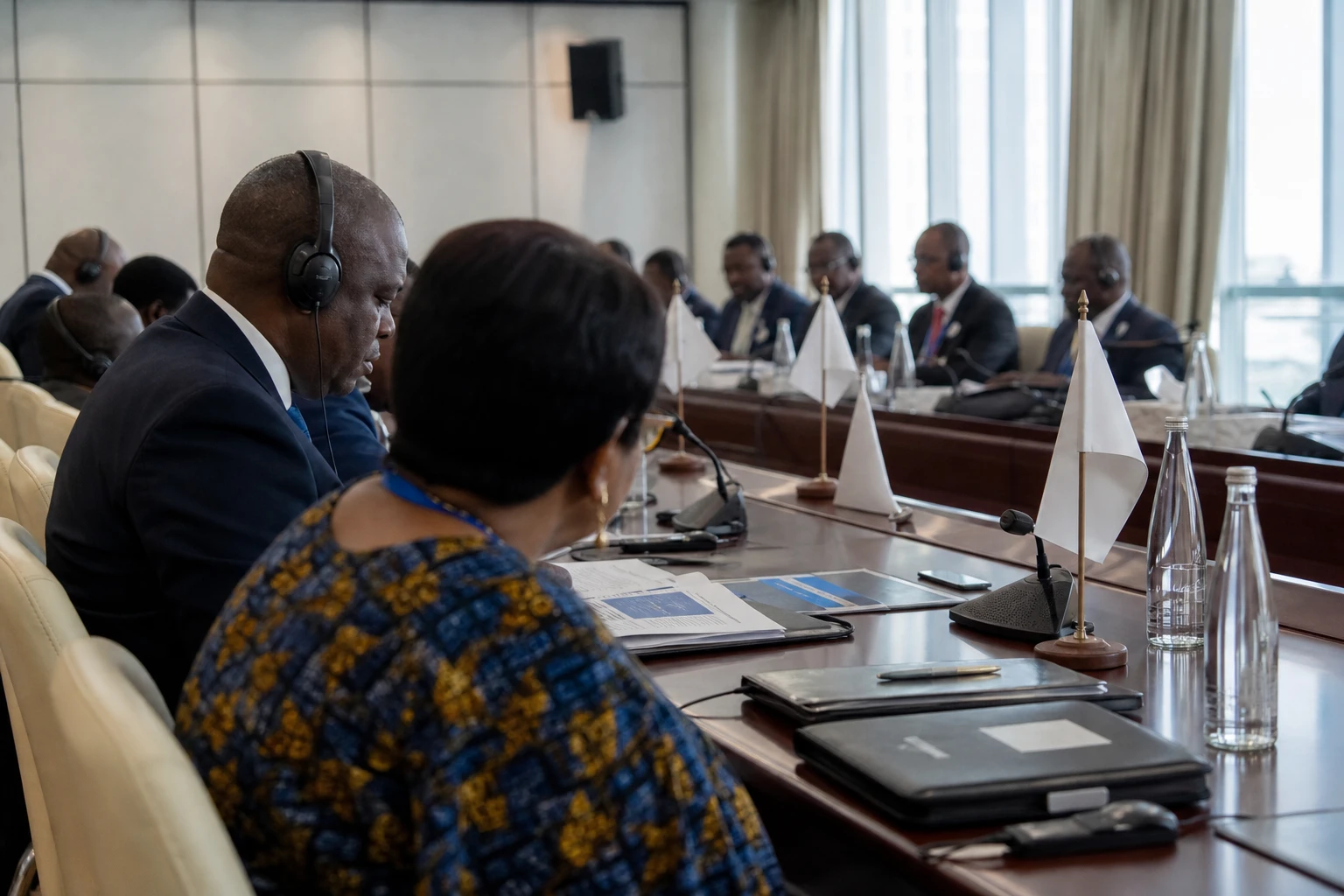
Togo is also an active diplomatic player. In June 2026, Lomé hosted an assessment meeting on the African Union peace process in the Democratic Republic of the Congo, a sign that the country is seeking to establish itself as a regional mediation hub. At the same time, it must manage a prolonged security situation in its own north, which weighs on its domestic agenda and its relations with external partners.
At continental level, the case is a reminder of a simple fact: security, the movement of media and freedom of production are not negotiated on the same terms in every territory. In the ECOWAS region, coastal states face the spread of Sahel-related risks, while their capitals seek to preserve public order, economic appeal and oversight of their borders. Togo is at the heart of this fragile balance.
The case’s significance for Africa ultimately lies in the approach. It is a reminder that a sector-specific permit does not always replace full accreditation, and that an administrative incident can become a political affair as soon as it involves foreigners, media or sensitive areas. In a region where states want to assert their sovereignty without fully closing off space for reporting and creative work, cases of this kind will continue to serve as a test. The next point to watch is how Lomé applies its rules on filming, the press and security in the north of the country in the coming months.