Algeria
 Egypt
 Libya
 Morocco
 Sudan
 Tunisia
 Benin
 Burkina Faso
 Cabo Verde
 Côte d'Ivoire
 Ghana
 Guinea
 Guinea-Bissau
 Liberia
 Mali
 Mauritania
 Niger
 Nigeria
 Senegal
 Sierra Leone
 The Gambia
 Cameroon
 Central African Republic
 Chad
 DR Congo
 Equatorial Guinea
 Gabon
 Republic of the Congo
 São Tomé and Príncipe
 Burundi
 Comoros
 Djibouti
 Eritrea
 Ethiopia
 Kenya
 Madagascar
 Malawi
 Mauritius
 Mozambique
 Rwanda
 Seychelles
 Somalia
 South Sudan
 Tanzania
 Uganda
 Angola
 Botswana
 Eswatini
 Lesotho
 Namibia
 South Africa
 Zambia
 Zimbabwe
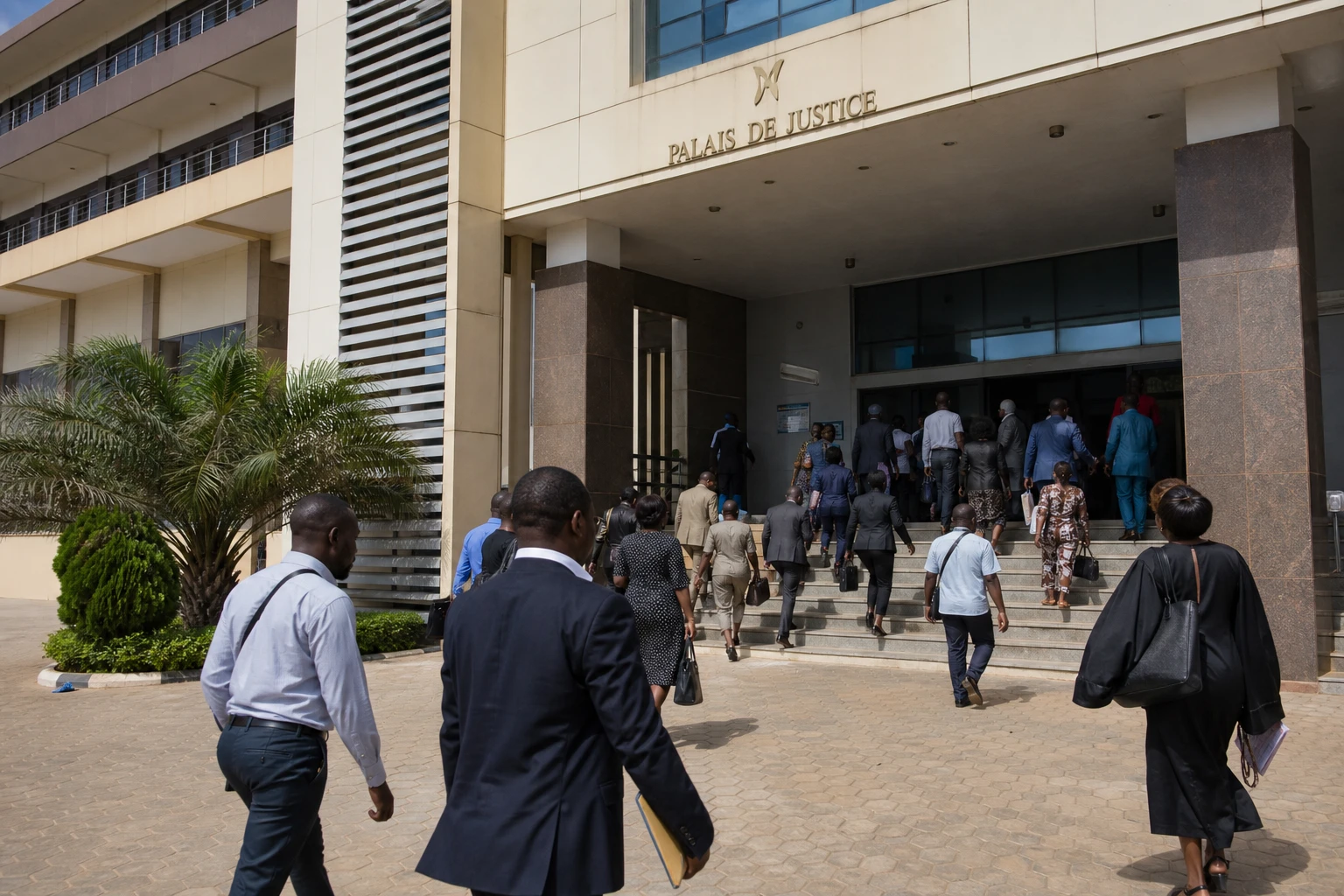
In northern Togo, a legal case extending beyond a film shoot
In Kara, northern Togo, a film crew found itself caught up in a case where security, press law and border controls intersect. Since 27 July 2026, two French directors, Gaël Mocaër and Sebastian Perez Pezzani, and their Togolese collaborator Fred Vedomey have faced the Togolese justice system after being detained while filming an episode of Les routes de l’impossible, broadcast on France 5. One of the two Frenchmen was later released under judicial supervision for health reasons, while the case remains open for the other people under investigation.
The case is sensitive because it comes amid heightened security vigilance in part of the country that has persisted for several years. In the Savanes region, in Togo’s far north, the state and its international partners have strengthened their presence in response to the effects of the Sahel conflict, the movement of weapons and the risk of attacks from across the border with Burkina Faso. In April 2026, the UN opened a joint office for the region to support conflict prevention, social cohesion and community resilience.
What the Togolese justice system accuses the three men of
According to information made public in recent days, the Togolese authorities accuse the three men of making “false declarations” in procedures related to their stay and the filming. Several media outlets and press freedom organisations have also raised the issue of a drone used in the north of the country, a sensitive matter in an area considered strategically important for national security. RSF said the three were initially remanded in custody in Lomé, before a hearing on 20 August resulted in Gaël Mocaër and Fred Vedomey remaining in detention and Sebastian Perez Pezzani being placed under house arrest.
On 24 August, the situation changed again: several press outlets, citing judicial sources, reported that Sebastian Perez Pezzani had been released under judicial supervision and was receiving medical care. His lawyer had previously said that he was suffering from serious health problems requiring specific treatment. RSF, for its part, had called for his urgent medical evacuation to France. These medical issues are now central to the provisional release measure, but they do not close the criminal case.
The Togolese Ministry of Justice did not immediately provide a detailed account of the case, but the High Authority for the Regulation of Written, Audiovisual and Digital Communication said that no accreditation request had been submitted for the shoot. This clarification matters because it places the case within the broader framework of national rules governing foreign media and crews working in the country. In a country seeking to attract investment, modernise its administration and impose greater regulation on public life, filming permits quickly become an institutional issue, not just a media one.
A sensitive case in a country balancing openness and security
Togo is not a peripheral player in African affairs. Lomé is also an active diplomatic and administrative hub, bringing together regional institutions, bilateral partners and continental organisations. The country remains a member of ECOWAS, the Economic Community of West African States, even as political ruptures in the Sahel have transformed the regional landscape. In this context, any incident involving foreigners, journalists or technical crews can be viewed through the lens of sovereignty, control of border areas and internal security.
Northern Togo bears a double burden. On the one hand, people live with restrictions linked to security risks. On the other, they also depend on reporting, development projects and humanitarian initiatives that document or address this reality. The African Development Bank’s humanitarian intervention in the Savanes region shows that the issue is not abstract: internal displacement, pressure on schools, weakened livelihoods and the need to preserve social cohesion. In other words, a legal case arising from a film shoot also indirectly affects the image of a region the state is trying to keep on its feet despite pressure from the Sahel.
What the case says about the relationship between the press, the law and sovereignty
For Togolese media professionals, this episode is a reminder that the freedom to work in the field remains closely tied to administrative procedures and local power dynamics. For the authorities, it raises another question: how can vulnerable areas be controlled without creating the impression that reporting or documentary work is being criminalised? There is no simple answer. In this case, the Togolese government defends its interpretation of events, citing failures to make the required declarations and evidence considered serious by the justice system; press freedom organisations, meanwhile, see the measure as disproportionate and a worrying signal for freedom of information.
The case’s African dimension is clear: several countries on the continent face the same dilemma. They must secure areas exposed to trafficking, terrorism or border tensions while allowing information, cameras and field investigations to circulate. In Lomé, the issue is all the more sensitive because Togo has for several years sought to strengthen its image as a stable, reform-minded country with clearer administrative procedures. A case like this is a reminder that stability is measured not only by infrastructure or official statements; it is also judged by how the state treats professionals who come to document the country.
What happens next will be decided by the Togolese justice system, with concrete implications for the three people under investigation, but also for the future of documentary filming in the north of the country. If judicial supervision continues, the case will remain a marker of institutional caution. If the charges are reduced, it may serve as an example of a graduated response in an area where Togo wants both to protect its borders and assert its sovereignty, while keeping the space for information open. In any event, the case goes beyond the fate of one director: it sheds light on how a West African state balances security, its international image and the right to observe reality.