Algeria
 Egypt
 Libya
 Morocco
 Sudan
 Tunisia
 Benin
 Burkina Faso
 Cabo Verde
 Côte d'Ivoire
 Ghana
 Guinea
 Guinea-Bissau
 Liberia
 Mali
 Mauritania
 Niger
 Nigeria
 Senegal
 Sierra Leone
 The Gambia
 Togo
 Cameroon
 Central African Republic
 Chad
 DR Congo
 Equatorial Guinea
 Gabon
 Republic of the Congo
 São Tomé and Príncipe
 Burundi
 Comoros
 Djibouti
 Eritrea
 Kenya
 Madagascar
 Malawi
 Mauritius
 Mozambique
 Rwanda
 Seychelles
 Somalia
 South Sudan
 Tanzania
 Uganda
 Angola
 Botswana
 Eswatini
 Lesotho
 Namibia
 South Africa
 Zambia
 Zimbabwe
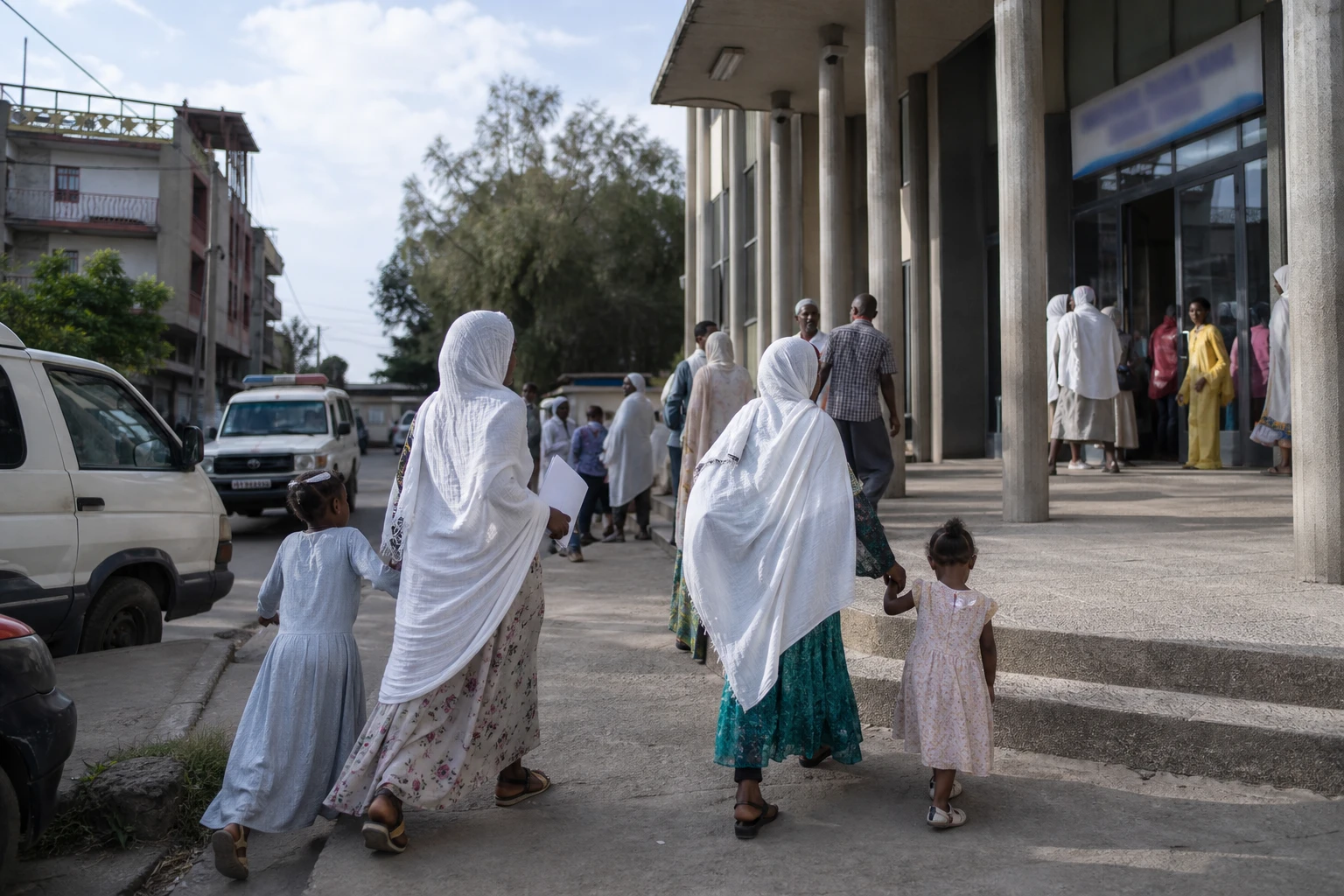
In Mekelle, the war is now measured at hospital doors. Children wounded in fighting in southern Tigray are arriving with severe injuries, as renewed hostilities threaten an already fragile balance since the end of Ethiopia’s civil war.
Healthcare system faces a new influx of wounded
Between Saturday 26 and Monday 28 September 2026, Ayder Referral Hospital in Mekelle received 44 civilians with serious injuries after bombardments in Maychew and Alamata, according to a member of medical staff cited by several media outlets.
Thirty-three of the patients were children. Some had injuries requiring amputations. Others had lost their sight. At least four people are reported to have died while being transferred to Tigray’s regional capital. These figures remain attributed, as access restrictions and telecommunications blackouts prevent full independent verification.
Consistent reports point to intense pressure on the region’s health facilities. Médecins Sans Frontières has reported a rapid rise in admissions at hospitals in Korem and Alamata, as well as an influx of more than 300 wounded people at Suhul Hospital in Shire in the space of a few days.
This comes as the medical system is already severely weakened. At Ayder, Human Rights Watch has also reported difficulties obtaining basic supplies, including anaesthetics, surgical equipment and devices needed for emergency care.
Fighting spreads beyond Tigray’s front line
The latest military escalation began on 23 September 2026, after several months of tension between Ethiopia’s federal government and the Tigray People’s Liberation Front, or TPLF. The movement remains the dominant political and military force in the northern region.
Clashes are concentrated along several axes. Federal forces and their allies have announced the capture of Alamata, a strategic town on the main road linking the south to Tigray. Residents, for their part, have described heavy artillery fire in Maychew, particularly in residential neighbourhoods and near a market.
The military situation remains difficult to establish precisely. The federal authorities, Tigrayan forces and allied groups offer differing accounts of the operations. Telephone and internet blackouts further complicate the work of journalists, humanitarian organisations and families trying to locate loved ones.
The fighting is not confined to Tigray. The TPLF has launched operations towards the neighbouring regions of Amhara and Afar. This expansion opens several fronts and increases the risk of disruption to trade routes linking Ethiopia to the port of Djibouti.
The conflict could also trigger further population displacement. In Afar, humanitarian actors have reported significant displacement of civilians but have been unable to provide a definitive figure. Here too, the numbers should be treated with caution until access is restored.
Pretoria accord remains the key reference point
The renewed fighting highlights the limits of the peace accord signed in Pretoria, South Africa, in November 2022. The agreement ended the war between the federal government and the TPLF that lasted from 2020 to 2022.
That war caused a major human catastrophe. The most widely cited estimates put the death toll at about 600,000, including both direct combat casualties and deaths linked to hunger, disease and the collapse of public services.
The accord provided for the disarmament of Tigrayan forces, the restoration of the regional administration and the return of displaced people. However, several key issues remain unresolved. The status of disputed territories, the reintegration of fighters and the rebuilding of regional institutions continue to fuel mistrust.
Tensions have intensified since the end of 2025. Drone strikes, troop movements and localised clashes have gradually narrowed the space for dialogue. Tigray’s internal political crisis has also undermined implementation of the accord.
For the population, the consequences are immediate. Residents of towns near military routes face bombardments, displacement and movement restrictions. In rural areas, access to healthcare, markets and humanitarian aid is becoming more uncertain. Families with regular incomes can sometimes buy medicines in the private sector. Others depend almost entirely on hospital stocks and external assistance.
A risk to the balance of the Horn of Africa
The Ethiopian crisis extends beyond Tigray’s borders. Ethiopia is a central player in the Horn of Africa and an important member of the Intergovernmental Authority on Development, IGAD, which works on regional peace and security.
A prolonged war could affect the regions of Amhara and Afar, as well as trade routes to Djibouti. It would put pressure on population movements, food prices and humanitarian operations in an area already beset by several crises.
Military developments around Mekelle will therefore be decisive. A federal advance towards Tigray’s capital could usher in a new phase of urban confrontation. Conversely, an expansion of operations into Afar and Amhara could turn the conflict into a multi-front national crisis.
The immediate priority remains access to healthcare and the protection of civilians. But lasting stability will depend above all on the resumption of a credible political process. Without a settlement of the territorial and institutional issues left unresolved by Pretoria, every military incident could still plunge northern Ethiopia into another war.