Algeria
 Egypt
 Libya
 Morocco
 Sudan
 Tunisia
 Benin
 Burkina Faso
 Cabo Verde
 Côte d'Ivoire
 Ghana
 Guinea
 Guinea-Bissau
 Liberia
 Mali
 Mauritania
 Niger
 Nigeria
 Senegal
 Sierra Leone
 The Gambia
 Togo
 Cameroon
 Central African Republic
 Chad
 DR Congo
 Equatorial Guinea
 Gabon
 Republic of the Congo
 São Tomé and Príncipe
 Burundi
 Comoros
 Djibouti
 Ethiopia
 Kenya
 Madagascar
 Malawi
 Mauritius
 Mozambique
 Rwanda
 Seychelles
 Somalia
 South Sudan
 Tanzania
 Uganda
 Angola
 Botswana
 Eswatini
 Lesotho
 Namibia
 South Africa
 Zambia
 Zimbabwe
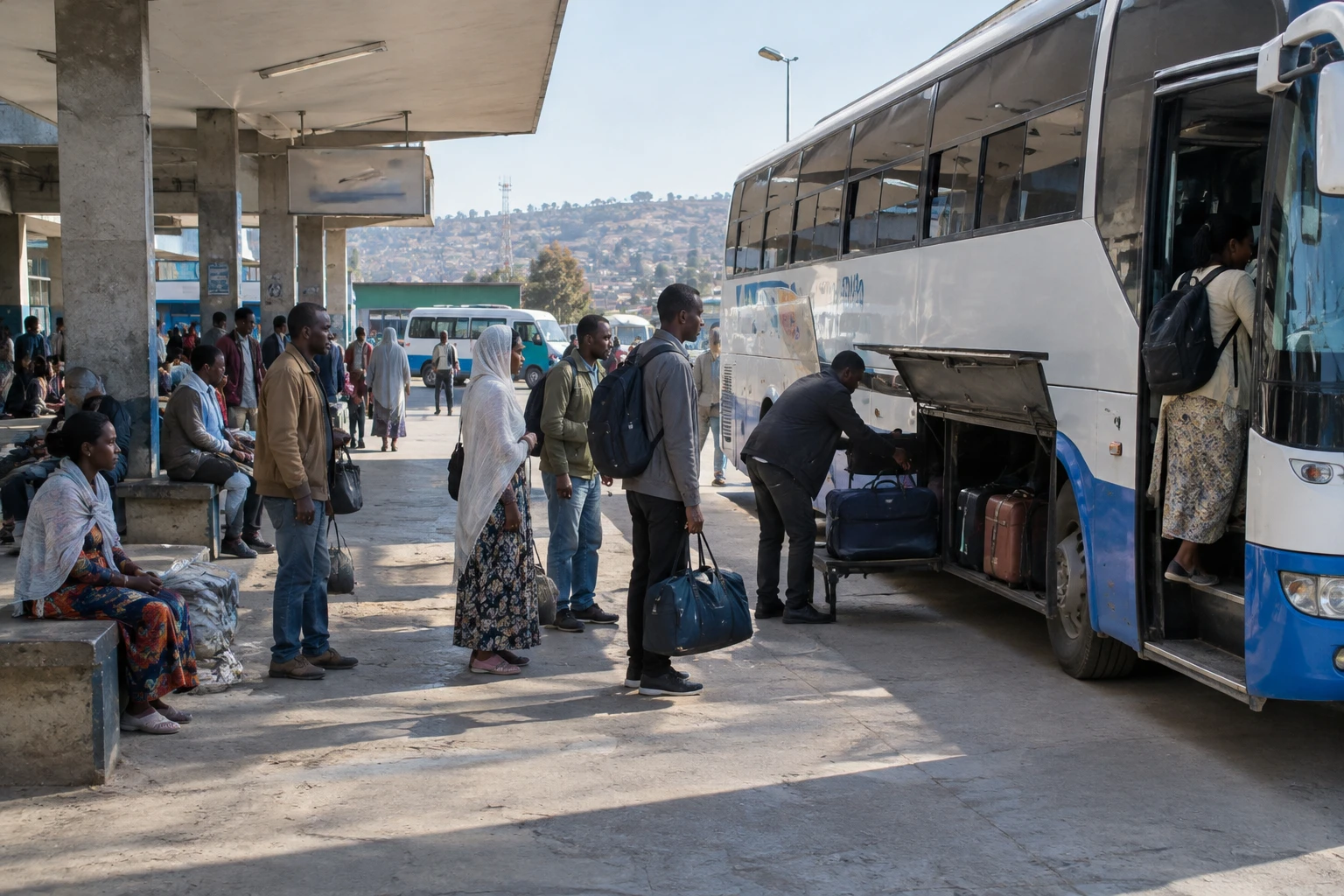
In Tigray, in northern Ethiopia, renewed fighting threatens more than a fragile return to calm. It has also revived the risk of a confrontation between Addis Ababa and Asmara, two capitals bound by a history of war, rapprochement and regional rivalry.
The accusations exchanged at the UN do not, by themselves, establish who crossed the border or with what forces. But they show that the Tigray crisis now extends beyond relations between Ethiopia’s federal government and the region’s political actors. For residents, the immediate concerns are more tangible: fighting, displacement and uncertain access to healthcare and essential services.
A 2022 peace deal strained by renewed fighting
Tigray is a region in northern Ethiopia, bordering Eritrea. Between 2020 and 2022, a war between Ethiopian federal forces and the Tigray People’s Liberation Front (TPLF) involved several armed actors, including the Eritrean army. The agreement signed in Pretoria, South Africa, in November 2022, ended the main fighting but did not resolve all political and territorial tensions.
The resurgence of violence in late September 2026 is putting the agreement under pressure. The TPLF and forces allied with the federal government have fought over towns and strategic positions. On 3 October, rebel fighters announced their withdrawal from Mekelle, the regional capital, which forces allied with the central government subsequently entered. Ethiopian Airlines flights to Mekelle resumed on 11 October after being suspended because of the fighting. These developments do not, however, mean that the region is at peace.
The United Nations secretary-general said on 10 October that he was concerned by the resumption of hostilities in Tigray, as well as in the neighbouring regions of Afar and Amhara. He called on all parties to stop fighting and on the signatories to the Pretoria agreement to resume dialogue. The UN also expressed concern over reports of Eritrean forces in Ethiopia, without presenting this information as definitively established fact.
Conflicting accounts put to the United Nations
On 9 October, Ethiopia’s foreign minister, Gedion Timothewos, wrote to the UN Security Council. He accused Eritrea of sending units into Ethiopian territory and invoked the right to self-defence under the UN Charter. Addis Ababa also accuses Asmara of supporting insurgent groups. These are allegations by the Ethiopian government; they are not, in themselves, independent verification of the presence or activities of Eritrean soldiers.
Eritrea rejects the accusations. In a letter sent to the Security Council on 10 October, its foreign minister, Osman Saleh, asked the UN to condemn what he described as an Ethiopian declaration of war and to take deterrent measures. Asmara thus presents Addis Ababa’s statements as a threat to its sovereignty. Both governments are appealing to the same institution, but to defend incompatible accounts.
News reports citing local officials and witnesses describe movements by Eritrean soldiers in some parts of Tigray. A figure of 5,000 to 8,000 troops was also cited by a security source quoted by Africanews and the Associated Press. In the absence of independent confirmation establishing this figure, it cannot be presented as a verified count. The UN, for its part, refers to reports and calls for de-escalation.
Tigray, a focal point for several rivalries
The crisis is not simply a border dispute. Tigray is still marked by the aftermath of war and disagreements over its administration, the TPLF’s political representation and implementation of the Pretoria agreement. Rivalry between Tigrayan factions and strained relations between the federal government and regional authorities complicate any resumption of the peace process.
The question of access to the sea adds a regional dimension. Ethiopia, a landlocked country since Eritrea’s independence in 1993, has publicly asserted its interest in securing sovereign access to the Red Sea. Eritrea views Addis Ababa’s maritime ambitions as a cause for concern. Negotiated access to ports and a claim to territorial sovereignty are not the same thing; the distinction matters, as any confusion could fuel fears and military calculations.
The Horn of Africa is also affected by the war in Sudan and rivalries among neighbouring states. Eritrea, Ethiopia and Djibouti are on the African shore of the Red Sea, a strategic shipping route. An escalation between Addis Ababa and Asmara could therefore affect border security, trade and relations with neighbouring countries. It would also complicate the African Union’s efforts to support regional de-escalation; the organisation is headquartered in Addis Ababa.
Civilians bear the cost of uncertainty
In Mekelle, residents described closed banks, shortages and inadequate access to healthcare to the Associated Press. These accounts illustrate difficulties reported in a city affected by fighting; they do not, on their own, describe the situation across all of Tigray. In rural areas and towns near the front lines, access for humanitarian teams and the restoration of services may be even harder to ensure.
The consequences also extend beyond households directly exposed to the fighting. The closure of roads or banking services hampers trade and complicates the payment of wages and purchases. Farmers, small traders and businesses that rely on regular connections are particularly vulnerable to another disruption. For federal and regional authorities, the ability to restore civilian services will matter as much as military control of towns.
What happens next will depend on observable steps on the ground: the withdrawal of forces, humanitarian access, an end to air strikes and the resumption of talks between the federal government and Tigrayan leaders. The UN is calling for a return to the Pretoria framework; the African Union remains a central actor in supporting mediation. At this stage, mutual accusations are not enough to establish responsibility. But the reported presence of Eritrean forces, if confirmed, would turn an internal crisis into a direct confrontation between two neighbouring states.
Sources consulted: Associated Press report on Ethiopia’s letter to the UN ; Africanews cross-check of the accusations and reported deployments ; statement by the United Nations secretary-general on 10 October 2026 ; Eritrea’s appeal to the Security Council, reported by Deutsche Welle ; International Crisis Group regional analysis of Ethiopia, Eritrea and Tigray.