Algeria
 Egypt
 Libya
 Morocco
 Sudan
 Tunisia
 Benin
 Burkina Faso
 Cabo Verde
 Côte d'Ivoire
 Ghana
 Guinea
 Guinea-Bissau
 Liberia
 Mali
 Mauritania
 Niger
 Nigeria
 Senegal
 Sierra Leone
 The Gambia
 Togo
 Cameroon
 Central African Republic
 Chad
 DR Congo
 Equatorial Guinea
 Gabon
 Republic of the Congo
 São Tomé and Príncipe
 Burundi
 Comoros
 Djibouti
 Ethiopia
 Kenya
 Madagascar
 Malawi
 Mauritius
 Mozambique
 Rwanda
 Seychelles
 Somalia
 South Sudan
 Tanzania
 Uganda
 Angola
 Botswana
 Eswatini
 Lesotho
 Namibia
 South Africa
 Zambia
 Zimbabwe
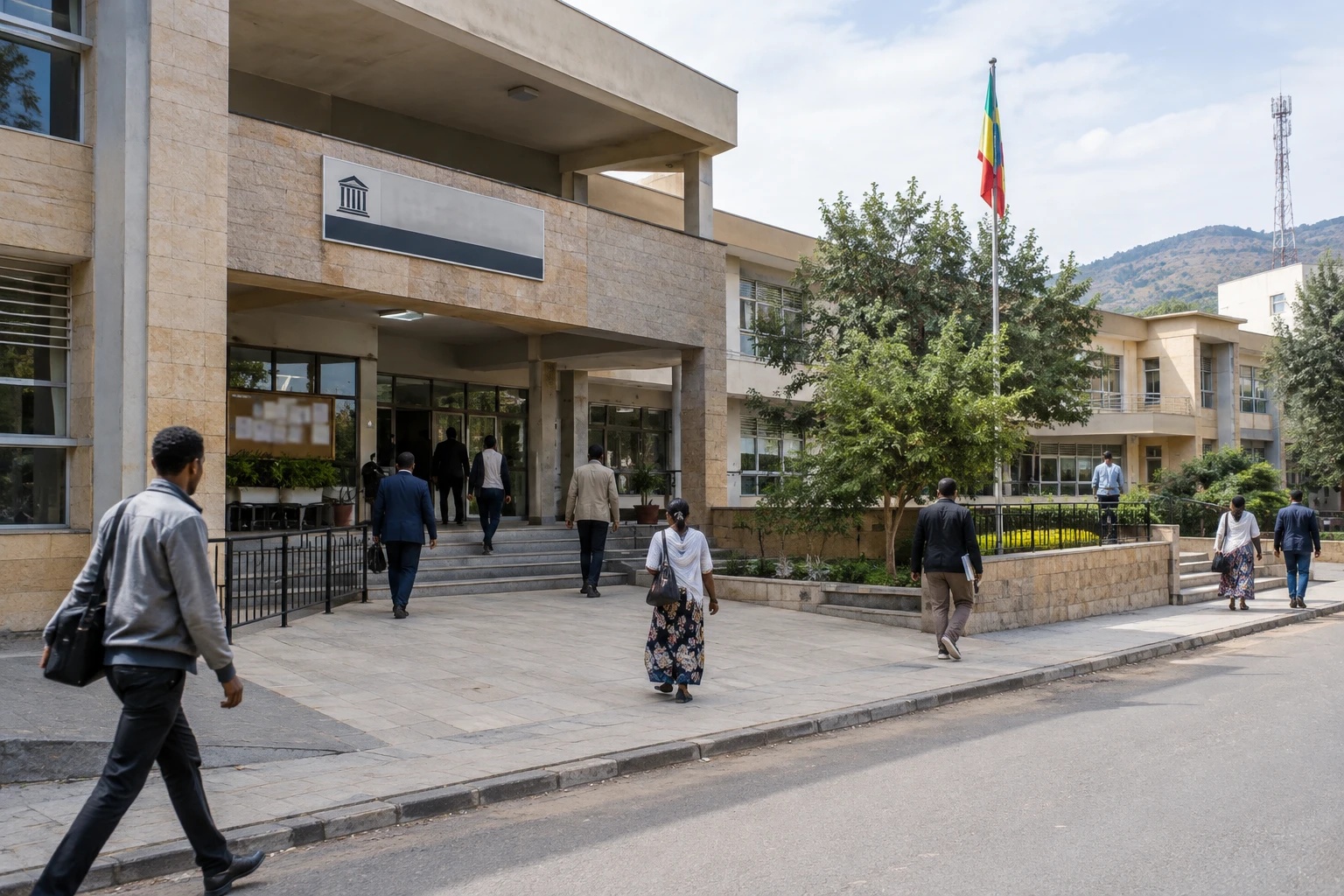
In Adigrat, a Tigrayan city near the Eritrean border, residents say they have seen soldiers from Eritrea. The accounts come as fighting has resumed in the region. Independent verification remains limited, but the reports’ convergence is raising fears of a further widening of the crisis.
A region already weakened by renewed fighting
Tigray lies in northern Ethiopia, between Eritrea and the Ethiopian regions of Amhara and Afar. The area is still scarred by the 2020–2022 war between Ethiopian federal forces and the Tigray People’s Liberation Front (TPLF). Eritrea fought alongside the federal army at the time.
The Pretoria Agreement, signed on 2 November 2022 under the auspices of the African Union (AU), ended hostilities between Addis Ababa and the TPLF. It did not, however, resolve all political and territorial tensions. Eritrea was not a party to the agreement, even though its troops had taken part in the war. The AU has since called for the gains made through the cessation of hostilities to be preserved.
Since 23 September 2026, fresh clashes have pitted federal forces against Tigrayan fighters in Tigray. The fighting has led to shifts in control and the entry of forces allied with the government into Mekele, the regional capital, on 4 October. The regional organisation IGAD, which brings together countries in the Horn of Africa, has called for immediate de-escalation and respect for the Pretoria Agreement.
Consistent accounts, but facts remain difficult to establish
Residents of Adigrat told the African Press Agency (APA) that they had seen soldiers wearing Eritrean uniforms in the city and its surroundings. According to their account, some were heading south towards Mekele. The agency reported these accounts on 7 October.
On 8 October, the Associated Press cited a commander of the Tigray Peace Force, which is allied with the Ethiopian government. He said Eritrean troops entered Adigrat on Tuesday 6 October, then Idaga Hamus on Wednesday 7 October. The ACLED monitoring group also reported a border crossing at Zelambesa and an Ethiopian drone attack on Eritrean soldiers near Guada. Not all of these details have been independently verified.
AFP, meanwhile, reports that several sources told it Eritrean soldiers were present around Adigrat and moving south. The accounts carried by APA, AP and AFP converge on the alleged presence of Eritrean troops in northern Tigray. They do not, however, establish on their own the scale of the deployment, its chain of command or its purpose. Military claims and reported movements should therefore remain attributed.
This caution also matters because the parties to the conflict are communicating amid heightened tensions. The Ethiopian army recently accused Eritrea of providing financial support to the TPLF. Asmara has not confirmed the accusations reported by Ethiopian authorities. Reports of Eritrean soldiers on Ethiopian soil do not, on their own, constitute proof of coordination with Tigrayan forces.
An escalation that extends beyond the front line
Relations between Addis Ababa and Asmara have deteriorated. Ethiopia ordered ten Eritrean diplomats to leave and announced the closure of its embassy in Eritrea in early October. The dispute is linked, in particular, to tensions over Ethiopia’s access to the Red Sea. The landlocked country has expressed its wish to secure sovereign access to a port; Eritrea views these statements as a threat to its sovereignty.
The risk is that the fighting in Tigray becomes the point where several rivalries converge: the conflict between the federal authorities and the TPLF, tensions between Ethiopia and Eritrea, and continuing disagreements over the implementation of the Pretoria Agreement. A confirmed incursion by Eritrean troops could increase the risk of a direct clash between states. At this stage, the available information describes alleged movements, not an officially declared war between the two countries.
For residents, military uncertainty can disrupt travel, trade and access to services in towns in northern Tigray. Households, traders and displaced people are exposed to the immediate consequences of the fighting. The authorities and armed groups, by contrast, have different means of moving around or leaving dangerous areas. No verified death toll linked to the reported movements around Adigrat has been established in the information cross-checked here.
The expected role of the African Union and IGAD
The crisis is testing African mediation mechanisms. The African Union, headquartered in Addis Ababa, sponsored the Pretoria Agreement. IGAD has called for hostilities to be contained and the agreement preserved. But neither diplomatic statements nor the 2022 text will be enough unless the parties concerned resume dialogue and clarify troop movements at the border.
The immediate priority is to verify the facts, prevent cross-border fire and protect civilians. The next statements from the Ethiopian and Eritrean governments, along with steps by the AU and IGAD, will show whether the incident remains localised or is part of a broader confrontation. For East Africa, the stakes are concrete: preventing an incomplete peace in Tigray from turning into a crisis between neighbouring states.