Algeria
 Egypt
 Libya
 Morocco
 Sudan
 Tunisia
 Benin
 Burkina Faso
 Cabo Verde
 Côte d'Ivoire
 Ghana
 Guinea
 Guinea-Bissau
 Liberia
 Mali
 Mauritania
 Niger
 Nigeria
 Senegal
 Sierra Leone
 The Gambia
 Togo
 Cameroon
 Central African Republic
 Chad
 DR Congo
 Equatorial Guinea
 Gabon
 Republic of the Congo
 São Tomé and Príncipe
 Burundi
 Comoros
 Djibouti
 Eritrea
 Ethiopia
 Kenya
 Madagascar
 Malawi
 Mauritius
 Mozambique
 Rwanda
 Seychelles
 Somalia
 South Sudan
 Uganda
 Angola
 Botswana
 Eswatini
 Lesotho
 Namibia
 South Africa
 Zambia
 Zimbabwe
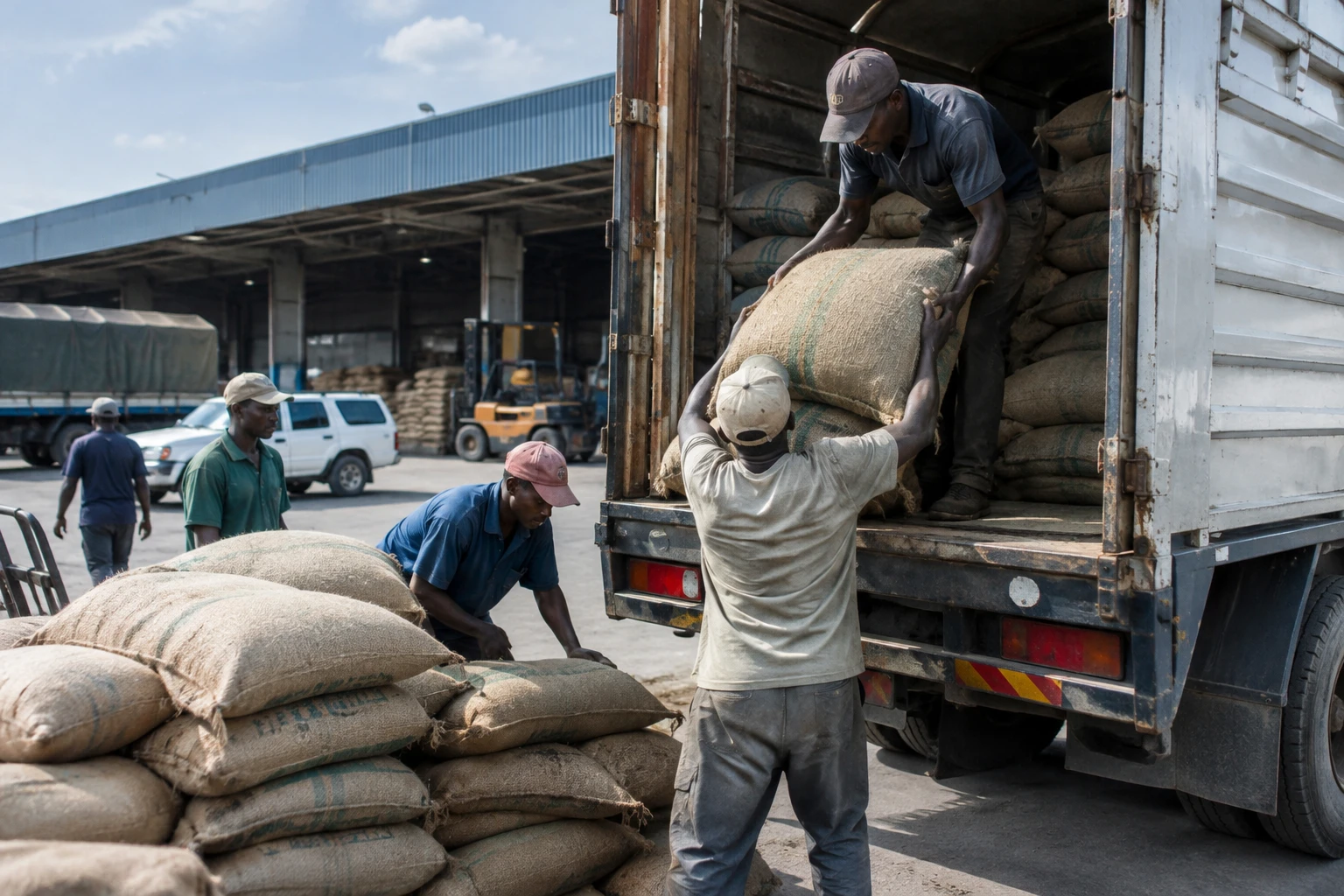
When Vietnam buys fewer raw cashew nuts from some West African countries, the impact goes beyond trade figures. Demand from its factories also reveals a shift in supply chains, with Tanzania gaining ground while Côte d’Ivoire develops its own industrial capacity.
The question is central for African producers and processors: should they sell raw nuts quickly, or retain more value by processing them locally? The two strategies serve different interests. Their results depend on the harvest, quality, prices and market outlets.
A Vietnamese market diversifying its suppliers
Vietnam is a major processing centre and exporter of cashew kernels. Its purchases of raw nuts link it to production zones in Africa and South-East Asia. Access to this market remains important for producing countries, even if volumes vary from one season to another.
According to a market bulletin published by N’kalô on 3 November 2026, Vietnamese imports of raw cashew nuts reached about 2.36 million tonnes in the first nine months of the year, nearly 3% less than in the same period in 2025. Customs statistics cited in the bulletin show contrasting trends by origin. These figures could not be independently cross-checked against the sources consulted, so they remain attributed to N’kalô.
Purchases from Côte d’Ivoire, Nigeria and Ghana reportedly totalled about 752,000 tonnes, compared with 997,000 tonnes a year earlier, a fall of 25%. Ivorian shipments reportedly fell 20% to 435,522 tonnes. Those from Nigeria declined 28% to 182,393 tonnes, while Ghana’s fell 34% to 134,074 tonnes.
At the same time, supplies from Cambodia reportedly rose 13%, and those from Tanzania by 19%. This contrast is not enough to conclude that the market is undergoing a lasting shift. It does, however, show that Vietnamese buyers have several sources and can adjust their purchases according to seasonal conditions.
Harvests, quality and processing: several factors at play
The decline in West African shipments is not necessarily explained by a single factor. Harvest volumes matter, as do nut quality, export prices and the share taken up by local processing plants. A lower kernel yield can make a consignment less attractive to processors, even when nuts remain available.
In its October 2026 report, trader ofi said West African harvests had fallen short of initial expectations, in both quantity and quality. The company cited more frequent defects and lower kernel yields in Ghanaian and Ivorian consignments destined for Vietnam and India. This is the assessment of a commercial operator; it provides insight into the market but is not, on its own, a comprehensive measure of the regional harvest.
Growth in processing in Côte d’Ivoire is also changing trade flows. The Ivorian Cashew Processors Association says the country’s factories processed 659,579 tonnes of raw nuts in 2025, compared with 344,026 tonnes in 2024. The Ivorian government has also reported these volumes. Increased local activity may reduce the quantity available for export in raw form, while creating a larger supply of processed kernels.
This change is not merely commercial. It shifts some added value to the producing country and supports activity at factories and among their suppliers. But it also raises practical questions: can plants operate regularly, buy the harvest on viable terms and maintain markets for their products? Increased capacity does not automatically guarantee the same revenues for every player in the value chain.
Ivorian exports of cashew kernels reached 44,403 tonnes between January and May 2026, according to N’kalô data cited by Cambodian organisation CAC International. The figure suggests an increase in sales of processed products. However, on its own, it does not measure the volume of raw nuts processed over the full year.
Price can also influence buyers’ choices. The African Cashew Alliance reported a July 2026 benchmark export price of $1,600 a tonne for Nigerian nuts, compared with $960 for Ivorian nuts. The reported gap illustrates the market’s sensitivity to prices across origins. It does not show that price alone explains the decline in Nigerian purchases.
What Tanzania’s gains do — and do not — tell us
For Tanzania, the reported increase in deliveries to Vietnam offers an additional outlet for an agricultural sector geared towards international markets. But growth over nine months does not, on its own, reveal producer incomes, the regularity of exports or the share of the harvest processed in the country. These aspects require further national data.
The trend is part of a contest for supplies between South-East Asia and several African production zones. For Tanzanian exporters and their West African counterparts, nut quality, logistics costs and prices offered remain decisive. In Dodoma, Tanzania’s capital, the sector’s performance also has implications for agricultural policy choices: whether to support sales of raw nuts or expand local processing.
At regional level, the issue also concerns co-operation between producing countries. The East African Community (EAC), a regional integration organisation of which Tanzania is a member, provides a forum for economic consultation. Trade figures with Vietnam do not prove that a common cashew strategy already exists. Rather, they underscore the value of better comparisons of data, quality standards and processing opportunities among producers.
The next indicators to watch will be the full results of Vietnam’s trade in 2026, the volumes actually harvested and processed in supplier countries, and price trends by origin. For Tanzania, market-share gains will be sustainable only if they translate into predictable outlets. For West Africa, the challenge is not only to recover export volumes: it is also to strengthen quality and the value created locally.