Algeria
 Egypt
 Libya
 Morocco
 Sudan
 Tunisia
 Benin
 Burkina Faso
 Cabo Verde
 Côte d'Ivoire
 Ghana
 Guinea
 Guinea-Bissau
 Liberia
 Mali
 Mauritania
 Niger
 Nigeria
 Senegal
 Sierra Leone
 The Gambia
 Togo
 Cameroon
 Central African Republic
 Chad
 DR Congo
 Equatorial Guinea
 Gabon
 Republic of the Congo
 São Tomé and Príncipe
 Burundi
 Comoros
 Djibouti
 Eritrea
 Ethiopia
 Kenya
 Madagascar
 Malawi
 Mauritius
 Mozambique
 Rwanda
 Seychelles
 Somalia
 South Sudan
 Uganda
 Angola
 Botswana
 Eswatini
 Lesotho
 Namibia
 South Africa
 Zambia
 Zimbabwe

At Mtwara, the port looks out towards the Indian Ocean. At Mbamba Bay, goods could reach the shores of Lake Nyasa. Between the two lies a question: will mines and regional trade generate enough freight to justify a new railway line of almost 1,000 kilometres?
A regional project still at the study stage
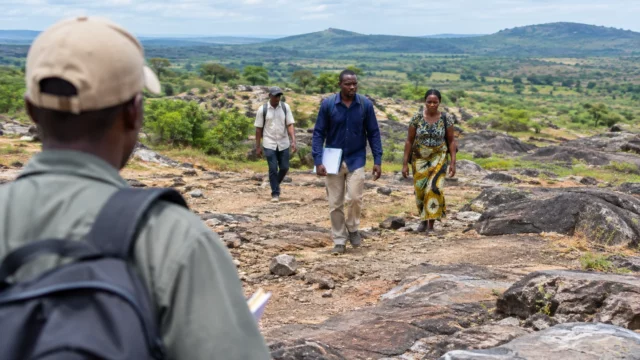
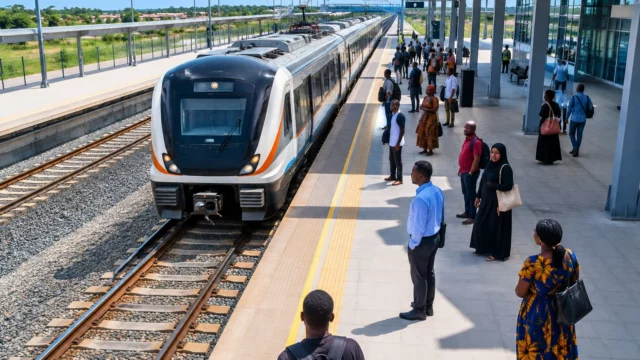
The project is part of the Mtwara Development Corridor, an initiative intended to connect southern Tanzania with neighbouring markets. The proposed railway would link the port of Mtwara to Mbamba Bay via Songea, with branch lines to the Mchuchuma and Liganga mining sites. The route could connect with roads, ports and lake transport links to Malawi and Mozambique.
Tanzania belongs to both the East African Community and SADC, the Southern African Development Community. For this corridor, SADC provides the main regional framework: the organisation lists the project among infrastructure initiatives that could facilitate trade between neighbouring countries. The African Union’s Programme for Infrastructure Development in Africa also lists it as a regional railway project.
On 16 October 2026, Tanzania Railways Corporation (TRC), the state-owned railway company, signed a memorandum of understanding with Arab Contractors, an Egyptian construction company. The agreement provides for preliminary and feasibility studies. It is not a construction contract. According to Tanzanian daily The Citizen and the signatory company, Arab Contractors will fund the studies, while TRC will provide technical data and co-ordinate the institutions involved.
The step comes as the government says it has already completed a feasibility study and preliminary design of the route. In February 2026, the deputy transport minister told parliament that the authorities were still seeking the necessary funding, including through a public-private partnership, in which the state and private investors share financing and responsibilities. The new agreement should therefore be understood as a co-operation and assessment process, not proof that funding or construction is secured.
Mines are expected to provide some of the freight
The project’s economic case depends partly on Mchuchuma and Liganga, two projects conceived as an integrated industrial complex in the Njombe region. Mchuchuma is expected to provide coal and a power plant; Liganga, iron ore and a steelworks. The stated aim is to process more resources locally, rather than export them unprocessed and then import finished products.
The projects have, however, been delayed by contract negotiations and changes of investors. In September 2026, the Tanzanian government said implementation was planned to begin in 2027, in several phases. The announcement sets out a political timetable, but does not yet confirm that construction will actually start or establish production volumes. In 2025, a government official recalled that discussions with the previous partner had been halted after disagreements over the contract terms. The timeline published by Tanzania’s planning and investment office sheds light on the delays.
For the railway, the stakes are tangible: coal, ore, steel and other goods could generate freight traffic. But the study will need to assess actual demand, construction and operating costs, and financing options. Mining projections alone are no guarantee that trains will run with regular loads.
The challenge also concerns local people and businesses. A corridor can reduce transport costs and open up markets for producers far from major ports. It can also concentrate the benefits in mines and towns connected to the railway, while areas without a rail link are left behind. The studies will therefore need to set out local benefits, jobs accessible to Tanzanians, training needs and support measures for affected communities.
From the port to neighbouring markets: what the corridor needs
The railway would not operate in isolation. To the west, Mbamba Bay lies on Lake Nyasa, whose shores connect Tanzania with Malawi and Mozambique, among others. Suitable roads and port facilities would be essential to transfer goods between trains, lorries and boats. The SADC project overview describes a line of about 1,000 kilometres serving deposits in south-western Tanzania.
The ambition is rooted in a geography that extends beyond the mines. The corridor could strengthen the role of Mtwara port and offer neighbouring countries an additional transit route. But proposed connections to Zambia or other markets will depend on available roads, cross-border agreements and infrastructure’s ability to operate together. A national railway line cannot, by itself, create a seamless regional network.
For the government, the project is also an industrial wager: bringing together transport, energy, extraction and steelmaking. For private-sector players, the central question will be long-term profitability. And for people in the south, success will be measured in jobs, services and local trade, not just export tonnage. The authorities will need to make these trade-offs clear before any major commitment.
The next step is therefore less dramatic than laying tracks, but decisive: establishing costs, freight demand, the financing structure and each partner’s responsibilities. In Dodoma, the announcement of a mining start in 2027 is a milestone to watch; it will need to be followed by concluded agreements and investment actually secured. At SADC level, the project illustrates a shared challenge: turning corridor plans into operational links that can support regional trade while delivering verifiable benefits to the areas they cross.