Algeria
 Egypt
 Libya
 Morocco
 Sudan
 Tunisia
 Benin
 Burkina Faso
 Cabo Verde
 Côte d'Ivoire
 Ghana
 Guinea
 Guinea-Bissau
 Liberia
 Mali
 Mauritania
 Niger
 Nigeria
 Senegal
 Sierra Leone
 The Gambia
 Togo
 Cameroon
 Central African Republic
 Chad
 DR Congo
 Equatorial Guinea
 Gabon
 Republic of the Congo
 São Tomé and Príncipe
 Burundi
 Comoros
 Djibouti
 Eritrea
 Ethiopia
 Kenya
 Madagascar
 Malawi
 Mauritius
 Mozambique
 Rwanda
 Seychelles
 Somalia
 South Sudan
 Uganda
 Angola
 Botswana
 Eswatini
 Lesotho
 Namibia
 South Africa
 Zambia
 Zimbabwe
Another boost for Tanzania’s graphite sector
In Tanzania, graphite is no longer just a subject for geologists. It has become an issue of industrial sovereignty. As global demand shifts towards batteries and energy storage, the East African country is seeing a growing number of mining projects, resource announcements and discussions about local processing. The latest signal comes from the Morogoro project, west of Dar es Salaam, where exploration work has confirmed new potential in an area already being closely monitored by Tanzanian authorities.
The regional context matters as much as what lies underground. Tanzania is a member of the East African Community, a bloc whose states are seeking to capture more value from strategic minerals rather than limit themselves to extraction. At the same time, competition among producer countries is intensifying in southern and eastern Africa, against the backdrop of the global energy transition and still highly concentrated supply chains. For Dodoma, the challenge is therefore not only to produce more, but to process more locally.
What the Morogoro discovery shows
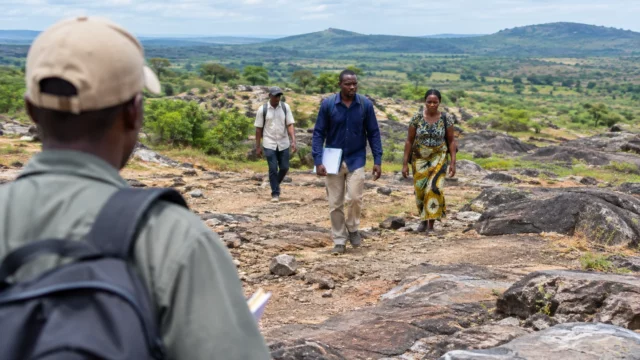
According to results published by InVert Graphite Limited, the resource identified at the Morogoro project amounts to 2.56 million tonnes of contained graphite. It is currently classified as inferred, meaning it is still a preliminary estimate based on geological data that will need to be strengthened through further drilling and analysis. The company also says exploration work has identified continuous mineralised zones over about two kilometres and that a new drilling campaign is planned to increase confidence in the deposit.
The announcement did not come out of nowhere. The Morogoro project is already part of a broader Tanzanian portfolio that includes several graphite projects at different stages of development. Tanzania’s Ministry of Minerals says the country is estimated to have more than 18 million tonnes of graphite reserves, mainly in the regions of Lindi, Morogoro and Tanga. The authorities have also highlighted the development of other sites, including Mahenge, Epanko, Chilalo and Bunyu, confirming that Tanzania is moving towards a comprehensive national graphite map.
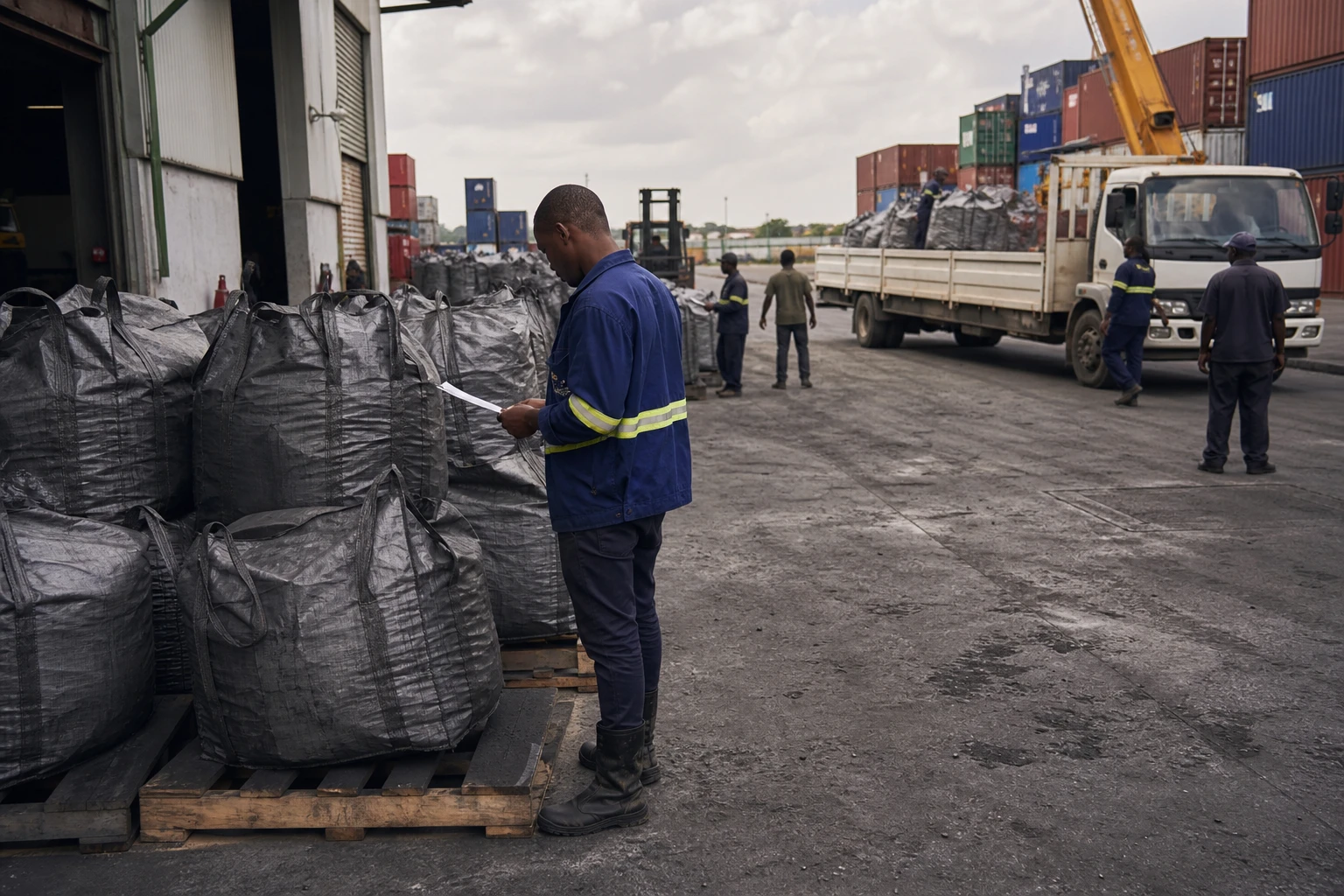
The project’s location adds to its appeal. InVert describes Morogoro as an asset close to existing infrastructure, with relatively good access to roads, rail and the port of Dar es Salaam. In a mining sector where transport costs weigh heavily on profitability, this proximity is no minor detail. It can make the difference between a project that looks promising on paper and a mine that can actually export its output and potentially process it locally.
A strategic resource, but a still-fragile market
Graphite has become essential in lithium-ion batteries, as well as in some industrial energy-storage applications. The International Energy Agency says global graphite demand is on a marked upward trajectory in energy-transition scenarios, with a doubling expected by 2040 in its central scenario. It also notes that value chains remain dominated by a handful of producers and, above all, a very small number of refining players. In other words, having the resource is not enough: it must also be processed, purified and sold on favourable terms.
This reality is crucial for Tanzania. The country is already among Africa’s most prominent graphite producers. Available data from the IEA and the US Geological Survey show that Tanzanian production has risen significantly, although its precise ranking can vary from year to year and according to methodology. The message is clear: Tanzania is no longer a peripheral player. It is joining the group of countries able to influence a raw material that has become critical to the global energy industry.
But geological abundance does not guarantee automatic growth. Projects advance in stages, and many still depend on securing finance, feasibility studies, permits, infrastructure and local acceptance. This is true in Morogoro and elsewhere. Recent developments concerning graphite projects in the country also show that the state is now pushing operators to speed up, while seeking to secure its economic share through national mining regulations.
What the project means for Tanzania and the region
For the Tanzanian authorities, the issue is not just tonnage. It concerns local employment, public revenue, the trade balance and local content. If projects are limited to raw extraction, value is captured elsewhere. But if processing expands locally, the value chain can benefit subcontractors, transport companies, engineers, laboratories and industrial workshops. This is where the difference lies between a conventional mining windfall and a development strategy.
People living near the sites, meanwhile, are looking for tangible benefits. Their first concerns are jobs, followed by land compensation, access to roads, water and electricity, and stable relations with companies. In several Tanzanian graphite projects, the state has already reminded investors that they must begin work without undue delay. This warning reflects a clear political shift: Dodoma wants visible projects, but also more tangible benefits for producing areas.
At the regional level, Tanzania is also seeking to distinguish itself. Within the East African Community, it could become a major supplier of raw or semi-processed graphite, provided it keeps investment moving at pace. More broadly, the issue feeds into Africa’s debate on critical minerals: how can the global energy transition avoid reproducing old patterns of raw-material exports without local industrialisation? The IEA is now stressing the economic value of regional and local processing of strategic minerals, giving Tanzania a genuine, but narrow, window of opportunity.
The next steps will therefore follow two timelines. First, exploration, with the drilling announced at Morogoro to firm up the resource. Then execution, with decisions on financing, construction and processing. If Tanzania manages this sequence successfully, it could establish itself not only as an African graphite producer, but also as a player in the value chain now surrounding this strategic mineral.