Algeria
 Egypt
 Libya
 Morocco
 Sudan
 Tunisia
 Benin
 Burkina Faso
 Cabo Verde
 Côte d'Ivoire
 Ghana
 Guinea
 Guinea-Bissau
 Liberia
 Mali
 Mauritania
 Niger
 Nigeria
 Senegal
 Sierra Leone
 The Gambia
 Togo
 Cameroon
 Central African Republic
 Chad
 DR Congo
 Equatorial Guinea
 Gabon
 Republic of the Congo
 São Tomé and Príncipe
 Burundi
 Comoros
 Djibouti
 Eritrea
 Ethiopia
 Kenya
 Madagascar
 Malawi
 Mauritius
 Mozambique
 Rwanda
 Seychelles
 Somalia
 South Sudan
 Uganda
 Angola
 Botswana
 Eswatini
 Lesotho
 Namibia
 South Africa
 Zambia
 Zimbabwe
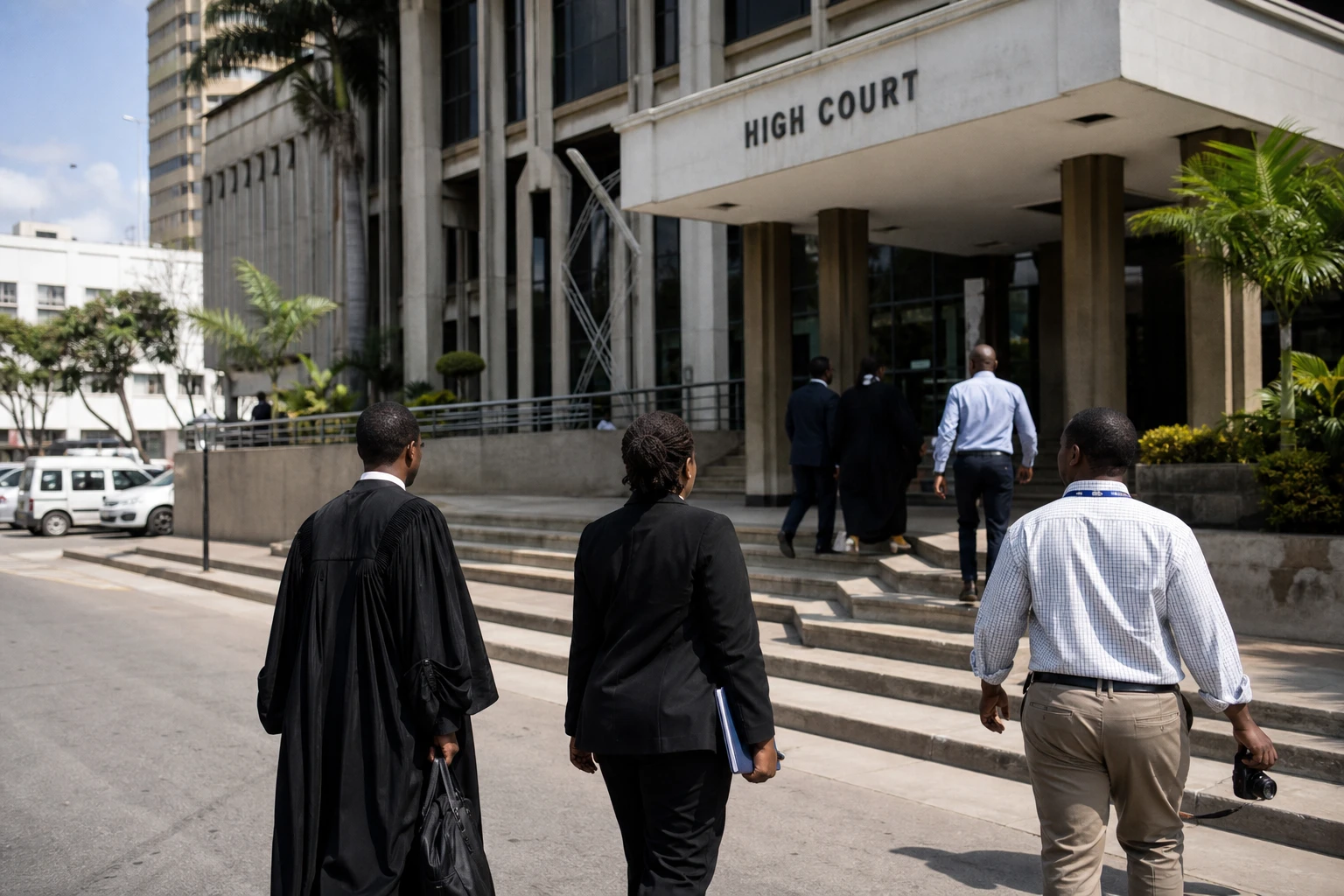
In Tanzania, a court case that has become emblematic of the relationship between the opposition and the government has reached a decisive moment. On Wednesday 23 September 2026, Tundu Lissu and the prosecution presented their closing submissions before the High Court in Dar es Salaam. The verdict is not yet known, but the outcome of the trial will have implications far beyond the fate of the Chadema leader.
A trial at the heart of a tense political period
Tundu Lissu is being prosecuted for treason, an offence punishable by death under Tanzanian law. The prosecution accuses him of calling on the public to prevent the 2025 general election from taking place. The charges relate in particular to a speech he gave on 3 April 2025 in Dar es Salaam, as part of the campaign by Chadema, the Party for Democracy and Development.
The opposition leader was arrested on 9 April 2025, after a rally in Mbinga, in the Ruvuma Region. He has been in custody since then, awaiting trial. The case was first heard by the Kisutu court before being transferred to the High Court, which has jurisdiction over the most serious criminal cases.
The political context explains the significance of the case. Chadema had launched the slogan “No Reforms, No Election”, arguing that electoral reforms were needed before the vote. A few days after Tundu Lissu’s arrest, the party was barred from the 2025 general election by the electoral commission, which said it had not signed the electoral code of conduct. The party challenged the decision.
Tanzanian media report that the final hearing was held before a panel of three judges: Dunstan Ndunguru, James Karayemaha and Ferdinand Kiwonde. The hearing followed the close of the defence case on 18 September 2026.
Disagreement over the meaning of the words and the evidence
At the heart of the trial is a difficult legal question: can political statements calling for an election to be blocked, on their own, constitute an intention to commit treason? The defence says no. It argues that the remarks attributed to Tundu Lissu must be considered in their political context and that no concrete act intended to overthrow or intimidate the government has been established.
Tundu Lissu acknowledges making some of the statements cited by the prosecution. He disputes, however, their criminal classification. His lawyers also argue that the prosecution has not proved that he was responsible for publishing the video broadcast on Jambo TV’s YouTube channel.
The defence has relied on rulings by the East African Court of Appeal. According to its argument, three elements must be established to prove liability for treason: the accused’s allegiance to the Republic, the existence of criminal intent, and the expression of that intent in writing or through a concrete act. The mere expression of a political position would therefore not be sufficient.
The prosecution takes a different view. It argues that Tundu Lissu’s remarks expressed a desire to disrupt the election and threaten the authority of the state. Prosecutors say the law does not require the government to have actually been intimidated. It is enough to demonstrate an intention to threaten it, on the basis of witness testimony and other evidence submitted in the case.
The prosecution called 17 witnesses, although it had initially announced that it would call 30. The defence says several important pieces of evidence were not adequately authenticated. One issue concerned digital storage devices, including a flash drive and a memory card linked to the meeting’s video. The High Court refused to admit them through a witness it considered insufficiently qualified to present them.
The defence also wanted to hear from three senior security officials: Director of Criminal Investigations Ramadhani Kingai, Chief of Defence Forces Jacob Mkunda and Inspector General of Police Camillius Wambura. According to court reports, these officials did not ultimately testify.
A case that goes beyond Tundu Lissu
The forthcoming ruling will first have a direct impact on the opposition leader. An acquittal could revive debate over the circumstances of his arrest and his continued detention. A conviction, by contrast, would open a new phase in a case in which the maximum penalty is death, although its application remains a separate matter.
For the government in Dodoma, the case also tests the promise of political openness made in recent years. President Samia Suluhu Hassan had opened a dialogue with several opposition figures after taking office in 2021. Since 2025, however, arrests, restrictions targeting Chadema and electoral controversies have revived concerns about the space available for pluralism.
Tanzanians are following the proceedings for different reasons. In urban centres, the case is focused on freedom of expression, the functioning of the courts and electoral competition. In regions far from Dar es Salaam, the issues also concern access to information, the safety of rallies and parties’ ability to organise their activities.
The trial also raises the question of pre-trial detention in cases punishable by death. Tanzanian human rights organisations have criticised the lack of bail for people charged with treason. The United Nations Working Group on Arbitrary Detention, for its part, found in February 2026 that Tundu Lissu’s detention was arbitrary. That position does not bring the domestic proceedings to an end, but adds an international dimension to the case.
A signal watched across East Africa
Tanzania is a member of the East African Community (EAC), which brings together several countries in the region for economic, political and legal cooperation. The tensions surrounding Tundu Lissu’s trial are therefore being watched by Tanzania’s neighbours, particularly in a region where courts are regularly called upon to consider questions of political rights and judicial safeguards.
The proceedings also come after a 2025 election strongly contested by the opposition. Regional and continental organisations will have to monitor the outcome of the trial, the treatment of Chadema and the conditions under which political forces can take part in future elections.
The next step will depend on the High Court’s timetable. If the judges find that the prosecution has proved treason beyond reasonable doubt, Tundu Lissu will be able to appeal. If they conclude that the evidence is insufficient, his acquittal will immediately revive discussions about his detention, Chadema’s exclusion from the election and the future of political reforms in Tanzania.