Algeria
 Egypt
 Libya
 Morocco
 Sudan
 Tunisia
 Benin
 Burkina Faso
 Cabo Verde
 Côte d'Ivoire
 Ghana
 Guinea
 Guinea-Bissau
 Liberia
 Mali
 Mauritania
 Niger
 Nigeria
 Senegal
 Sierra Leone
 The Gambia
 Togo
 Cameroon
 Central African Republic
 Chad
 DR Congo
 Equatorial Guinea
 Gabon
 Republic of the Congo
 São Tomé and Príncipe
 Burundi
 Comoros
 Djibouti
 Eritrea
 Ethiopia
 Kenya
 Madagascar
 Malawi
 Mauritius
 Mozambique
 Rwanda
 Seychelles
 Somalia
 South Sudan
 Uganda
 Angola
 Botswana
 Eswatini
 Lesotho
 Namibia
 South Africa
 Zambia
 Zimbabwe
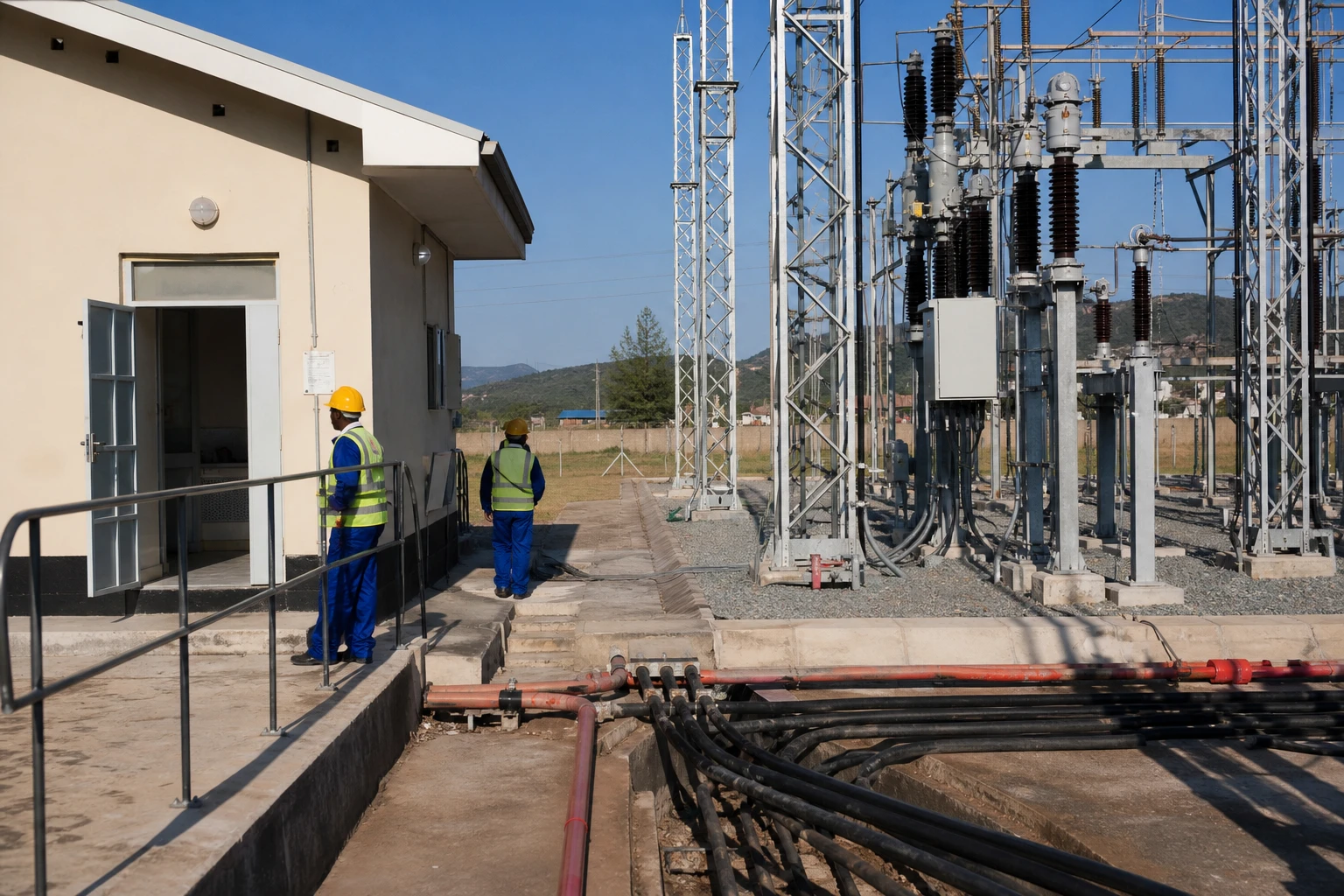
At Rufiji, electricity moves to a new scale
In Tanzania, a major infrastructure project is about more than engineering prowess. It also says something more tangible: a country’s ability to turn a river into an industrial engine, and a political promise into available electricity. The inauguration of the Julius Nyerere dam, in Rufiji District, Pwani Region, marks precisely this shift from a symbolic construction project to a strategic asset for Dodoma and the entire Tanzanian economy.
The project comes amid a regional environment in which energy has become a matter of sovereignty as well as growth. Tanzania is part of the East African Community, whose integration agenda is encouraging member states to connect their electricity grids more effectively and trade surplus power. At the same time, rising electricity needs are accompanying industrialisation, urbanisation and demographic pressure across the region.
What was inaugurated, and what it changes
Samia Suluhu Hassan officially inaugurated the Julius Nyerere hydropower plant on Saturday 22 August 2026. It is located on the Rufiji River. The site has nine turbines with a total capacity of 2,115 MW. According to publicly available information, all the turbines had already been connected to the grid by March 2025, and the facility is expected to generate about 6,307 GWh a year. Government communications presented its commissioning as a turning point for national energy security.
The project’s most striking feature is its scale. In August 2026, Tanzania’s total installed capacity was reported at 4,646 MW, while publicly cited peak demand stood at around 2,271 MW. Even using the most cautious figures, the dam adds a very substantial margin to the national system. In other words, a single facility provides power comparable to the country’s peak demand.
This scale explains the project’s change in status. Until now, Tanzania’s electricity supply had been constrained by more limited capacity, local outages and the need to expand the grid before fully benefiting from new generation facilities. With Julius Nyerere, the challenge shifts: it is no longer just about generating more power, but about transmitting it, securing substations and then distributing it to areas that remain poorly served.
The real challenge: the grid, access and industry
The plant is part of a National Energy Compact aimed at expanding access to electricity. The official document sets a target of increasing the connection rate from 46% in 2022 to 75% by 2030, with about 8.3 million additional connections. The government also wants to accelerate rural electrification and extend access in underserved areas. These targets were confirmed in World Bank public documents and cited by the International Energy Agency.
The access figure is crucial, because a giant power plant cannot by itself transform households’ daily lives. Cities, industrial zones and mines often benefit from new megawatts faster than remote villages. But if transmission lines keep pace, the impact could be broad: lower production costs for factories, better power for public services, expanded refrigeration for the agro-food sector and greater reliability for small businesses that depend on electricity from day to day. Tanzania’s presidency has also presented the facility as a boost for industry, mining, modern agriculture, trade and employment.
The dam also strengthens hydropower’s place in Tanzania’s energy mix. Public and industry sources indicate that hydropower now provides most of the country’s electricity, ahead of natural gas. Across the continent, this is a reminder that Africa’s energy transition is not limited to solar and wind. Hydropower remains capable of delivering several gigawatts of dispatchable electricity through a single project, a significant factor in systems facing rapidly rising demand.
A regional role for East Africa
For Dodoma, the stakes go beyond meeting domestic demand. Tanzania is also seeking to position itself in regional electricity trade. TANESCO says it is preparing the country to participate fully in the Eastern Africa Power Pool, the body that organises cooperation between East African grids. The idea is simple: countries with a surplus can export to those facing shortages, while interconnections stabilise their systems.
From this perspective, Julius Nyerere is more than a national dam. It can serve as a negotiating tool, an industrial lever and a source of revenue if transmission infrastructure and regional agreements follow. The Tanzanian government has already indicated that it sees the project as a basis for generating a surplus and integrating it more effectively into trade with neighbouring countries. The strategy fits the dynamics of the East African Community, where economic integration also depends on energy, logistics and industrial corridors.
The project is also a reminder of what it takes. Major African hydropower schemes require capital, time, tight governance and grids capable of absorbing the power they produce. Ethiopia’s Grand Ethiopian Renaissance Dam and Tanzania’s Julius Nyerere show how a single facility can change a country’s energy equation. But the real question now is how many households, workshops, schools and production units will actually see that electricity reach their sockets.