Algeria
 Egypt
 Libya
 Morocco
 Sudan
 Tunisia
 Benin
 Burkina Faso
 Cabo Verde
 Côte d'Ivoire
 Ghana
 Guinea
 Guinea-Bissau
 Liberia
 Mali
 Mauritania
 Niger
 Nigeria
 Senegal
 Sierra Leone
 The Gambia
 Togo
 Cameroon
 Central African Republic
 Chad
 DR Congo
 Equatorial Guinea
 Gabon
 Republic of the Congo
 São Tomé and Príncipe
 Burundi
 Comoros
 Djibouti
 Eritrea
 Ethiopia
 Kenya
 Madagascar
 Malawi
 Mauritius
 Mozambique
 Rwanda
 Seychelles
 Somalia
 South Sudan
 Tanzania
 Uganda
 Botswana
 Eswatini
 Lesotho
 Namibia
 South Africa
 Zambia
 Zimbabwe

Between Dar es Salaam, Dodoma and Luanda, the challenge is not simply to sign agreements. It is to turn longstanding political ties into connections, exchanges and services that benefit businesses and travellers alike.
Turning political ties into tangible exchanges
Tanzania, a member of the East African Community (EAC), looks towards the Indian Ocean and East African markets. Angola, a southern African country and member of the Southern African Development Community (SADC), draws on its Atlantic opening. Their closer ties therefore bring together two economic regions linked by transport corridors that are yet to be developed.
Relations between the two countries date back to the liberation struggles in southern Africa. Today, they are focused on economic sectors and institutional partnerships. Angolan President João Lourenço’s state visit to Tanzania from 28 to 30 October 2026 is part of this continuity, but also reflects a stated desire to give greater weight to trade.
This diplomatic momentum is not confined to the two countries. On 19 October, Angola and Namibia signed eight cooperation instruments in Luanda, covering tourism, fisheries, culture and cross-border exchanges, among other areas. These agreements illustrate governments’ growing interest in more operational African partnerships, although their impact will depend on the resources devoted to implementation.
Four agreements, details of implementation still to come
On 29 October, Tanzania and Angola signed four instruments covering air transport, information and communications technology, meteorology and the transfer of sentenced persons. The documents were signed by ministerial officials and specialist institutions from both countries during João Lourenço’s visit.
The air services agreement establishes a legal framework for cooperation between the two countries. It could facilitate direct links between Dar es Salaam and Luanda, but signing the agreement does not guarantee that flights will begin immediately or operate regularly. Decisions by airlines, demand and commercial conditions will be decisive.
In digital technology, the memorandum provides for exchanges of expertise and knowledge. It establishes a basis for cooperation without, at this stage, announcing a specific programme, budget or timetable. The benefits will therefore depend on the projects selected and their ability to bring together government departments, businesses and local expertise.
The meteorological component concerns measurement science and technical areas related to observations. Exchanges in this field can improve the practices and data used by public services. However, the information available does not yet set out how the agreement will be implemented.
Finally, the agreement on the transfer of sentenced persons establishes a framework for judicial cooperation. It provides that any transfers must comply with the terms of the agreement and applicable legal procedures. The mechanism concerns individual cases and does not mean that prisoners will be transferred automatically.
Bilateral trade remains modest
The low level of current trade highlights the gap between political ambitions and the existing economic relationship. According to Bank of Tanzania data for the 2024-2025 financial year, Tanzanian exports to Angola reached $4.7 million, compared with $100,000 in imports from the country. These figures cover the stated financial year, not the calendar year 2024 as a whole.
The amounts point to room for growth, but are not enough to establish which sectors might benefit. For businesses, simpler air links and better freight connections could reduce some obstacles. For travellers and professionals, a possible direct service would cut detours through hubs in other countries. But these gains remain conditional until services actually begin.
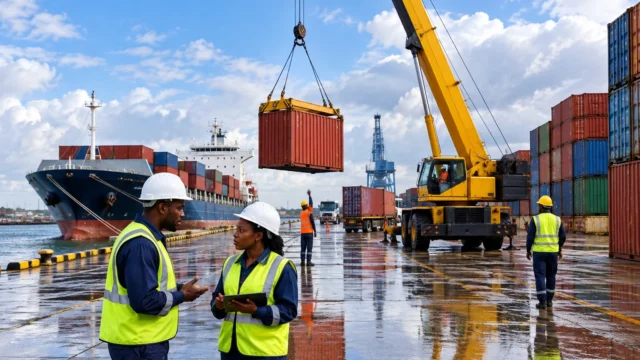
The rail cooperation discussed by the leaders carries a broader significance. The project would aim to connect the Benguela railway and the Lobito Corridor in Angola to Tanzania’s network, particularly the TAZARA line linking Tanzania and Zambia. A regional route would also involve the Democratic Republic of the Congo and Zambia. This connection remains a project: announcements specify neither an implementation timetable nor full funding.
Corridors that extend beyond bilateral ties
If realised, a continuous railway link between the Atlantic and Indian Ocean coasts could create new options for carriers and businesses in the countries along the route. It would form part of a landscape in which several states and partners are investing in logistics corridors, particularly to facilitate the movement of goods and access to ports. Coordination of networks, standards and investment will remain decisive.
The stakes are not the same for everyone. Central authorities may see it as a lever for integration and investment. Transport companies and exporters are looking for more predictable journey times. People in the cities and regions along the routes could benefit from economic activity and services, but only if projects include local connections and do not focus solely on the transit of goods.
The next step will therefore be less diplomatic than practical: defining responsibilities, funding studies and construction, and publishing verifiable deadlines. The four agreements establish a framework for cooperation between Luanda and Dodoma. Their economic impact will be measured by the services actually put in place, the volume of trade and tangible progress on the regional rail project.