Algeria
 Egypt
 Libya
 Morocco
 Sudan
 Tunisia
 Benin
 Burkina Faso
 Cabo Verde
 Côte d'Ivoire
 Ghana
 Guinea
 Guinea-Bissau
 Liberia
 Mali
 Mauritania
 Niger
 Nigeria
 Senegal
 Sierra Leone
 The Gambia
 Togo
 Cameroon
 Central African Republic
 Chad
 DR Congo
 Equatorial Guinea
 Gabon
 Republic of the Congo
 São Tomé and Príncipe
 Burundi
 Comoros
 Djibouti
 Eritrea
 Ethiopia
 Kenya
 Madagascar
 Malawi
 Mauritius
 Mozambique
 Rwanda
 Seychelles
 Somalia
 South Sudan
 Tanzania
 Uganda
 Angola
 Botswana
 Eswatini
 Lesotho
 Namibia
 South Africa
 Zambia
When a relationship story becomes a social issue
In Zimbabwe, marriage is not just a private matter. It touches on the law, money, women’s safety and the place society gives to consent. This also helps explain why a novel born in Harare can, years later, resonate far beyond the country’s borders.
In Zimbabwe, the legal framework distinguishes between civil marriage, which is monogamous, and customary marriage, which may be polygamous or potentially polygamous depending on the custom concerned. The law also stipulates that no person may be married under both civil and customary law at the same time. The debate is therefore not theoretical: it plays out in households, before the courts and in power relations between men and women.
Across the region, the issue resonates throughout Southern Africa. SADC has adopted a regional women’s economic empowerment programme for 2020-2030, noting that inequalities in access to resources, income and property remain entrenched across the region. Zimbabwe, for its part, has launched a national strategy to prevent and combat gender-based violence for 2023-2030.
A Zimbabwean author whose career was built on hard work, not luck
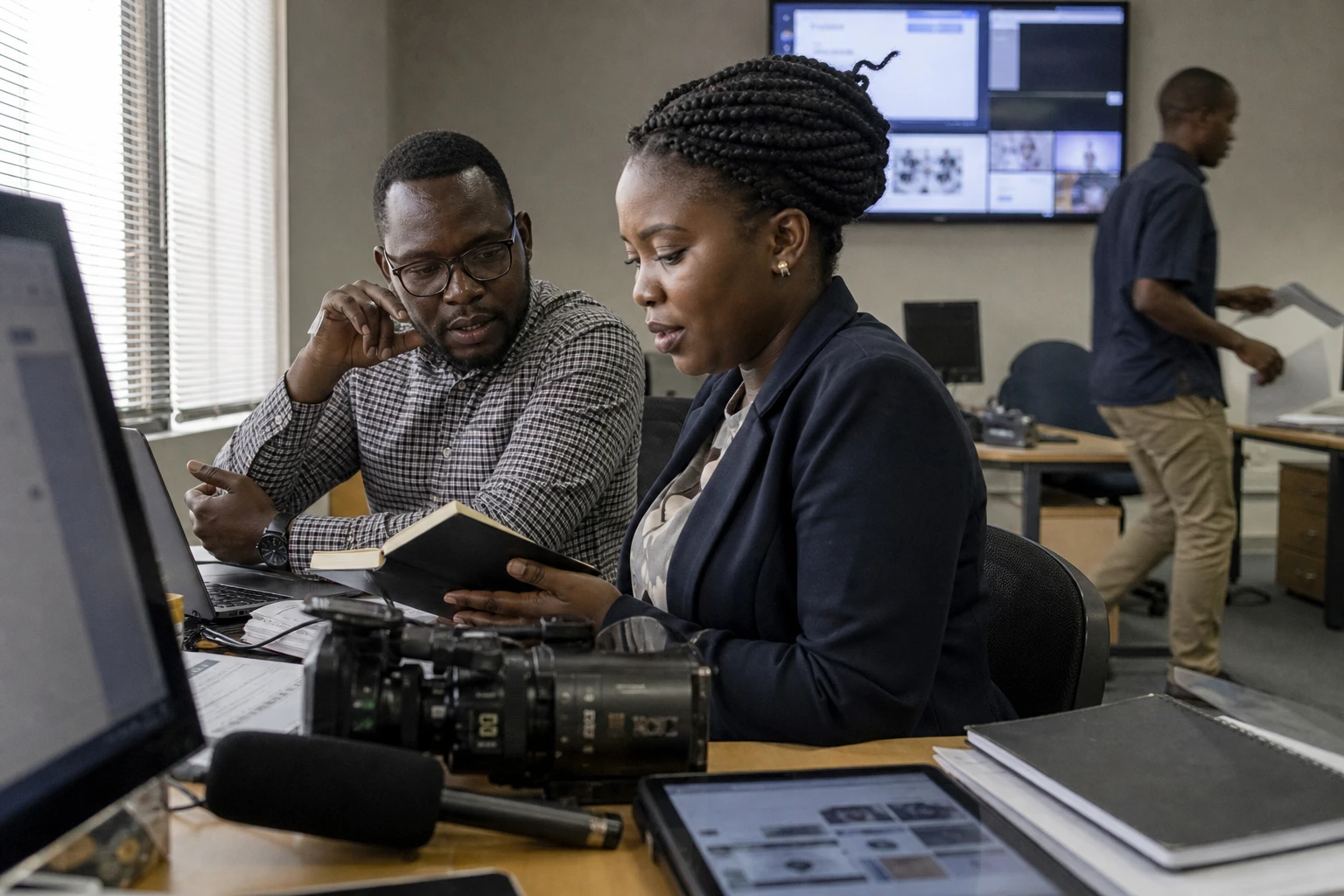
Sukoluhle “Sue” Nyathi, a Zimbabwean author born in Bulawayo, has built her career without an easy path. She studied finance at the National University of Science and Technology, then worked for several years in finance and investment. On her official website, she says she began writing after office hours, before publishing her first novel in 2012, after moving closer to a more dynamic publishing environment in South Africa.
That trajectory matters in understanding the story of The Polygamist. The book was published in 2012 and adapted into a South African series for Netflix in 2026. The platform says the series launched on 12 June, has 22 episodes and is based on a Zimbabwean novel by Sue Nyathi. Netflix also says the adaptation has achieved international success, with 27.6 million views and a place in the Top 10 in 62 countries.
This belated success says a great deal about the African book market. Production costs, distribution and circulation remain major obstacles. African Books Collective says print runs of 500 copies are still often the norm for debut authors, with production costs reaching several thousand dollars depending on the type of book. The challenge is therefore not just creativity. It is also logistical, financial and commercial.
Polygamy, consent and economic power
The heart of the story is not polygamy as a custom. It is its misuse. Sue Nyathi contrasts consensual polygamy, recognised under Zimbabwean customary law, with a modern form of male double life built on secrecy. In both the novel and the series, the central questions become simple and stark: who knows, who decides, who suffers?
This reading echoes realities that are well documented across the region. SADC acknowledges that women remain more exposed to poverty, unequal access to resources and discriminatory laws. In this context, financial dependence becomes a source of vulnerability. When a man controls the income, housing or family business, his wife’s room to negotiate shrinks.
HIV, too, remains an important backdrop to stories of this kind. UNAIDS maintains an active presence in Zimbabwe and closely monitors the country’s epidemiological situation. Without reducing public health to a romantic plotline, the issue is a reminder that a relationship marked by deception and an imbalance of power can also limit women’s ability to insist on protected sex or discuss prevention.
The novel thus becomes a social mirror. It is about wives, but also invisible labour, age gaps, economic dependence and that grey area where social norms protect lies more than women’s voices. In Southern Africa, this issue connects with public policies on gender-based violence, as well as wider debates on economic autonomy and equality in marriage.
Global visibility, but a local question remains
The adaptation’s success is not based on scandal alone. Netflix says the series has widened the book’s reach and boosted sales of several of Sue Nyathi’s titles. But the stakes for Zimbabwe are deeper. It shows that an author from the country can tell a local story, take it around the world and bring her characters into a global space dominated by other narratives.
There is also a broader cultural significance. The production was made in South Africa, in Zulu, with subtitles. This says something important: African stories travel better when they remain rooted in their languages, their bodies and their social codes. English opens doors, but it cannot replace the cultural depth carried by African languages.
For Zimbabwean women writers, the issue goes beyond the fame of a single author. It raises questions about access to a writing career in a country where creative work is often done alongside a salaried job, another source of income or outside support. Nyathi herself stresses the point: writing takes time, and time is expensive. This reality affects an entire generation of creators across the continent, not just Zimbabwe.
Ultimately, the story is a reminder of a simple truth: African stories lack neither complexity nor a market. What they often lack are distribution networks, patient funding and recognition at the right level. When these barriers fall, a book born in Bulawayo can become a continental conversation, then a global one, without losing its Zimbabwean roots.