Algeria
 Egypt
 Libya
 Morocco
 Tunisia
 Benin
 Burkina Faso
 Cabo Verde
 Côte d'Ivoire
 Ghana
 Guinea
 Guinea-Bissau
 Liberia
 Mali
 Mauritania
 Niger
 Nigeria
 Senegal
 Sierra Leone
 The Gambia
 Togo
 Cameroon
 Central African Republic
 Chad
 DR Congo
 Equatorial Guinea
 Gabon
 Republic of the Congo
 São Tomé and Príncipe
 Burundi
 Comoros
 Djibouti
 Eritrea
 Ethiopia
 Kenya
 Madagascar
 Malawi
 Mauritius
 Mozambique
 Rwanda
 Seychelles
 Somalia
 South Sudan
 Tanzania
 Uganda
 Angola
 Botswana
 Eswatini
 Lesotho
 Namibia
 South Africa
 Zambia
 Zimbabwe
In Paris, Sudanese cinema speaks out in wartime
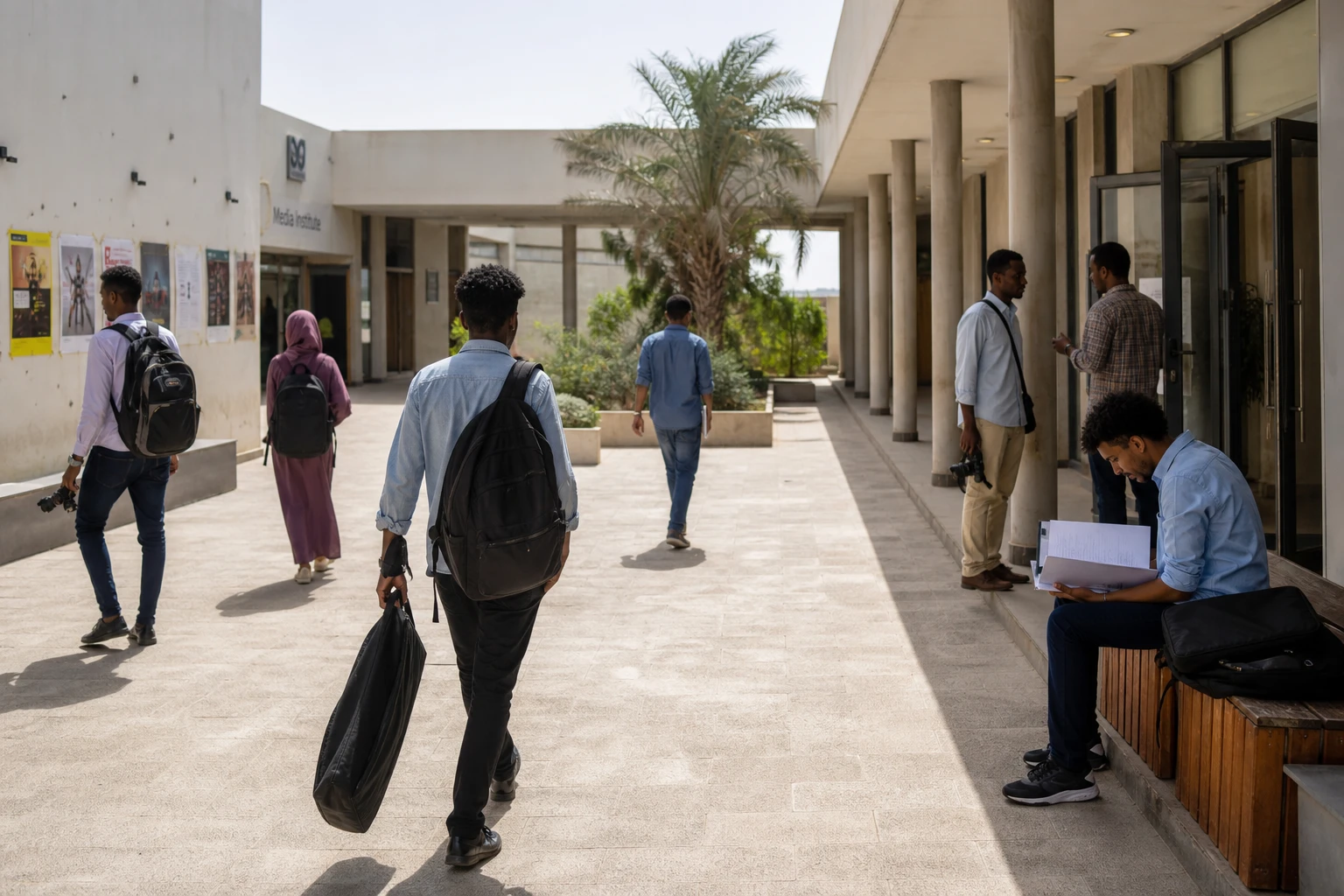
Sudanese cinema often gets by on limited means, but it has a strong sense of memory. In Paris, this creative work has a rare space in which to tell its stories beyond images of crisis. The Arkawit Festival, held from 2 to 6 September, puts films made in exile, stories of young people and the traces war leaves on ordinary lives at its heart.
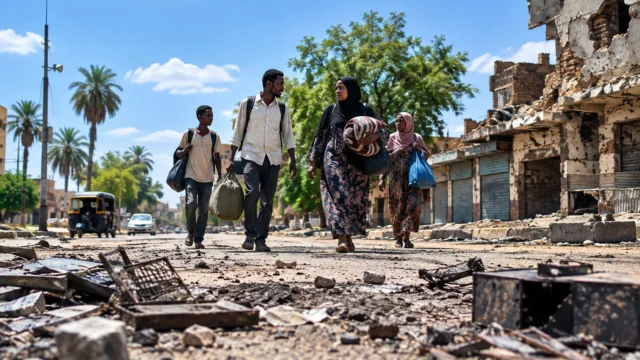
The choice is no coincidence. Sudan has been at war since April 2023, with fighting between the Sudanese Armed Forces and the Rapid Support Forces. The conflict has displaced millions of people within the country and across its borders. In this context, art is not an abstract refuge. It becomes a means of continuity and testimony, and sometimes of professional survival.
A Paris gathering, but a profoundly Sudanese subject
The festival forms part of a network of exchanges between Khartoum, Cairo and Paris. It is organised by an association dedicated to Sudanese culture, alongside researchers, filmmakers and cultural partners based in Sudan, France and Egypt. The organisers have chosen a format that captures the times: “exiles” and “commitments”. In other words, filming far from Khartoum does not mean filming at a distance from the country.
The programme resonates with a broader history. For decades, Sudanese cinema was held back by censorship, political isolation and the collapse of cinemas. The 1989 Islamist military coup marked a brutal turning point, shutting down an already fragile cultural space. Some filmmakers left the country. Others continued to work in the shadows.
To understand this return to the screen, it is also worth recalling that, before the current war, a generation of directors had already begun to revive filmmaking. Sudanese films appeared at international festivals after 2018, propelled by a surge of energy born of the popular uprising and then the fall of Omar al-Bashir. That revival was interrupted, then scattered, by the 2023 war.
Films made in exile, sometimes with almost nothing
A significant number of the works screened in Paris were produced after 2023. They are often made by young, self-taught directors, some of them in exile in Egypt or elsewhere. Many work with limited resources, but with a clear aim: to show what war does to bodies, children, families and social ties. The setting matters, of course. But the real subject remains the conflict’s impact on everyday life.
Filmmaker Shehab Satti, now based in Egypt, is part of this generation. After releasing his first experimental film in 2018, he is preparing a new short film in which the war is not shown directly, but through its effects on the characters, particularly the children. This choice says much about how contemporary Sudanese cinema approaches memory: indirectly, through rupture and displacement.
One idea recurs in the festival’s discussions: Sudanese creativity did not begin with the war, but it is being transformed under its pressure. This distinction matters. It avoids reducing Sudanese filmmakers to witnesses to catastrophe. Their work belongs to a longer history, shaped by struggles against censorship, collectives founded in Khartoum and the passing of knowledge between generations.
How war changes things for artists and the country
War destroys more than infrastructure. It also breaks up production networks, cinemas, archives, funding and routes for getting work seen. As Khartoum becomes harder to live in, the capital ceases to be the natural centre of creative work. Filming moves elsewhere. Editors work remotely. Screenings become itinerant. Exile thus becomes a way of making films, not merely a political consequence.
For Sudanese audiences, this shift has two sides. On the one hand, it takes works away from national cinemas, which were already fragile. On the other, it gives them new visibility. At festivals, Sudanese films reach audiences with little knowledge of the country’s cinematic history. This international profile can support careers, but it cannot replace a local ecosystem. Without cinemas, accessible archives and sustainable cultural policies, the revival remains incomplete.
The current war is also affecting Sudan’s place in its neighbourhood. The movement of displaced people towards Chad, Egypt, South Sudan, Ethiopia and Libya shows that the crisis extends beyond national borders. African and regional bodies, from the African Union to IGAD, have repeatedly called for an inclusive political solution, but the fragmentation on the ground makes an end to the war seem distant. In this context, culture becomes a space for regional continuity linking Sudanese people, exiles, researchers and African audiences in the diaspora.
A continental significance extending beyond the French capital
The Paris festival points to a wider reality: African cinema is often rebuilt from its margins, in exile and amid crises. The Sudanese case echoes that of other film industries long constrained by war, authoritarianism or a lack of infrastructure. But it also has its own distinctive character. In Khartoum, cinema was for a long time a place of urban social life, before becoming a site of cultural resistance.
What is happening in Paris, ultimately, is more than a week of screenings. It is about a country at war retaining a distinct artistic voice despite the dispersal of its creators. It is also a useful reminder for the continent: African cultural industries cannot be measured only by box-office takings or streaming platforms. They are also defined by how they survive political shocks, protect their stories and reinvent their forms. In Sudan, that struggle continues, from Khartoum to the cities of exile.