Algeria
 Egypt
 Libya
 Morocco
 Tunisia
 Benin
 Burkina Faso
 Cabo Verde
 Côte d'Ivoire
 Ghana
 Guinea
 Guinea-Bissau
 Liberia
 Mali
 Mauritania
 Niger
 Nigeria
 Senegal
 Sierra Leone
 The Gambia
 Togo
 Cameroon
 Central African Republic
 Chad
 DR Congo
 Equatorial Guinea
 Gabon
 Republic of the Congo
 São Tomé and Príncipe
 Burundi
 Comoros
 Djibouti
 Eritrea
 Ethiopia
 Kenya
 Madagascar
 Malawi
 Mauritius
 Mozambique
 Rwanda
 Seychelles
 Somalia
 South Sudan
 Tanzania
 Uganda
 Angola
 Botswana
 Eswatini
 Lesotho
 Namibia
 South Africa
 Zambia
 Zimbabwe
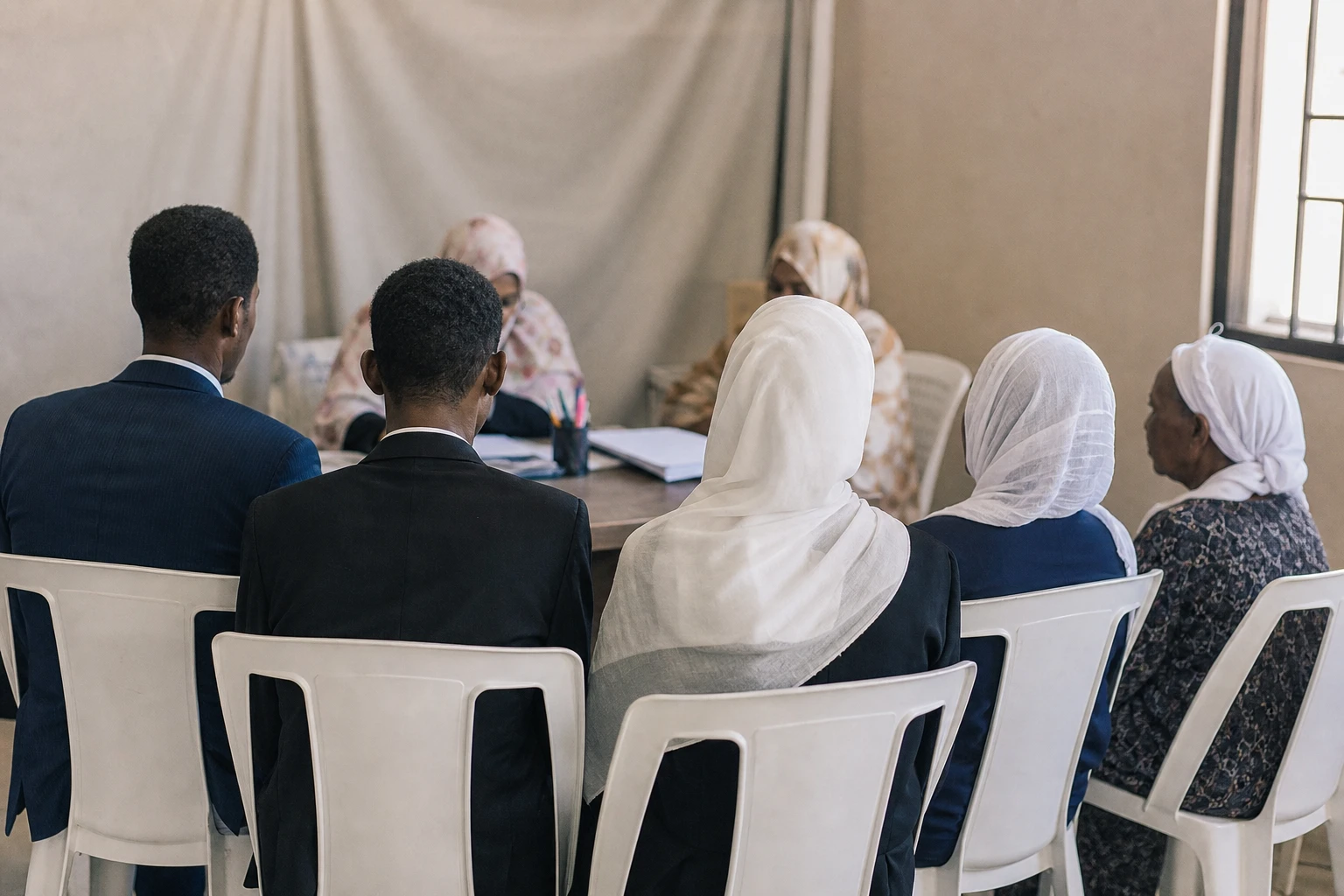
When a child is born without papers, their whole life can be put on hold
In Sudan, war is destroying not only homes and markets. It is also disrupting civil registration, the often overlooked link that allows a child to exist in the eyes of the authorities. Without a birth certificate, access to vaccination, school, healthcare and, later, official documents becomes more uncertain. In a country where birth registration was already fragile, war has turned this problem into a social emergency.
This reality is especially stark in Darfur, where mass displacement, the collapse of public services and the closure of administrative offices have left thousands of families without an easy solution. The conflict between the Sudanese army and the Rapid Support Forces, which began in April 2023, has worsened a situation already marked by insecurity, internal displacement and the breakdown of civil services.
In Darfur, war has also shut the door to civil registration
In western Sudan, el-Fasher was for a long time one of the army’s last major strongholds in Darfur. The city endured a prolonged siege, followed by intense fighting, before the Rapid Support Forces announced in October 2025 that they had taken control of the city. The United Nations and IGAD then warned of the risks faced by civilians who remained there or were forced to flee.
This context sheds light on the plight of children born in a war zone. When roads are cut off, hospitals lack staff and families cannot produce the required documents, registration becomes almost impossible. UNICEF points out that the Child Act of 2010 and the Civil Registry Act of 2011 provide for the registration of children, and that the lack of documents subsequently blocks access to basic rights.
In several parts of Sudan, births take place far from public facilities, sometimes at home and sometimes in makeshift centres for displaced people. Where civil services no longer function, even a simple hospital certificate may be unavailable. In Darfur, this problem is compounded by fear, displacement and the loss of administrative identity.
From forced pregnancies to an administrative void
The case of this 17-year-old Sudanese girl illustrates how sexual violence can continue to affect victims through paperwork. After fleeing the outskirts of el-Fasher with her family, she says she was abducted by armed men, held for two months in the Tabit area and repeatedly raped. Her child was later born in a humanitarian facility in Darfur, but eight months after the birth, it had still not been possible to register it. The essential details of her account could not be independently verified, but they reflect the documented reality of sexual violence in the conflict in Sudan.
The administrative blockage is tangible. Without the father’s identity, a police report or a complete file, the process can grind to a halt. UNICEF explains that in Sudan, families often have to prove the parents’ identities or go through lengthy procedures. In ordinary circumstances, this is burdensome. In wartime, it can become impossible.
The consequences extend well beyond early childhood. Without registration, a child may be excluded from vaccination, protection services and then school. Later, the same gap can make it difficult to obtain an identity card, passport or legal document. The problem is therefore not merely administrative. It affects public health, mobility and citizenship.
The law exists, but war is breaking the chain of protection
On paper, Sudan recognises a child’s right to an identity. UNICEF points out that national legislation provides for birth registration, including for children born outside marriage. But the same source also notes that a process dependent on a police report or the presence of institutions becomes highly vulnerable when civil registration offices close or are no longer accessible.
Protection workers on the ground describe another obstacle: stigma. Mothers of children born of rape are often reluctant to speak out. Some are themselves minors and therefore depend on a guardian to begin an official process. According to the Sudanese organisation cited in the sources consulted, the vast majority of cases it follows do not result in a formal complaint. This figure should be read as a field estimate, not as an exhaustive national statistic.
This gap between the law and reality is central. The law may provide for protection. War, however, breaks the offices, roads, registers and chain of evidence. In areas under military pressure, legal identity then becomes a privilege reserved for those who still have access to the authorities.
An issue for Sudan, but also for Africa
The situation in Sudan resonates far beyond Darfur. Across the continent, birth registration remains a major challenge. UNICEF points out that Africa is expected to account for a growing share of global births by 2050, making legal identity at birth even more crucial to children’s health, education and protection.
The conflict in Sudan also highlights the importance of regional mechanisms. IGAD, which is monitoring the crisis, recently called for an immediate ceasefire to protect civilians. The African Union and regional organisations are therefore not looking only at a military conflict: they are witnessing a collapse of civil order, with long-term effects on an entire generation.
In the months ahead, the challenge will not be only humanitarian. It will also be administrative and political. Reopening civil registration offices in accessible areas, securing maternity facilities, simplifying late registration and protecting victims of sexual violence are minimum conditions for preventing the war from creating legally invisible children. In Sudan, the battle for identity often begins before a child’s first birthday.