Algeria
 Egypt
 Libya
 Morocco
 Tunisia
 Benin
 Burkina Faso
 Cabo Verde
 Côte d'Ivoire
 Ghana
 Guinea
 Guinea-Bissau
 Liberia
 Mali
 Mauritania
 Niger
 Nigeria
 Senegal
 Sierra Leone
 The Gambia
 Togo
 Cameroon
 Central African Republic
 Chad
 DR Congo
 Equatorial Guinea
 Gabon
 Republic of the Congo
 São Tomé and Príncipe
 Burundi
 Comoros
 Djibouti
 Eritrea
 Ethiopia
 Kenya
 Madagascar
 Malawi
 Mauritius
 Mozambique
 Rwanda
 Seychelles
 Somalia
 South Sudan
 Tanzania
 Uganda
 Angola
 Botswana
 Eswatini
 Lesotho
 Namibia
 South Africa
 Zambia
 Zimbabwe
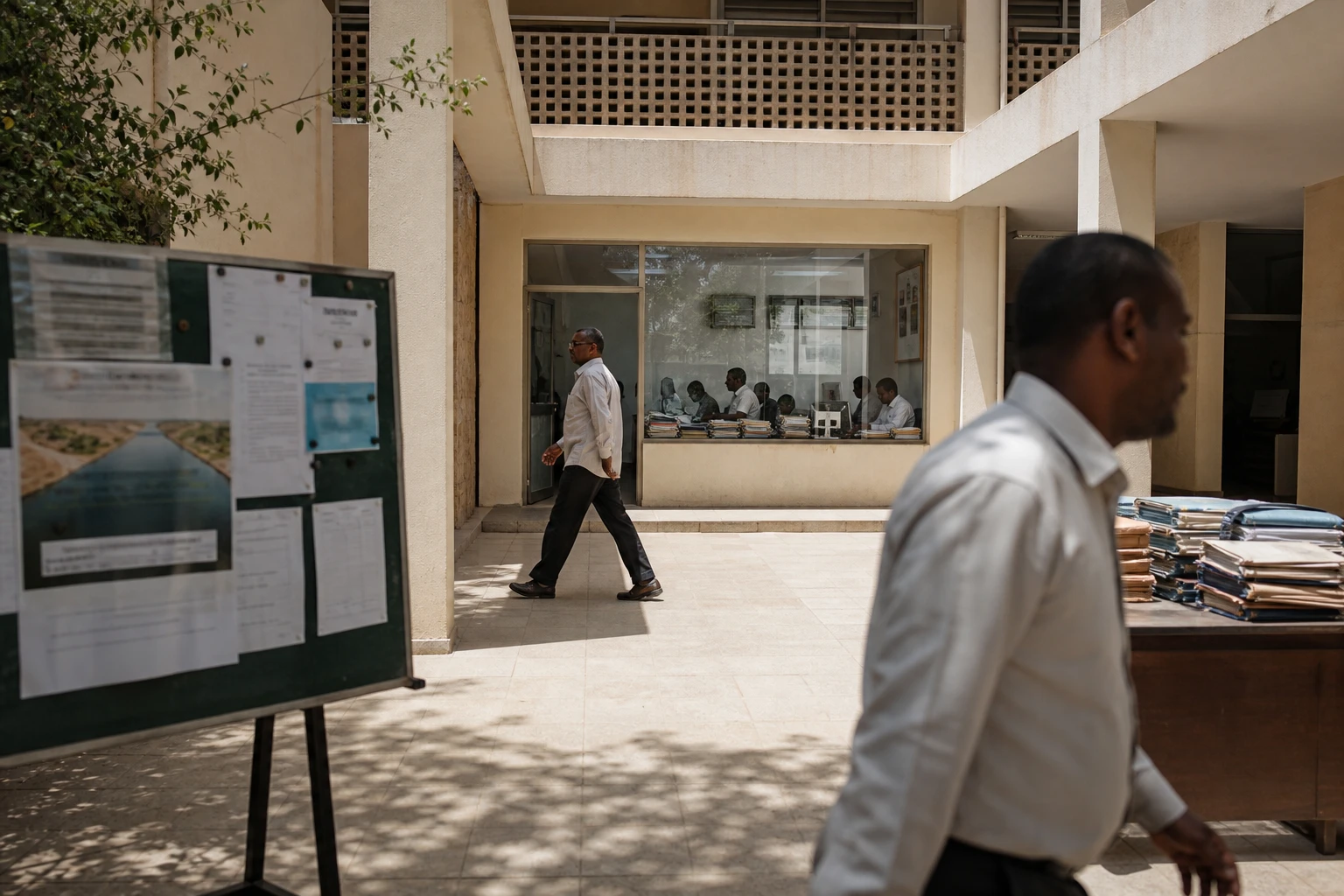
When an intimate tradition becomes an indicator of climate stress
In Sudan, henna is not used only to decorate a bride’s hands. It accompanies family rites, rites of passage and a social language passed down from one generation to the next. When water grows scarce, harvests struggle and roads are closed, these everyday practices are also put at risk. The country is facing a protracted war, an agricultural crisis and intense climate pressure at the same time, in a context where agriculture remains a pillar of subsistence for a large share of the population.
This cultural fragility points to something broader: in Sudan, the environmental crisis is not abstract. It can be seen in irrigation canals, markets, processing workshops and even beauty salons. UN agencies operating in the country describe an agricultural system under strain, with urgent needs for water, seeds, infrastructure and ways to build resilience to climate change.
A country already battered by war and drought
Since April 2023, Sudan has been destabilised by an armed conflict that has fractured trade networks, displaced millions of people and placed further strain on public services. In this landscape, agriculture remains one of the few economic buffers, but it is bearing the full force of insecurity, rising fuel costs, the breakdown of credit and difficulties accessing inputs. The FAO says that in 2026, around 19.5 million people could face acute food insecurity at phase 3 or worse, while 2025 cereal production is estimated to have fallen by 22% compared with 2024.
Wartime pressure is compounded by a climate that is harder to predict and more costly to manage. The FAO reports below-average rainfall prospects across much of the growing areas, with moisture deficits already worsening growing conditions in several agricultural states. A UN report on Sudan also ranks the country among those most vulnerable to climate change, with very limited capacity to prepare for shocks.
Henna, from fields to workshops and weddings
In this context, the henna supply chain feels the crisis at every stage. The plant needs regular water to grow properly. Yet growers in the north of the country say irrigation has become unpredictable, with water arriving at longer intervals and supply cuts occurring just when crops need it most. Canals, when damaged or poorly maintained, make the problem worse.
Processing and sales are also suffering. Logistical networks have been disrupted by the war. Exports and trade flows are finding it harder to use their usual routes, while costs are rising. The supply chain is therefore losing not only a raw material but also its economic organisation. Henna is no longer just a cultural practice; it is becoming a scarcer, more expensive product that is less reliably available.
For women, this strain has particular significance. Bridal henna remains a marker of beauty, identity and social belonging. In many Sudanese families, it is part of wedding preparations, as well as community gatherings where appearance is linked to the continuity of family lines and social respectability. When supplies shrink, an entire balance between household economics, cultural transmission and craft income is put at risk.
What the henna supply chain reveals about Sudan’s economy
The case of henna sheds light on a key point: in Sudan, climate change is not destroying only staple crops such as sorghum, millet and wheat. It is also weakening less visible value chains, often sustained by women and small family-run businesses. These activities support entire neighbourhoods, from rural areas to urban centres such as Khartoum and Omdurman, even though they rarely feature at the heart of economic policy.
Public responses are under way, but remain constrained. In 2026, the FAO and Sudanese authorities launched a programming framework for agricultural recovery, focusing on rehabilitating irrigation, value chains, the sustainable management of natural resources and climate adaptation. The UNDP, for its part, says it is supporting the resilience of rain-fed and pastoral farming systems through to 2027. These initiatives show that recovery also depends on water, soil and market networks, not just emergency aid.
But adaptation moves more slowly than destruction. As long as roads remain cut off in some regions, inputs are too expensive and population displacement disrupts trade, small supply chains remain vulnerable. Henna offers a clear illustration: the food crisis and the cultural crisis intersect in the same economic space.
A warning for North Africa and the Horn of Africa
The situation in Sudan goes beyond weddings and traditional cosmetics. It is a reminder that, in a region already exposed to water shocks, crops with great cultural value can disappear before they even vanish from agricultural statistics. This is a warning for North Africa and the Horn of Africa, where trade-offs between security, water, transport and local production are becoming increasingly difficult.
At the continental level, Sudan’s experience speaks to a question increasingly raised in the work of the African Union, humanitarian agencies and regional institutions: how can livelihoods be protected when war, droughts, floods and market fragmentation reinforce one another? In this landscape, Sudanese henna is no folkloric detail. It is a weak but valuable signal of how climate change is entering social life, the movement of goods and families’ dignity.
What happens next will depend not on one sector alone but on several interlinked areas of work: repairing canals, securing trade routes, supporting small processing businesses and protecting rural incomes. In Sudan, preserving a tradition now also depends on water management.