Algeria
 Egypt
 Libya
 Morocco
 Tunisia
 Benin
 Burkina Faso
 Cabo Verde
 Côte d'Ivoire
 Ghana
 Guinea
 Guinea-Bissau
 Liberia
 Mali
 Mauritania
 Niger
 Nigeria
 Senegal
 Sierra Leone
 The Gambia
 Togo
 Cameroon
 Central African Republic
 Chad
 DR Congo
 Equatorial Guinea
 Gabon
 Republic of the Congo
 São Tomé and Príncipe
 Burundi
 Comoros
 Djibouti
 Eritrea
 Ethiopia
 Kenya
 Madagascar
 Malawi
 Mauritius
 Mozambique
 Rwanda
 Seychelles
 Somalia
 South Sudan
 Tanzania
 Uganda
 Angola
 Botswana
 Eswatini
 Lesotho
 Namibia
 South Africa
 Zambia
 Zimbabwe
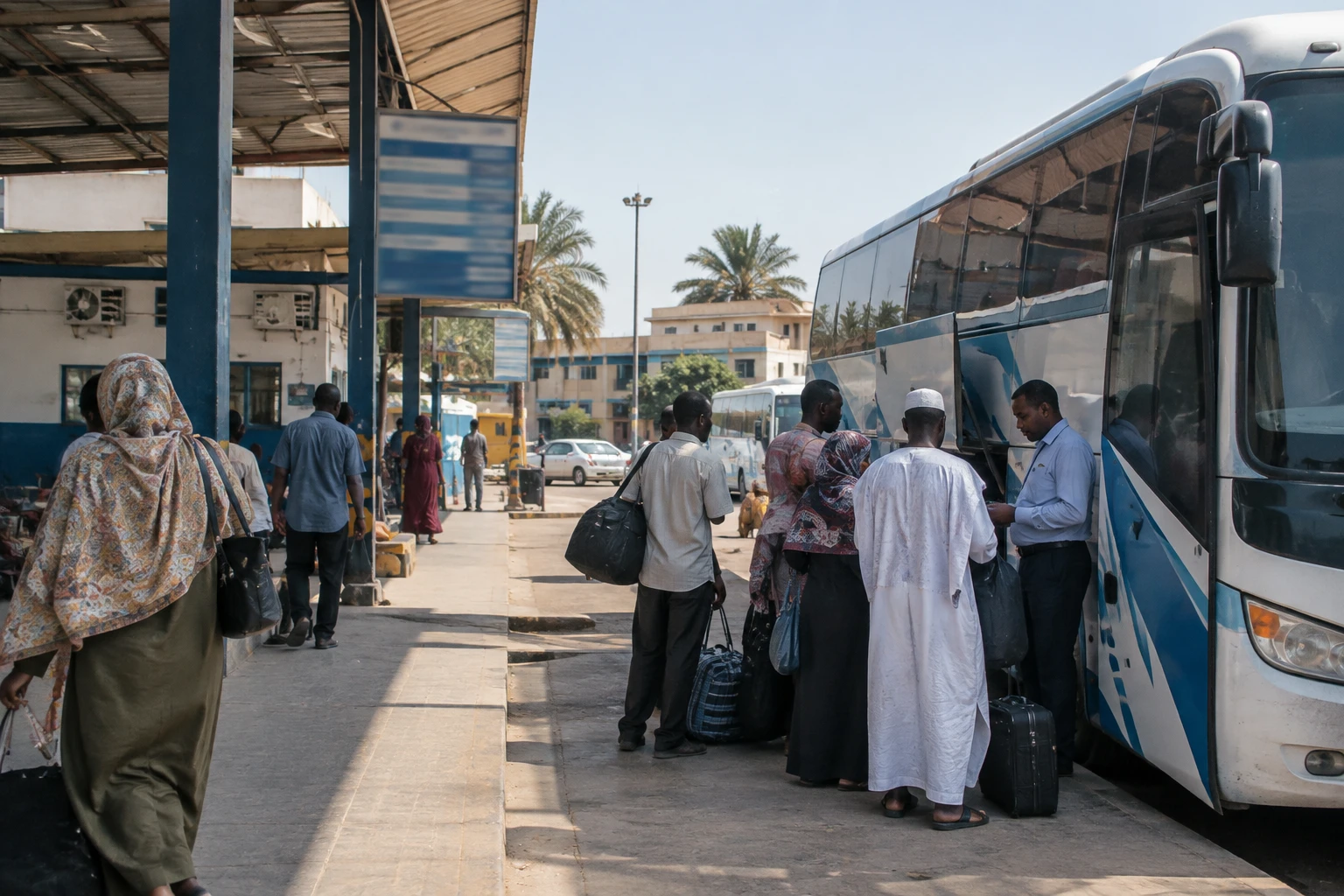
One year after El-Fasher fell, the danger is not limited to crimes already documented. Across several regions of Sudan, civilians remain exposed to fighting, forced displacement and impediments to aid. A coalition of states and partners is now warning of the risk of further large-scale atrocities.
A war spreading far beyond Darfur
Sudan’s conflict erupted on 15 April 2023, when the Sudanese Armed Forces and the Rapid Support Forces (RSF), a paramilitary force, clashed in Khartoum. The fighting spread to Darfur and other regions. It pits two armed forces once linked to the government against each other in a struggle for control of the state and territory.
El-Fasher, the capital of North Darfur, was the region’s last major centre still held by the Sudanese army and its allies. The city had endured about 18 months of siege. Its fall, announced by the RSF on 26 October 2025, shifted the balance of power in Darfur and prompted another exodus of civilians.
Sudan is also at the heart of a regional space where displacement and insecurity cross borders. Chad, South Sudan and Egypt are hosting people who have fled the war. IGAD, the cooperation organisation for countries in the Horn of Africa, and the African Union have called for civilians to be protected and aid facilitated. The region therefore cannot treat the crisis as a strictly domestic matter.
A warning on the anniversary
On 23 October 2026, members of the Coalition for Atrocity Prevention and Justice in Sudan issued a joint statement. As the first anniversary of the violence in El-Fasher approaches, they say the risk of further large-scale atrocities remains acute. They cite attacks on civilians and infrastructure, sexual violence, displacement and obstacles to humanitarian assistance.
The Coalition stresses that civilians must not be targeted and calls on the parties to the conflict to respect international humanitarian law. It also urges states to use their influence to protect the population and not to fuel the war with weapons, funding or other forms of support. This statement is a political warning; on its own, it does not constitute proof that a specific operation is imminent.
The atrocities committed during the capture of El-Fasher, by contrast, have been documented by separate investigations. In February 2026, the Office of the United Nations High Commissioner for Human Rights reported more than 6,000 deaths during the first three days of the offensive, based on interviews with more than 140 victims and witnesses. The actual toll could be higher. The Independent International Fact-Finding Mission for the Sudan, for its part, described evidence displaying the characteristics of a genocidal pattern targeting, among others, the Zaghawa and Fur communities. These are the investigators’ findings; they do not replace a judicial ruling.
Civilians pay the price of the siege
The siege narrowed opportunities to flee and to access food, healthcare and essential goods. After the city was taken, survivors also faced detention, violence and uncertainty over the fate of missing relatives. Humanitarian and rights organisations report that access to aid remains severely restricted, while tens of thousands of residents have left the city or its surroundings.
The consequences are not the same for everyone. Residents who remain depend on safe access to services and assistance. Displaced people must seek shelter and livelihoods, often far from their family networks. Women and girls are particularly exposed to sexual violence, while local Sudanese organisations documenting abuses and supporting survivors work in conditions of danger and scarcity.
The Coalition specifically highlights the role of these Sudanese organisations. Their work helps gather testimony and maintain contact with victims. Justice efforts must not be designed without them or without survivors. Confidentiality and access to medical, psychosocial and legal care for victims of sexual violence are also at stake.
Protection and justice: two linked fronts
Declarations alone are not enough to prevent further crimes. Aid corridors must be made workable, humanitarian workers protected, and monitoring mechanisms put in place to document violations. Investigations and the preservation of evidence also matter: they can help establish responsibility and curb impunity, without presuming individual guilt before due process.
International criminal justice is already pursuing work concerning Darfur, while the United Nations and the African Union have launched investigative efforts. The Coalition calls for these efforts to continue and for those responsible for serious violations to be held accountable. But the pursuit of justice faces an immediate difficulty: fighting, fragmented control of territory and access restrictions complicate the independent collection of evidence.
For the African Union and IGAD, the issue tests the ability of regional organisations to influence a war whose repercussions extend beyond Sudan. Diplomatic initiatives will have an impact only if they bring the parties closer to a cessation of hostilities and concretely guarantee access to civilians. The experience of El-Fasher also serves as a reminder of the cost of warnings ignored before an offensive.
The next development to watch is therefore as much diplomatic as humanitarian: the course of fighting in threatened areas, access for aid workers and cooperation with investigators. For Sudanese people, the urgent priority remains protection in their daily lives. For regional and international actors, the challenge is to turn the warning into verifiable measures, without allowing statements to substitute for a ceasefire or aid that people can actually access.