Algeria
 Egypt
 Libya
 Morocco
 Tunisia
 Benin
 Burkina Faso
 Cabo Verde
 Côte d'Ivoire
 Ghana
 Guinea
 Guinea-Bissau
 Liberia
 Mali
 Mauritania
 Niger
 Nigeria
 Senegal
 Sierra Leone
 The Gambia
 Togo
 Cameroon
 Central African Republic
 Chad
 DR Congo
 Equatorial Guinea
 Gabon
 Republic of the Congo
 São Tomé and Príncipe
 Burundi
 Comoros
 Djibouti
 Eritrea
 Ethiopia
 Kenya
 Madagascar
 Malawi
 Mauritius
 Mozambique
 Rwanda
 Seychelles
 Somalia
 South Sudan
 Tanzania
 Uganda
 Angola
 Botswana
 Eswatini
 Lesotho
 Namibia
 South Africa
 Zambia
 Zimbabwe
In West Darfur, every advance is measured less in kilometres than in supply lines
In Sudan, the battle is not being fought only in major cities. It is also shifting to secondary roads, desert tracks and localities that control access to a border, a depot or a retreat route. This is where the balance of power between the Sudanese Armed Forces and the Rapid Support Forces (RSF), the paramilitary group fighting the army since April 2023, is built or undone. In Darfur, this logic is decisive, because control of the territory determines the delivery of weapons, fuel and reinforcements.
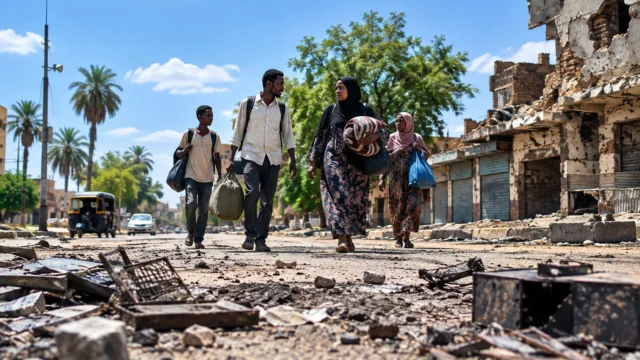
Darfur also remains one of the most sensitive theatres in a war that has fractured the country and displaced millions of people. Estimates by the UN and the AU put the number of internally displaced people at more than 8.6 million and refugees at more than 4 million in early 2026. In western Sudan, the immediate impact of the fighting can be seen in blocked roads, disrupted markets and cities gripped by fear.
Local counter-offensive north of El-Geneina
On 5 August, forces loyal to the Sudanese army said they had repelled an RSF attack in West Darfur, along the so-called Northern Front, in the areas of Bir Saliba and Hajar Marfa’in. Fighting also reportedly affected several neighbouring localities, according to the same sources. The attackers are said to have suffered losses, including that of a commander recently promoted to the rank of major general, described as one of the RSF’s most prominent field commanders in the area. This information had not been independently confirmed at the time of publication.
On the ground, the episode is part of a wider sequence. For several weeks, clashes have been concentrated north of El-Geneina, the capital of West Darfur, and around the town of Tiné, one of the few points in the region still held by the army. Regional observers and Sudanese media have also described a series of attacks and counter-attacks along the corridor linking Tiné, Kulbus and El-Geneina, a route useful for the movement of both fighters and goods.
In this sequence, Minni Arko Minnawi, governor of Darfur and head of the Sudan Liberation Movement/Army, which is allied with the army, described the fighting as a setback for the RSF. This, too, is an account from an interested party. But it reflects an important political fact: in Darfur, the army is not fighting alone. It relies on so-called joint forces, drawn from former movements that signed the 2020 Juba Agreement and have resumed a central military role since the return of open warfare.
A local front, but a networked war
West Darfur is not only a battlefield. It is also a logistical hub. The areas of Bir Saliba, Hajar Marfa’in, Kulbus and Tiné lie on roads used for both military movements and cross-border trade. When a position changes hands, it is not just a hill that falls. Often, it is a checkpoint, a supply corridor or room for manoeuvre that is lost.
This networked war also extends beyond Sudan’s borders. Several UN and open-source investigative sources describe the use of Libya as a transit hub for weapons, fuel and fighters linked to the RSF, via the Koufra area in south-eastern Libya. A report by the UN Panel of Experts on Libya, reported by the AP, confirmed in spring 2026 the role of this area in transfers to Sudan. Other investigations have also reported the resumption of activity at al-Koufra airport after runway works, as the site comes under scrutiny for its logistical role.
The effects are visible as far as Kordofan, the route linking Darfur to Khartoum. After setbacks in this area, the RSF is under pressure on several fronts at once. When the army and its allies strike convoys, disrupt supply routes or contest a border locality, they are seeking less to capture a city than to break the continuity of the opposing force’s operations. That is what makes every clash, even a limited one, strategic.
What this sequence says about Sudan today
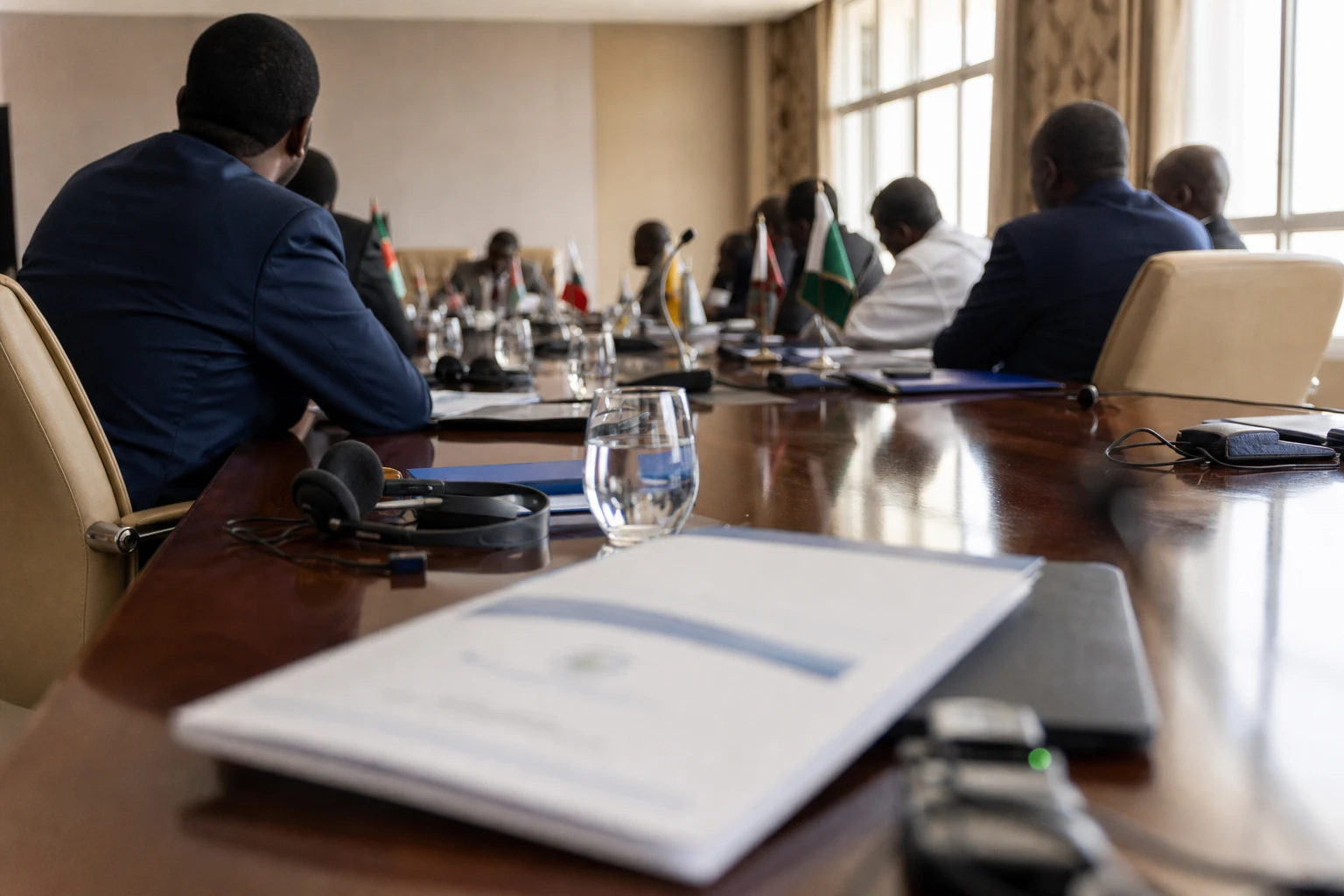
Sudan is entering a phase in which military and political lines overlap without merging. The country resumed full participation in IGAD, the East African organisation tasked with regional mediation, in February 2026. At the same time, the African Union and IGAD continue to call for an inclusive, Sudanese-led civilian process, as fighting spreads and institutions remain fragmented. The battle in West Darfur therefore carries weight in diplomacy as well as on the ground.
For residents, the stakes are tangible. In El-Geneina and neighbouring localities, every shift in control further undermines markets, access to healthcare and freedom of movement. Urban areas remain exposed to strikes and reprisals, while rural areas face blockades, requisitions and insecurity on the tracks. In a conflict with shifting fronts, the population pays the price of imposed military mobility.
Across the continent, the signal is clear. The conflict in Sudan continues to consume resources, reshape arms routes and disrupt the balance between the Horn of Africa, the eastern Sahel and the Saharan-Libyan coast. What is happening in West Darfur is therefore not simply a local episode. It is another piece in a protracted war, in which control of borderlands matters as much as the capture of capitals. That is precisely what makes the situation in Sudan so difficult to stabilise.