Algeria
 Egypt
 Libya
 Morocco
 Tunisia
 Benin
 Burkina Faso
 Cabo Verde
 Côte d'Ivoire
 Ghana
 Guinea
 Guinea-Bissau
 Liberia
 Mali
 Mauritania
 Niger
 Nigeria
 Senegal
 Sierra Leone
 The Gambia
 Togo
 Cameroon
 Central African Republic
 Chad
 DR Congo
 Equatorial Guinea
 Gabon
 Republic of the Congo
 São Tomé and Príncipe
 Burundi
 Comoros
 Djibouti
 Eritrea
 Ethiopia
 Kenya
 Madagascar
 Malawi
 Mauritius
 Mozambique
 Rwanda
 Seychelles
 Somalia
 South Sudan
 Tanzania
 Uganda
 Angola
 Botswana
 Eswatini
 Lesotho
 Namibia
 South Africa
 Zambia
 Zimbabwe
A road that is far more than a military route
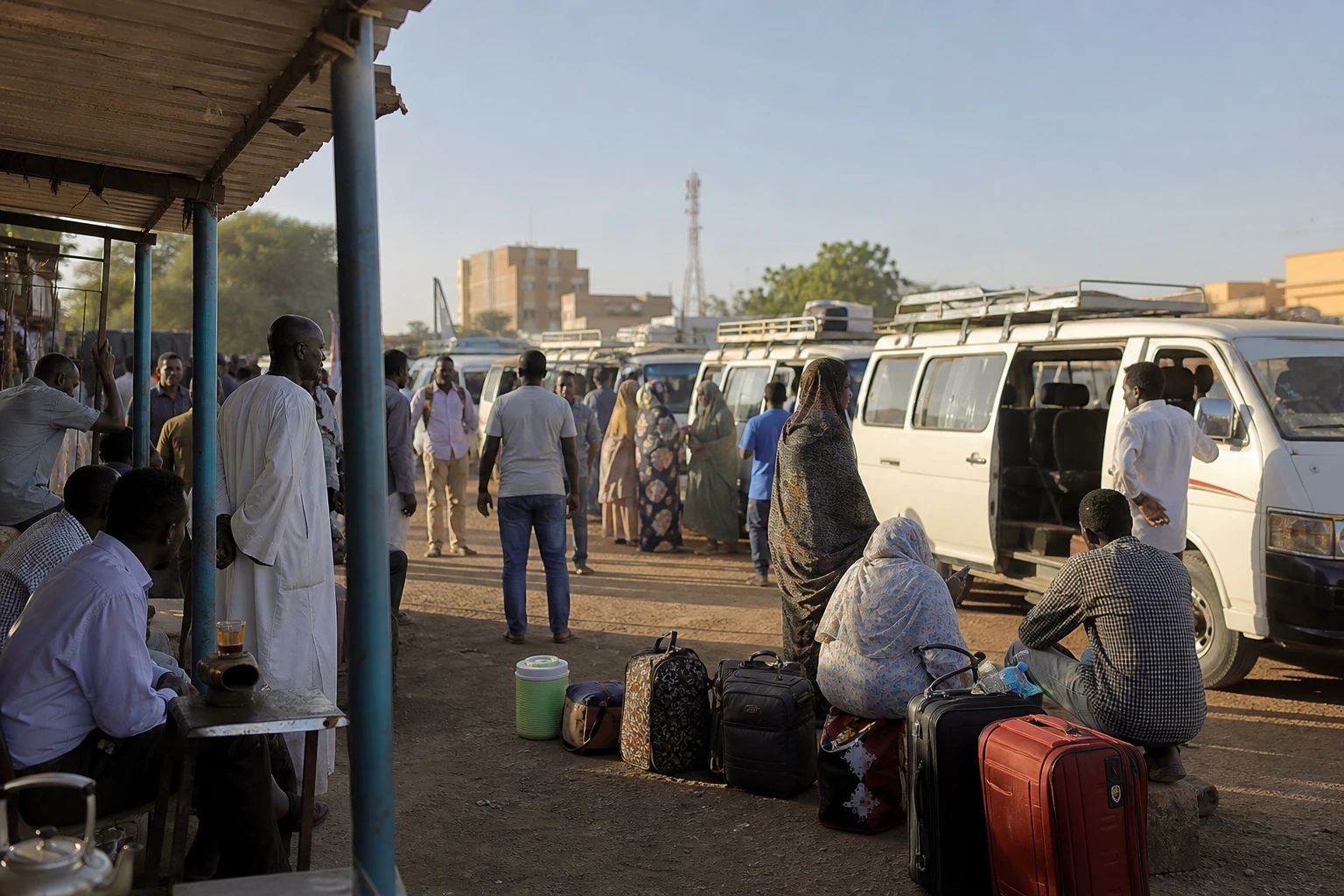
In El-Obeid, in North Kordofan, a road can determine the pace of an entire city. When the route linking Khartoum to this regional capital reopens, it is not only armoured vehicles that move forward or retreat. It also brings the very real hope of food, fuel and medicine returning, and of civilians being able to travel with somewhat less danger.
Sudan has been in open war since April 2023 between the Sudanese Armed Forces, led by General Abdel Fattah al-Burhan, and the Rapid Support Forces (RSF), a powerful paramilitary force. Since the conflict began, the front line has shifted with the balance of power, while Khartoum, Port Sudan and the country’s main central routes have become major strategic stakes.
Against this backdrop, El-Obeid plays a key role. The city links the centre of the country to Darfur and Kordofan, and remains a logistical hub for both the army and displaced people. The United Nations has described the city as an essential administrative, humanitarian and civilian hub, while UNICEF estimates that around 500,000 civilians are at risk in El-Obeid and its surroundings.
What the army says it has retaken
On Sunday 26 July 2026, the Sudanese army announced that it had retaken control of the main road linking Khartoum to El-Obeid. Military sources also reported the capture of Bara, Um Sayala, Jabra El Sheikh and neighbouring villages in North Kordofan, which would extend control over the so-called “Export Road” and loosen the encirclement of El-Obeid.
According to the same sources, the RSF retreated after intense fighting and left equipment behind. Media outlets covering the operations describe the advance as a significant tactical gain for the army, particularly because it consolidates its supply line to El-Obeid and reduces the paramilitaries’ ability to threaten the city from the west and north.
The timeline underscores the importance of the announcement. For several weeks, reports had described a de facto siege around El-Obeid, with drone attacks, bombardments and restrictions on roads out of the city. In late June, a Yale report had already noted a dense defensive network around the city, while the UN warned of an increase in strikes and the gradual isolation of routes.
A military gain, but no end to the crisis
On the ground, retaking a road does not end the war. It does, however, change the geography of fear. For the army, control of the Khartoum–El-Obeid road secures a vital line to Kordofan, facilitates the movement of people and goods, and consolidates its presence in the centre of the country. For the RSF, losing the route makes it harder to encircle El-Obeid and reduces its ability to threaten the rear of the military position.
For residents, the benefits will depend on how long control lasts and on security around the road. In early July, UNICEF reported that attacks around El-Obeid had already killed at least 35 children in North Kordofan since May, and that strikes had damaged homes, schools, health centres, water networks and markets. The same statement cited a risk to around 500,000 civilians in the area.
The overall figures also underline the scale of the national tragedy. The World Health Organization estimates that 13.6 million people had been displaced inside and outside Sudan by early 2026, while UNICEF and WHO describe a massive health and food crisis, with millions of people deprived of healthcare, schooling and safe drinking water. Estimates of the death toll vary widely by source, requiring caution and attribution; several international media outlets report figures ranging from tens of thousands to several hundred thousand since April 2023.
In this context, the Khartoum–El-Obeid route is not merely a military corridor. It is an economic artery. It determines the delivery of fuel, flour, medicine and goods to central Kordofan. It also affects local prices, already pushed up by blockades and attacks on fuel depots, petrol stations and basic infrastructure.
A signal for Sudan, Kordofan and the region
The advance comes as international pressure over El-Obeid has intensified. In early July, the Office of the United Nations High Commissioner for Human Rights warned of the risk of atrocities in and around the city. A few days earlier, the G7 and the European Union had called for an end to the violence and for humanitarian access to be opened. These warnings show that El-Obeid’s fate extends beyond a local front.
The continental implications are clear. Sudan is not just an internal crisis. It affects humanitarian corridors in the Horn of Africa, refugee flows to neighbouring countries and security in the Red Sea, where Port Sudan remains an institutional anchor for the government camp. Within the country, the balance of power remains fragmented: the army controls Khartoum and parts of the north, centre and east, while the RSF holds large areas of Darfur and remains present in some parts of Kordofan and Blue Nile.
The outcome will therefore depend less on a single road than on the two sides’ ability to impose their logistics, governance and access to the population over the long term. If the army consolidates this corridor, it gains leverage towards the country’s centre-west. If the RSF contests it again, El-Obeid will remain a city under pressure, with its residents caught between sieges, drones and shortages. For Sudan, the battle for roads is also a battle for the survival of civilian life.