Algeria
 Egypt
 Libya
 Morocco
 Sudan
 Tunisia
 Benin
 Cabo Verde
 Côte d'Ivoire
 Ghana
 Guinea
 Guinea-Bissau
 Liberia
 Mali
 Mauritania
 Niger
 Nigeria
 Senegal
 Sierra Leone
 The Gambia
 Togo
 Cameroon
 Central African Republic
 Chad
 DR Congo
 Equatorial Guinea
 Gabon
 Republic of the Congo
 São Tomé and Príncipe
 Burundi
 Comoros
 Djibouti
 Eritrea
 Ethiopia
 Kenya
 Madagascar
 Malawi
 Mauritius
 Mozambique
 Rwanda
 Seychelles
 Somalia
 South Sudan
 Tanzania
 Uganda
 Angola
 Botswana
 Eswatini
 Lesotho
 Namibia
 South Africa
 Zambia
 Zimbabwe
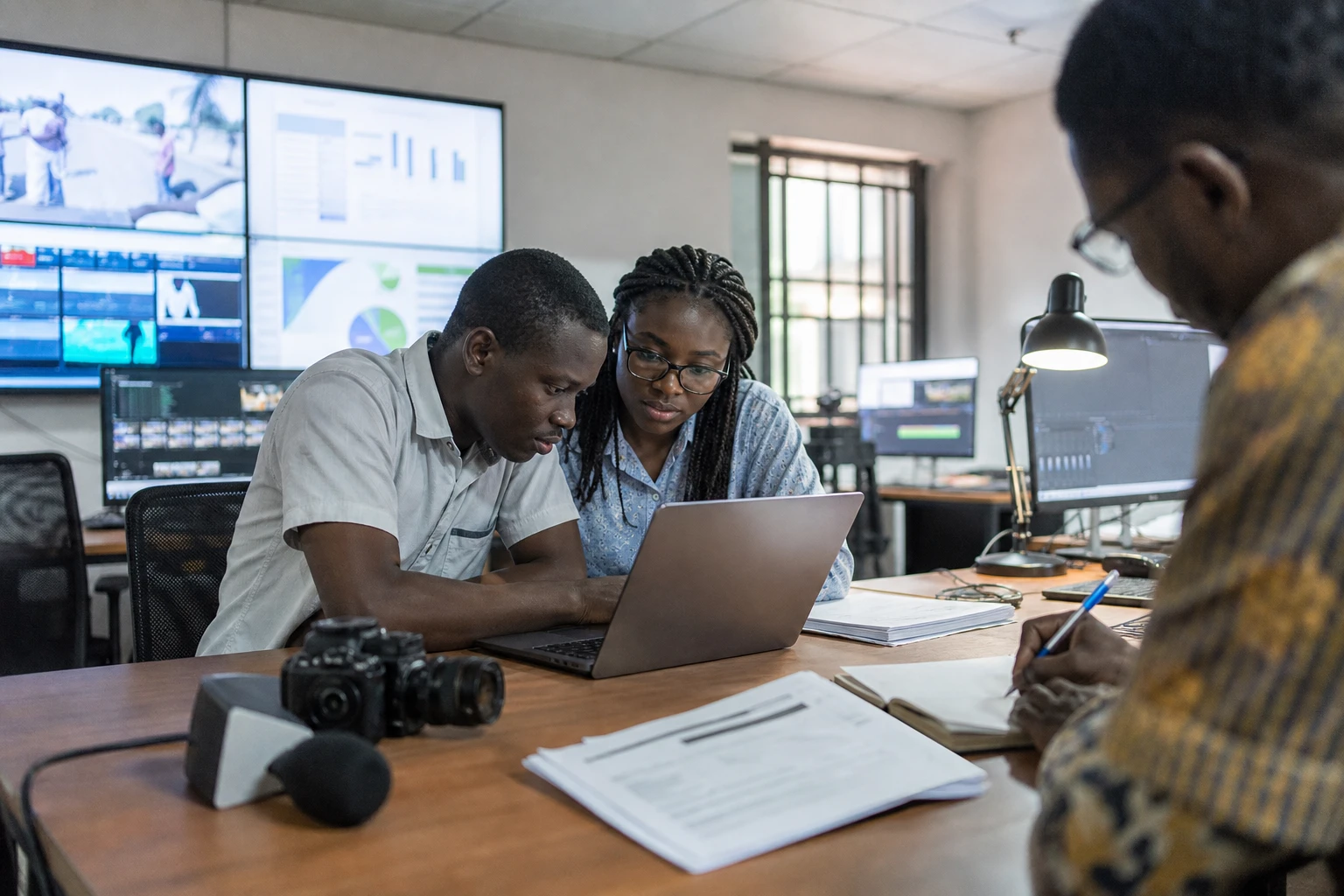
Ouagadougou at the crossroads of talent and capital
In Ouagadougou, ideas move faster than capital. That is both the promise and the limitation of the meetings taking place around the Sahal Tech Innovation Challenge 2026: to move Burkinabè and African projects beyond the demonstration stage and bring them closer to investors able to turn them into sustainable businesses. The arrival of a Qatari delegation adds a clear economic dimension: innovation is no longer happening only in laboratories; it is also being negotiated in meeting rooms.
Burkina Faso has been advancing this digital agenda for several months. The ministry responsible for the digital transition says it is leading the implementation of public policy on the digital economy, while a national workshop on artificial intelligence was opened in Ouagadougou in August 2025 to prepare an action plan dedicated to the technology. In this context, a startup competition is not merely a showcase event. It is part of a broader digital sovereignty strategy, at a time when countries in the sub-region are seeking to retain more value locally.
A competition, a market, economic diplomacy
STIC’26 was launched in Burkina Faso with an explicit ambition: to foster the development of artificial intelligence-based solutions in agriculture, health, education and finance. The event attracted more than 600 projects from 23 African countries, according to the organisers, and the finals are scheduled to take place in Ouagadougou on 22 August 2026. This growing scale gives the competition a continental reach. It shows that African innovation is not confined to one country or one sector, but responds to shared needs: producing more efficiently, providing faster healthcare, educating more people and making finance more accessible.
The Qatari delegation is led by Dr Mohamed bin Jawhar al-Mohamed, identified by the Qatar Chamber of Commerce as one of its board members. His presence in Ouagadougou gives the event an economic diplomacy dimension. Qatar strengthened its strategy to support startup ecosystems in 2026, announcing in Doha a $2bn expansion of its Fund of Funds programme at Web Summit Qatar 2026. For the Burkinabè organisers, the aim is clear: to attract partners who do not come merely to watch, but to fund, support and open doors.
Several international investors are expected in Ouagadougou, from the Arab world, Europe, the United States and China. The figure should be treated with caution until actual commitments are made public, but it already says something about the moment: African startups are now attracting capital looking for less saturated markets. The competition is therefore becoming a networking platform as much as a pitch contest.
What the arrival of foreign investors really changes
For young Burkinabè businesses, the question is not simply whether they can convince a jury. It is whether they can clear the most difficult hurdle: seed funding, followed by the ability to turn a good idea into a recurring service, jobs and revenue. Across the continent, available data show that capital remains concentrated in a handful of major markets. In 2025, analyses published by industry players confirmed that most funding continued to flow to a small group of countries already highly visible to investors. This leaves many ecosystems, including those in the Sahel, seeking visibility and patient capital.
Burkina Faso is trying to close this gap. The Sahal Tech Smart Innovation Hub, inaugurated in Ouagadougou in spring 2026, offers training in AI, cybersecurity, digital health, fintech and smart agriculture. The objective is clear: to prepare technical talent capable of developing products locally that are suited to the realities of Burkina Faso. This matters in cities, where digital services can accelerate uptake, but also in rural areas, where AI can help improve the monitoring of crops, health and access to education.
The issue also has a regional dimension. Burkina Faso remains engaged in West Africa, even though recent political realignments have weakened several frameworks for co-operation. ECOWAS continues to support youth and women’s entrepreneurship through dedicated programmes, showing that innovation has become a development lever in the sub-region. In Ouagadougou, the presence of investors from the Gulf, China and Europe does not replace African markets; it can, however, provide useful pathways for startups seeking to grow beyond their country of origin.
A development to watch beyond the weekend
The true measure of STIC’26 will not be the awards ceremony, but what happens in the weeks that follow. Should funding announcements, partnership agreements or incubation placements be expected? That is where the event’s credibility will be tested. If Burkinabè projects gain genuine access to capital, Ouagadougou will have sent a strong signal: West Africa can develop solutions, build them into businesses and sell them. Otherwise, the event will remain useful as a platform, but insufficient as an economic accelerator.
For Burkina Faso, the stakes go beyond a competition. They concern the country’s place in Africa’s new digital economy, its ability to retain its talent and its capacity to turn technological ambition into a productive base. In a region where capital is still hesitant, every meeting between innovators and investors matters. In Ouagadougou, the message is clear: innovation must no longer simply be celebrated; it must be funded, tested and strengthened.