Algeria
 Egypt
 Libya
 Morocco
 Sudan
 Tunisia
 Benin
 Burkina Faso
 Cabo Verde
 Côte d'Ivoire
 Ghana
 Guinea
 Guinea-Bissau
 Liberia
 Mali
 Mauritania
 Niger
 Nigeria
 Senegal
 Sierra Leone
 The Gambia
 Togo
 Cameroon
 Central African Republic
 Chad
 DR Congo
 Equatorial Guinea
 Gabon
 Republic of the Congo
 São Tomé and Príncipe
 Burundi
 Comoros
 Djibouti
 Eritrea
 Ethiopia
 Kenya
 Madagascar
 Malawi
 Mauritius
 Mozambique
 Rwanda
 Seychelles
 Somalia
 Tanzania
 Uganda
 Angola
 Botswana
 Eswatini
 Lesotho
 Namibia
 South Africa
 Zambia
 Zimbabwe
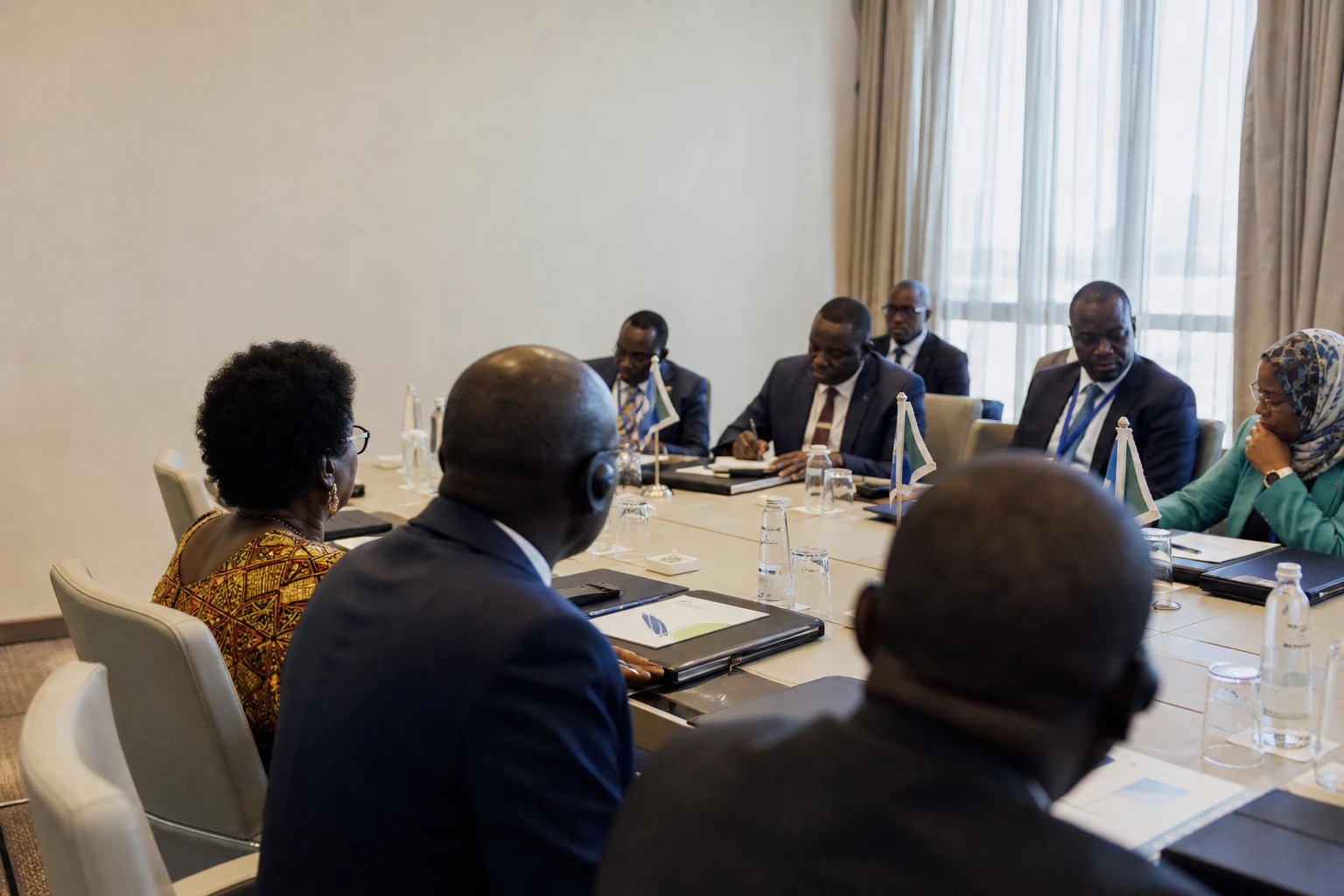
In Juba, international pressure is now focused on a dual imperative: protecting South Sudan’s population and preventing humanitarian aid from being further obstructed by violence, administrative restrictions and a lack of funding. Washington’s message comes as nearly two-thirds of the population could need assistance in 2026.
A national crisis compounded by regional tensions
South Sudan remains marked by the incomplete implementation of the 2018 peace agreement. The deal was intended to establish power-sharing between President Salva Kiir and Vice-President Riek Machar, while also reunifying the armed forces. Several provisions have, however, been delayed, while local clashes continue to undermine the states of Jonglei, Unity and Upper Nile.
The political instability has been compounded by the effects of the war in neighbouring Sudan, which began in April 2023. More than 1.3 million people have crossed the border into South Sudan, according to the United Nations. They include Sudanese refugees, as well as South Sudanese returning to a country with limited means to receive them.
The country is a member of the Intergovernmental Authority on Development, or IGAD, an East African regional organisation involved in mediating crises and coordinating cross-border responses. The situation in South Sudan cannot therefore be separated from the dynamics affecting Sudan, Ethiopia, Uganda and Kenya.
Washington takes a tougher line with Juba’s authorities
In a statement issued on Sunday 20 September 2026, the US State Department’s Bureau of African Affairs called on South Sudanese authorities to act swiftly on humanitarian issues. The message, described as particularly forceful, raised the possibility of sanctions if no concrete improvement is recorded.
The threat is aimed in particular at impediments to humanitarian access, the protection of aid workers and accountability for those involved in violence. It comes as aid organisations report attacks on their staff, vehicles and medical facilities.
The United States remains one of the leading providers of aid to South Sudan. Its position therefore combines diplomatic and financial leverage. It could increase pressure on political and military leaders. It also risks complicating dialogue if it is seen as a measure directed at the state rather than at specific individuals or entities.
The exact nature of the sanctions mentioned was not specified in the available material. They could target officials, travel restrictions or assets, but any concrete announcement should be verified against an official US instrument before being treated as confirmed.
Ten million people in need of humanitarian assistance
The United Nations estimates that about 10 million people, or nearly two-thirds of South Sudan’s population, will need humanitarian assistance in 2026. The figure includes people facing displacement, food insecurity, disease, flooding and the effects of the war in Sudan.
This estimate does not mean that all these people face the same circumstances. In rural areas, communities depend more heavily on crops, livestock and local markets. In cities, rising prices and low incomes are hitting households that are not always registered as displaced but remain vulnerable to hunger and disruptions to services.
Funding is another obstacle. The United Nations’ 2026 humanitarian plan sets out a $1.5 billion budget to provide life-saving assistance to 4.3 million people. Agencies are seeking to raise $1 billion as a priority, to reach about 4 million beneficiaries. The gap between identified needs and available resources is already forcing organisations to prioritise their interventions.
UNICEF, for its part, estimates that 9.3 million people, including 5 million children, are affected by the protracted crisis. The risks include malnutrition, water-borne diseases, access to education and child protection. Attacks on health centres and difficulties transporting supplies compound these vulnerabilities.
Humanitarian access has become a political issue
In several regions, aid is lacking not only because of insufficient donations. It is also delayed by insecurity, roadblocks, administrative authorisations and fighting. South Sudanese aid workers are particularly exposed, as they carry out a large share of operations in hard-to-reach areas.
In August 2026, the Associated Press, citing the United Nations humanitarian co-ordinator, reported that at least 36 aid workers and contractors had been killed since the start of the year. More than 450 incidents targeting humanitarian staff or equipment were reportedly recorded between January and July. These figures illustrate the deterioration in the operating environment.
For Juba’s authorities, the response is therefore not simply a matter of asking donors for more money. It means ensuring the safety of convoys, punishing attacks on staff and facilitating the movement of teams. It also requires restoring public services capable of gradually taking over from emergency aid.
For the population, the stakes are immediate. An impassable road can delay a food delivery. A refused authorisation can prevent the evacuation of a patient. An attack on a health centre can deprive an entire region of care for several weeks.
What happens next will hinge on peace, aid and accountability
US pressure comes at a time when South Sudan must maintain the peace agreement, manage the arrival of people from Sudan and prepare for the next stage of its political transition. The authorities and signatories will have to show that the commitments made in Juba can deliver results in the hardest-hit states.
IGAD, the United Nations and the African Union are closely monitoring this trajectory. A worsening of violence in South Sudan would weigh on neighbouring countries, which are already facing forced displacement and limited humanitarian resources. Conversely, improved humanitarian access would strengthen stability across the Nile Valley and the Great Lakes region.
The next indicators will be tangible: the opening of humanitarian routes, effective protection for aid workers, funding for operations and respect for peace commitments. Without progress on these four fronts, the threat of sanctions will be just another episode in a crisis in which people are above all waiting for accessible services and lasting security.