Algeria
 Egypt
 Libya
 Morocco
 Sudan
 Tunisia
 Benin
 Burkina Faso
 Cabo Verde
 Côte d'Ivoire
 Ghana
 Guinea
 Guinea-Bissau
 Liberia
 Mali
 Mauritania
 Niger
 Nigeria
 Senegal
 Sierra Leone
 The Gambia
 Togo
 Cameroon
 Central African Republic
 Chad
 DR Congo
 Equatorial Guinea
 Gabon
 Republic of the Congo
 São Tomé and Príncipe
 Burundi
 Comoros
 Djibouti
 Eritrea
 Ethiopia
 Kenya
 Madagascar
 Malawi
 Mauritius
 Mozambique
 Rwanda
 Seychelles
 Somalia
 Tanzania
 Uganda
 Angola
 Botswana
 Eswatini
 Lesotho
 Namibia
 South Africa
 Zambia
 Zimbabwe
In Juba, the central bank is as much a political post as an economic one
In South Sudan, the seat of monetary policy tells more than the story of prices and the currency. It also reflects the balance of power at the top of the state. When the government changes the governor of the Bank of South Sudan in Juba, it pulls a sensitive lever: confidence in a banking system already weakened by cash shortages and a fragile currency. The Constitution provides for a central bank with a degree of independence, whose governor is appointed by the president and approved by the Transitional National Assembly, but political practice often follows a different rhythm.
The country is also part of the East African Community, which it joined in 2016, and IGAD, the regional organisation in East Africa that regularly supports its peace and integration efforts. This matters because Juba’s decisions on interest rates, currency and payments now reach beyond national borders. They affect trade with Uganda, Kenya and Ethiopia and, more broadly, the financial credibility of a state still seeking to stabilise its economic framework.
Salva Kiir’s decree and Addis Ababa Othow’s return
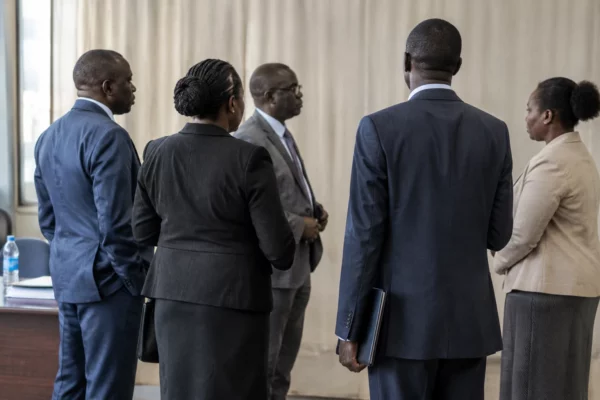
On 10 June 2025, President Salva Kiir dismissed Johnny Ohisa Damian as governor of the Bank of South Sudan without giving a public reason. The decree, read out on state television, appointed Addis Ababa Othow, then first deputy governor, in his place. The move was no mere footnote. It forms part of a series of rapid reshuffles in the country’s key ministries and financial institutions.
Addis Ababa Othow’s return to the top of the central bank was not a first. The senior official had held the post before, illustrating the limited circulation of trusted figures within South Sudan’s economic apparatus. Just days before his dismissal, Johnny Ohisa Damian was still appearing in official discussions on insurance regulation, showing that the decree caught the financial administration by surprise.
This pattern of rapid appointments and departures reflects a familiar logic in Juba: the political centre is constantly weighing loyalty, technical expertise and control of resources. In a state where oil revenues still underpin most public finances, the central bank governor is never merely a technocrat. The role makes its holder an actor in managing tensions between the Treasury, the executive and the foreign exchange market.
An economy under pressure from oil revenues and a cash shortage
The dismissal comes amid an economy already under severe strain. In recent work, the International Monetary Fund noted that falling oil revenues, reduced foreign currency availability and slowing activity had weighed on growth, wages and budget stability. The institution also reported persistently high inflation and ongoing monetary policy difficulties. The African Development Bank, for its part, described a banking sector hit by a liquidity crisis since late 2024, with withdrawals difficult to make and public confidence weakened.
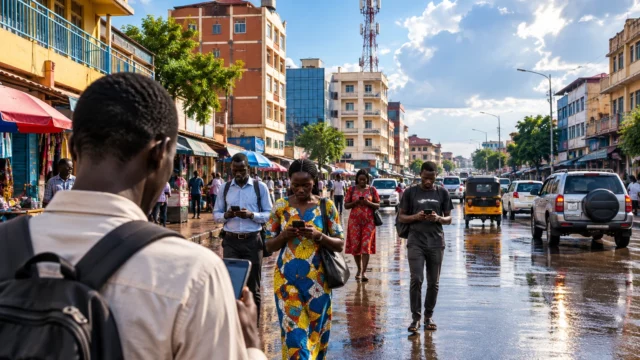
In this context, the change of governor is not merely administrative. It touches the nerve of everyday life. When banknotes do not circulate smoothly, public sector salaries are delayed, traders adjust prices from day to day and the informal economy handles a growing share of transactions. In Juba and several regional capitals, the cash shortage has become as much a measure of confidence as a technical problem. Recent measures to ease withdrawals or inject liquidity show that the issue remains urgent.
The country also remains exposed to shocks from neighbouring Sudan. The war in Sudan has disrupted South Sudanese oil exports, some of which pass through infrastructure dependent on the north. This vulnerability largely explains the scale of monetary pressures. When crude flows contract, budget revenues fall, foreign currency reserves dwindle and the state finds it harder to cover its day-to-day spending. The central bank’s problem then becomes a problem for the entire economic system.
What the dismissal says about power, currency and succession
The political reading of the reshuffle is hard to ignore. Analysts cited in the international press see it as an effort by Salva Kiir to consolidate power amid uncertainty over succession. This interpretation gains weight when one considers the frequency of dismissals from strategic posts in recent months. The central bank, finance ministry, revenue collection officials and even security posts have all been shaken by repeated changes.
For South Sudan’s population, the issue is less the wording of a decree than its tangible effects. A governor can promise better currency management, but cannot on his own create foreign currency, ensure regular payments to civil servants or restore confidence in commercial banks. He can, however, influence the circulation of cash, coordination with the finance ministry and the country’s ability to maintain a stable course during an external shock. That is where the difference lies between a simple reshuffle and a real shift in economic policy.
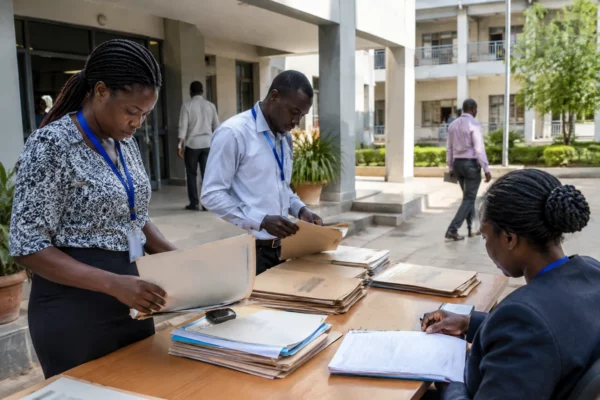
The South Sudanese central bank also has a broader institutional role. The law and Constitution entrust it with supervising the banking system, regulating credit and implementing monetary policy. In a country where institutions are still being built, every change at its helm reshapes the relationship between the executive and technical checks and balances. Regional partners, donors and market participants are watching closely, because it signals the real priority given to monetary discipline.
A regional signal to watch across East Africa
At the continental level, the South Sudanese case goes beyond the replacement of a governor. It points to a broader question facing states emerging from conflict or undergoing prolonged transitions: how can a credible central bank be built when politics dominates economic decision-making? South Sudan is a member of the African Union, IGAD and the East African Community. Its financial stability therefore has spillover effects on trade corridors, diaspora remittances and relations with banks in the region.
What happens next will be judged less by speeches than by figures. Fiscal discipline, banks’ access to cash, the performance of the South Sudanese pound and the government’s ability to limit recourse to improvised decisions will all need to be watched. In East Africa, where monetary integration ambitions are advancing at uneven speeds, the South Sudanese case is a reminder that a stable currency starts with clear governance. And in Juba, that clarity has yet to be built.