Algeria
 Egypt
 Libya
 Morocco
 Sudan
 Tunisia
 Benin
 Burkina Faso
 Cabo Verde
 Côte d'Ivoire
 Ghana
 Guinea
 Guinea-Bissau
 Liberia
 Mali
 Mauritania
 Niger
 Nigeria
 Senegal
 Sierra Leone
 The Gambia
 Togo
 Cameroon
 Central African Republic
 Chad
 DR Congo
 Equatorial Guinea
 Gabon
 Republic of the Congo
 São Tomé and Príncipe
 Burundi
 Comoros
 Djibouti
 Eritrea
 Ethiopia
 Kenya
 Madagascar
 Malawi
 Mauritius
 Mozambique
 Rwanda
 Seychelles
 Somalia
 South Sudan
 Tanzania
 Uganda
 Angola
 Botswana
 Eswatini
 Lesotho
 Namibia
 Zambia
 Zimbabwe
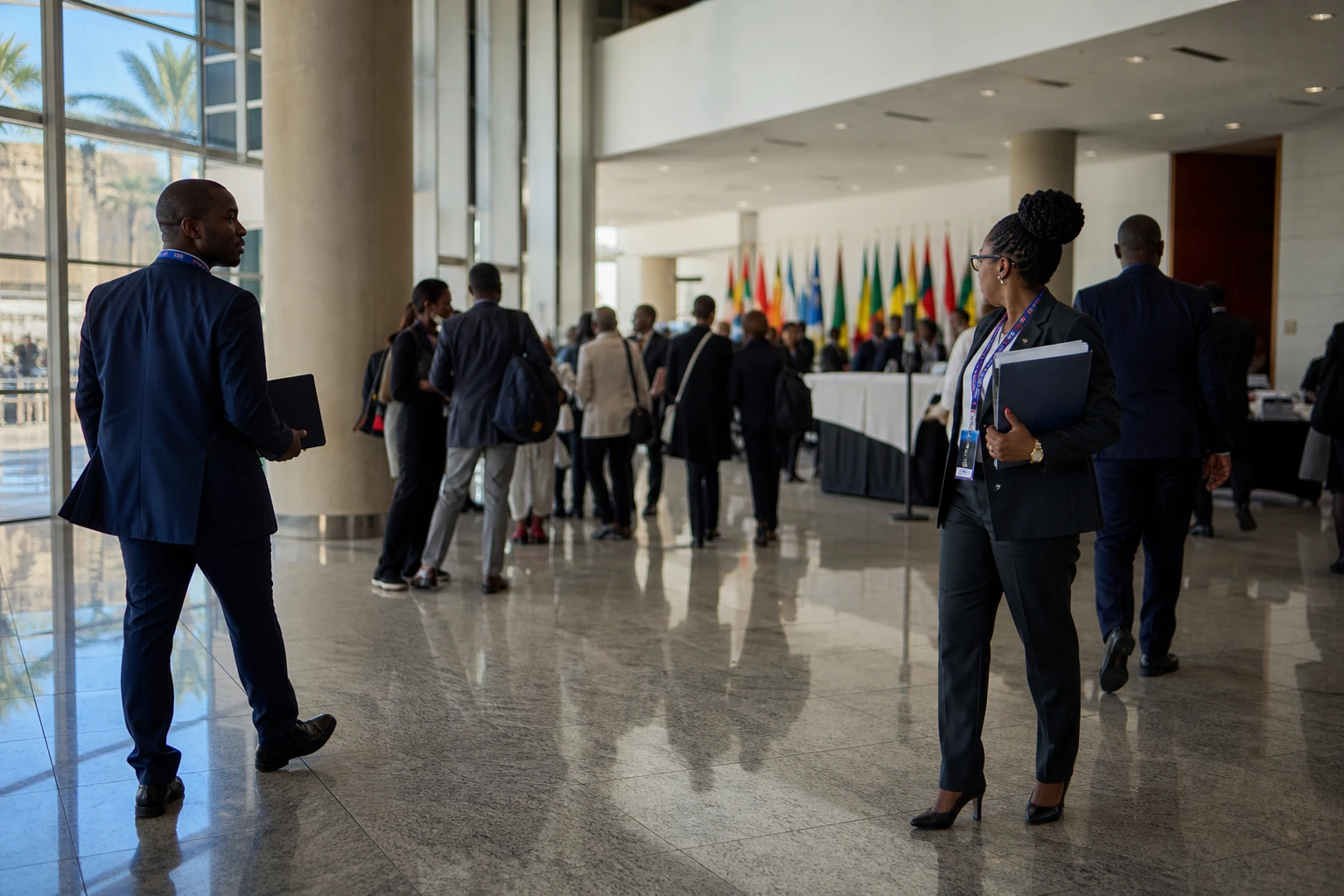
In Durban, SADC focused on the movement of people, borders and regional trust
In southern Africa, a border is never just a line on a map. It affects jobs, trade, security and the daily lives of millions of families. It was against this backdrop that Durban hosted the 46th ordinary summit of the Southern African Development Community (SADC) on 17 August 2026, under the chairmanship of South Africa’s Cyril Ramaphosa. The chosen theme focused on industrialisation, infrastructure, agriculture and critical minerals, but migration took centre stage in the discussions.
Durban was no accidental choice. South Africa assumed the annual SADC chairmanship at the summit and entered a 12-month cycle in which Pretoria wants to exert greater influence over regional integration. The South African government had already prepared for the event by announcing its roadmap, while SADC reiterated that the organisation brings together 16 member states and works on growth, peace and security in southern Africa. In the same city, the South African head of state had also pledged a few days earlier to defend a regional approach to migration rather than a strictly police-led response.
What Ramaphosa told heads of state, and what the summit endorsed
At the end of the proceedings, Cyril Ramaphosa said he had spoken « honestly and transparently » with his counterparts about a challenge he described as complex. This cautious language reflects a sensitive political reality in South Africa: for several months, anti-immigration movements have mobilised in several cities, with tensions directed mainly at nationals from Zimbabwe, Mozambique, Malawi and the Democratic Republic of the Congo. On 7 June 2026 in Pretoria, the South African president had already acknowledged that anger among part of the population was also explained by unemployment, pressure on public services, corruption and shortcomings in migration administration.
The summit therefore served as a platform for political clarification. Ramaphosa stressed that migration management could not rely on police operations alone. He also underlined the need to work with countries of origin and transit through SADC, the African Union and bilateral channels. This is already the South African government’s approach: in June, Pretoria adopted a comprehensive approach to migration management, with tighter checks, labour inspections and a stated commitment to tackling corruption in the relevant services. At the same time, the presidency highlighted measures intended to secure borders while protecting legitimate trade and human dignity.
On the diplomatic front, the final communiqué of the extraordinary meeting on 29 June 2026 had already demonstrated Ramaphosa’s approach: putting political stability at the centre of the regional agenda while strengthening mediation tools. The document referred to Madagascar, where SADC has supported dialogue efforts, and the Democratic Republic of the Congo, where the organisation expressed concern about the security situation in the east of the country. The Durban summit follows the same logic: a region seeking to prevent political, security or social crises from turning into mass displacement and domestic tensions.
Why the summit matters beyond South Africa
The issue is not limited to South Africa. In a region where economies are closely linked, population movements accompany political cycles, wage gaps, climate crises and local conflicts. The challenge is therefore twofold: protecting citizens from abuse, trafficking networks and exploitation, while avoiding making migrant workers the convenient face of a wider economic malaise. That is precisely the point Ramaphosa sought to make when he said South Africa could not deal alone with an issue that spans all of southern Africa.
The summit’s economic agenda points in the same direction. SADC wants to speed up implementation of its Regional Indicative Strategic Development Plan 2020–2030, develop infrastructure corridors and advance its regional financing instrument. The proposed common tourist visa, the SADC UniVisa, also made progress this year, following discussions between tourism ministers and private-sector stakeholders in Durban in the spring. For businesses, tourism and transport operators, the issue is a practical one: reducing border barriers to facilitate regional exchanges. For states, it is about finding a balance between economic openness and the management of mobility.
The continental significance is clear. South Africa, whose seat of government is in Pretoria, is trying to show that an African response to migration can be neither demagogic nor naïve. The message matters for the African Union, which has for years called for easier free movement while strengthening cooperation on security and rights. Durban thus served as a political testing ground: how to discuss migration without reducing it to a threat, how to protect labour markets without fuelling xenophobia, and how to make SADC more than a merely ceremonial framework — a useful tool for the region’s citizens. South Africa’s chairmanship will be judged on that capacity in the months ahead.