
 Algeria
 Egypt
 Libya
 Morocco
 Sudan
 Tunisia
 Benin
 Burkina Faso
 Cabo Verde
 Côte d'Ivoire
 Ghana
 Guinea
 Guinea-Bissau
 Liberia
 Mali
 Mauritania
 Niger
 Nigeria
 Senegal
 Sierra Leone
 The Gambia
 Togo
 Cameroon
 Central African Republic
 Chad
 DR Congo
 Equatorial Guinea
 Gabon
 Republic of the Congo
 São Tomé and Príncipe
 Burundi
 Comoros
 Djibouti
 Eritrea
 Ethiopia
 Kenya
 Madagascar
 Malawi
 Mauritius
 Mozambique
 Rwanda
 Seychelles
 Somalia
 South Sudan
 Tanzania
 Uganda
 Angola
 Botswana
 Eswatini
 Lesotho
 Namibia
 Zambia
 Zimbabwe
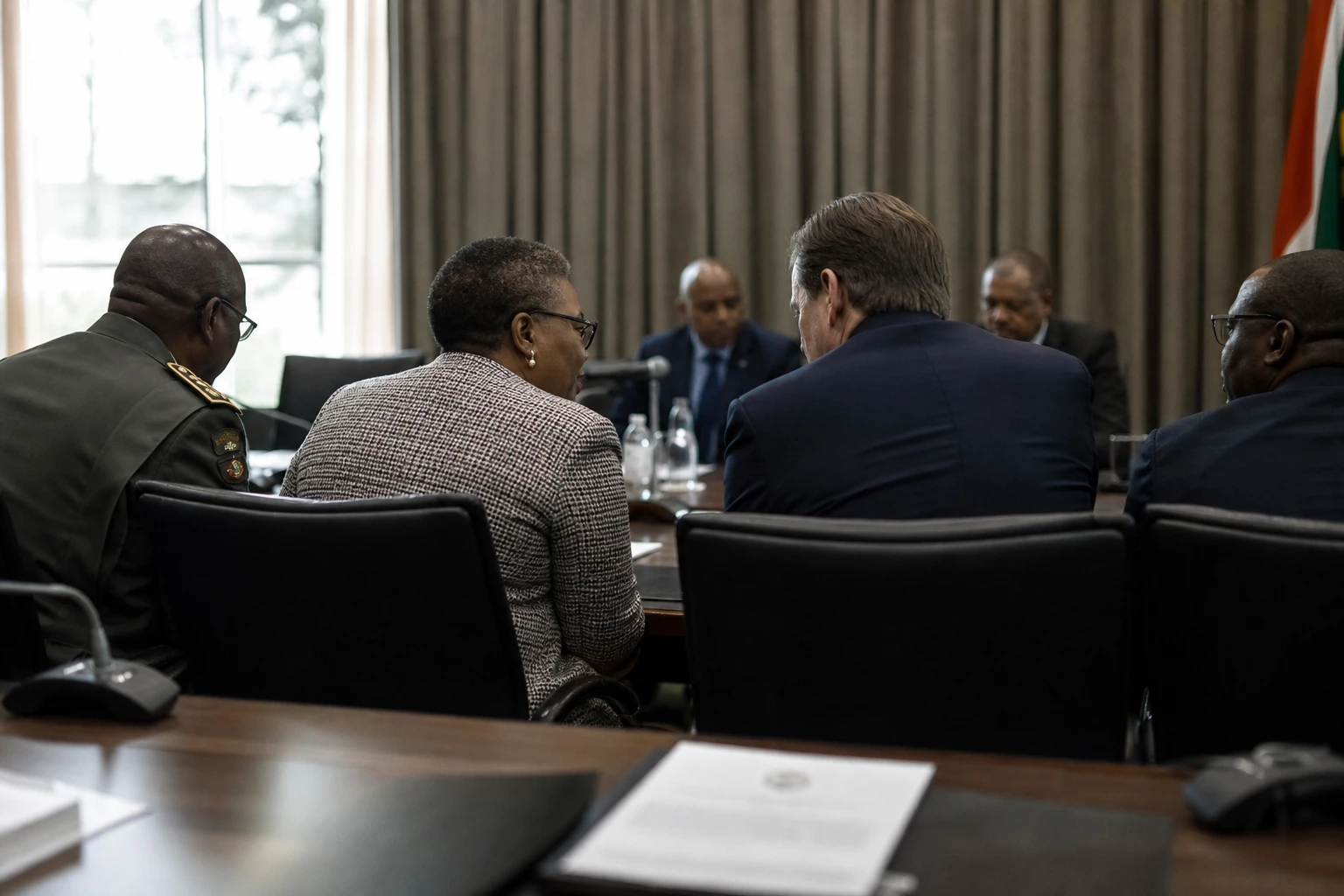
In Pretoria, military diplomacy walks a tightrope
In Pretoria, foreign policy is rarely played out solely at press conferences. It is also reflected in visits, joint exercises and signals sent by the security establishment. That is why the South African army chief’s visit to Moscow, amid the war in Ukraine, immediately took on a political significance beyond simple technical cooperation.
The debate is no small matter for South Africa, a military and diplomatic power in southern Africa and a member of the Southern African Development Community (SADC) and the Non-Aligned Movement. Cyril Ramaphosa’s government has for several years stressed that non-alignment does not mean indifference, but rather the freedom to engage with all sides while defending international law.
Moscow visit revives longstanding suspicion of a mismatch
According to information published this week, Lieutenant-General Lawrence Mbatha, chief of the South African army, met Russian military officials in Moscow to strengthen ties between the two countries’ land forces. Discussions focused on training, the sharing of expertise and consolidating longstanding bilateral cooperation.
In the view of the Democratic Alliance (DA), the country’s second-largest political force and the main opposition party to the ANC, the problem is one of consistency. The party argues that a state cannot claim to be non-aligned while publicly stepping up military ties with one of the parties to the Russia-Ukraine war. It says it will question the government in Parliament.
The controversy is part of a broader sequence of events. In January and March 2026, the South African government reiterated that its policy of non-alignment did not mean moral neutrality, but prioritised dialogue and peace. The presidency also recalled that Pretoria supports diplomatic efforts related to the conflict in Ukraine.
Foreign policy caught between principles, interests and memory
To understand the controversy, it is necessary to look at the architecture of South African diplomacy. Pretoria has long presented itself as a mediator, committed to multilateralism, the United Nations Charter and the peaceful resolution of disputes. This position allows it to keep channels open with Western, Asian, African and Russian partners. But it also leaves it open to suspicion whenever a military signal appears to contradict the official line.
South Africa also has a sensitive relationship with Moscow. The country was already criticised in 2023 after naval exercises off Cape Town with Russia and China. In 2026, the issue resurfaced with revelations of visits and military cooperation exchanges, as Parliament and several parties called for greater transparency around these diplomatic channels.
The question is all the more delicate because, in early 2026, the country also had to manage the return of South Africans who had been trained or lured to the front lines in Russia and Ukraine. The government then worked with Moscow to repatriate several nationals, while stressing that the matter was under investigation. This sequence of events heightened public sensitivity around the Russian issue.
What the issue says about the domestic balance of power
Domestically, the controversy reveals a familiar fault line in South African politics. The ANC defends a policy of strategic autonomy. The DA, by contrast, is calling for stricter safeguards, particularly when military gestures could have economic repercussions. Its argument is straightforward: the signals sent by Pretoria affect the country’s credibility with its trade and security partners.
The security context does not help. During the defence of the 2026/27 budget, the Department of Defence itself acknowledged that the military faced funding constraints, ageing equipment and modernisation needs. In this context, every foreign partnership is also viewed through the lens of skills, technology transfers and budgetary priorities.
In other words, the issue concerns more than generals and diplomats. It touches on the consistency of public policy, how the country is viewed internationally and how Pretoria intends to reconcile sovereignty, diversified partnerships and responsibility in a polarised world. For residents, the stakes are tangible: diplomatic stability affects trade, investment, the defence industry and the country’s ability to speak with one voice on the world stage.
A South African issue with continental implications
The issue also extends beyond South Africa. In southern Africa, SADC is seeking to strengthen regional integration and collective security, while Pretoria holds a distinctive position because of its military, economic and diplomatic weight. Any move perceived as drawing too close to one side in the war in Ukraine can therefore affect how the region as a whole is viewed abroad.
At continental level, the issue also resonates with Africa’s renewed role in major geopolitical alignments. South Africa has just secured a new term on the African Union’s Peace and Security Council, while continuing to advocate an African perspective on international crises. In this context, the real question is not whether Pretoria can talk to Moscow. It is on what terms it can do so without blurring its message on peace, international law and African interests.
What happens next will play out in the South African Parliament and through diplomatic channels. If the explanations promised by the DA confirm that the arrangement is strictly bilateral, Pretoria will seek to present it as a continuation of its policy of engagement. If, on the other hand, the impression of double standards grows, the controversy could weigh on South Africa’s voice far beyond Pretoria, including in African and multilateral forums where the country likes to present itself as a credible mediator.



