
 Algeria
 Egypt
 Libya
 Morocco
 Sudan
 Tunisia
 Benin
 Burkina Faso
 Cabo Verde
 Côte d'Ivoire
 Ghana
 Guinea
 Guinea-Bissau
 Liberia
 Mali
 Mauritania
 Niger
 Nigeria
 Senegal
 Sierra Leone
 The Gambia
 Togo
 Cameroon
 Central African Republic
 Chad
 DR Congo
 Equatorial Guinea
 Gabon
 Republic of the Congo
 São Tomé and Príncipe
 Burundi
 Comoros
 Djibouti
 Eritrea
 Ethiopia
 Kenya
 Madagascar
 Malawi
 Mauritius
 Mozambique
 Rwanda
 Seychelles
 Somalia
 South Sudan
 Tanzania
 Uganda
 Angola
 Botswana
 Eswatini
 Lesotho
 Namibia
 Zambia
 Zimbabwe
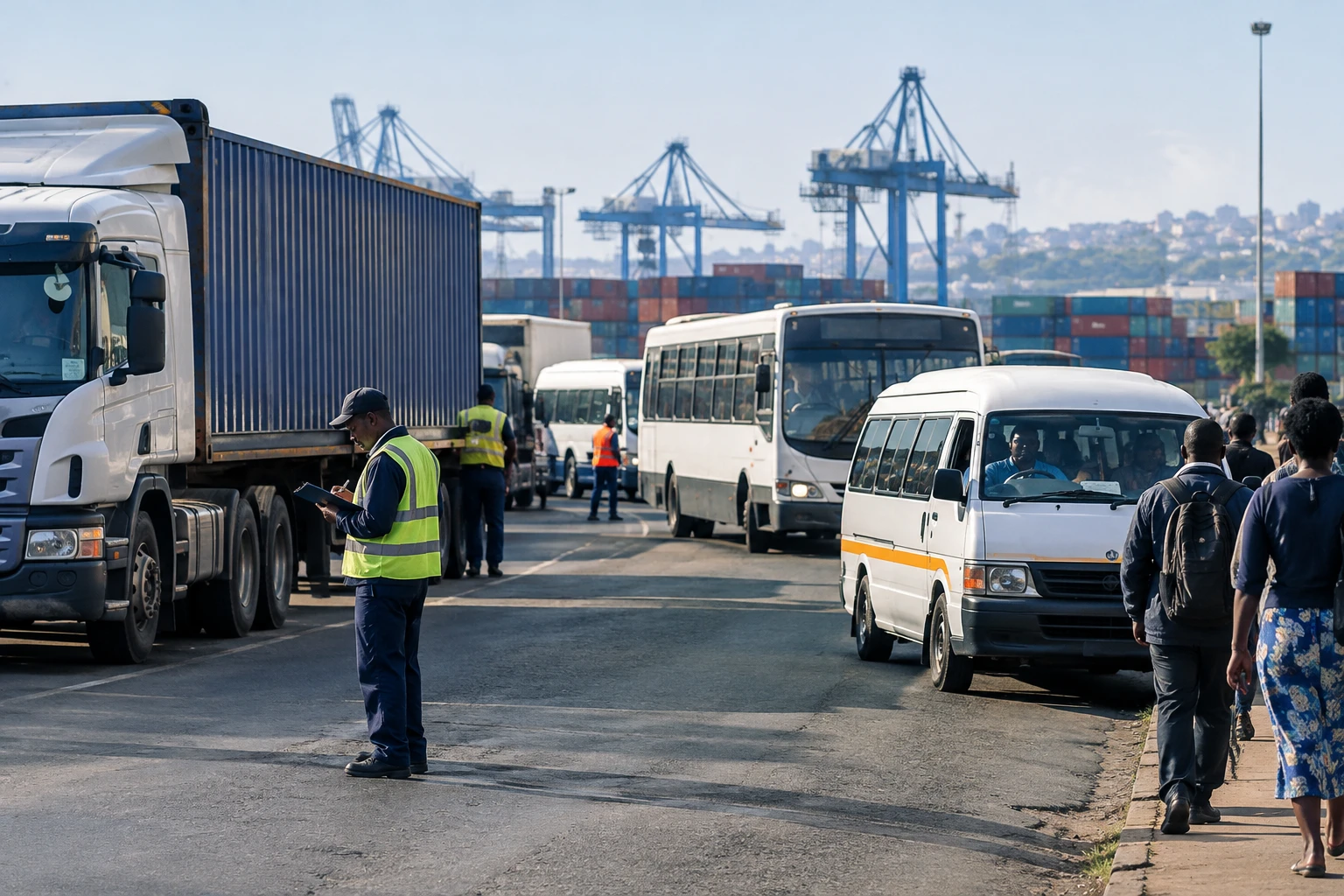
The loss of a tariff advantage does not, by itself, close a market. But it can change prices, weaken contracts and put pressure on jobs at exporting businesses. In South Africa, the US decision on AGOA has therefore revived a very practical question: how can market access be preserved without relying on a political scheme that can be revoked?
Preferential access to the US market under pressure
AGOA, or the African Growth and Opportunity Act, gives eligible sub-Saharan African countries duty-free access to the US market for certain products. Created in 2000, the programme is separate from ordinary trade rules: South African exporters will still be able to sell to the United States, but some products will lose this tariff advantage.
The programme has been extended until the end of 2026. On 2 November, Washington announced its intention to remove South Africa from the programme from 1er January 2027. The decision also concerns Rwanda. The US administration cites barriers to trade and investment, as well as concerns relating to its national security and foreign policy. It has not publicly set out all the grievances against Pretoria.
The South African government says it received 60 days’ notice. It says it offered trade concessions during talks launched in 2025, while defending its constitutional and health regulations. Pretoria regrets that, in its view, Washington has raised new issues during the process. The two accounts show that the dispute goes beyond customs access alone: it is part of a deteriorating political relationship.
Limited national exposure, concentrated in certain sectors
Official figures help measure the stakes without minimising them. In 2025, about $1.7 billion of South African exports to the United States benefited from AGOA, compared with $4 billion in 2024. This represented nearly 10% of South African exports to the US market and about 1% of the country’s global exports. The remaining 89% of exports to the United States were subject to ordinary trade conditions, according to South Africa’s Department of Trade, Industry and Competition.
These proportions do not, however, show where the shock will be concentrated. Higher tariffs can make a product less competitive, even if trade continues. Agricultural exporters, vehicle manufacturers and manufacturing businesses are not exposed in the same way. The effects can also be concentrated in particular employment hubs, where farms, workshops and their suppliers depend on orders destined for the United States.
The Congress of South African Trade Unions, COSATU, fears job losses. Its parliamentary coordinator, Matthew Parks, cited estimates of about 3,000 jobs directly affected, potentially rising to 10,000 when indirect effects are included. This figure remains an attributed estimate, not an established tally. Parks says the national impact could remain limited, while still being severe for the workers and communities concerned.
Projections vary by sector and methodology. The National Agricultural Marketing Council of South Africa has modelled possible declines in several agricultural exports. Meanwhile, agricultural organisation AgriSA points out that the US market remains open, but that the loss of preferences will not affect all sectors equally. These analyses do not yet make it possible to quantify precisely the consequences of the decision announced this week.
The standoff goes beyond trade
Washington presents its decision as the result of a review of AGOA eligibility criteria. The US Trade Representative cites trade barriers, corruption, and security and foreign policy issues. Pretoria, for its part, disputes the timing and scope of US demands. The announcement comes as bilateral relations have grown strained over political and diplomatic disagreements.
The economic relationship nevertheless remains substantial. The South African government puts bilateral trade at $28.8 billion in 2025 and says more than 600 US companies operate in South Africa. These figures show that leaving AGOA would not end trade. It could, however, weaken value chains that link US suppliers, South African factories and customers on both sides of the Atlantic.
Opinions also differ on the strategy to pursue. Some trade union leaders are urging the government to continue its efforts to prevent the withdrawal. Former diplomat Kingsley Makhubela, by contrast, believes more energy should be devoted to diversifying trade partners. This debate is less about choosing dialogue over autonomy than about how to allocate resources: negotiating with Washington while reducing reliance on uncertain preferential access.
The response will also take shape in southern Africa
Pretoria’s announced diversification covers several regions and agreements. The African Continental Free Trade Area (AfCFTA) aims to facilitate trade between African countries. SADC, the Southern African regional economic community, offers another framework for developing markets and production chains. The European Union, the United Kingdom, India and other partners are also among the markets cited by the government.
These options will not automatically replace the US market. They require buyers, logistics infrastructure, compatible standards and financing to help businesses redirect their sales. Large groups can sometimes spread sales across several markets. Small businesses, farms and subcontractors often have less room to absorb a tariff increase or quickly find new customers.
The next milestone is 1er January 2027, the announced date of withdrawal, subject to developments in the talks. By then, Pretoria will have to identify the sectors most exposed and decide how to support affected workers. For southern Africa, the episode is a reminder that a US trade programme can affect economies far beyond its borders. It also tests the ability of African countries to negotiate collectively and broaden their market opportunities without mistaking diversification for an immediate break.



