Algeria
 Egypt
 Libya
 Morocco
 Sudan
 Tunisia
 Benin
 Burkina Faso
 Cabo Verde
 Côte d'Ivoire
 Ghana
 Guinea
 Guinea-Bissau
 Liberia
 Mali
 Mauritania
 Niger
 Nigeria
 Senegal
 Sierra Leone
 The Gambia
 Togo
 Cameroon
 Central African Republic
 Chad
 DR Congo
 Equatorial Guinea
 Gabon
 Republic of the Congo
 São Tomé and Príncipe
 Burundi
 Comoros
 Djibouti
 Eritrea
 Ethiopia
 Kenya
 Madagascar
 Malawi
 Mauritius
 Mozambique
 Rwanda
 Seychelles
 Somalia
 South Sudan
 Tanzania
 Uganda
 Angola
 Botswana
 Eswatini
 Lesotho
 Namibia
 Zambia
 Zimbabwe
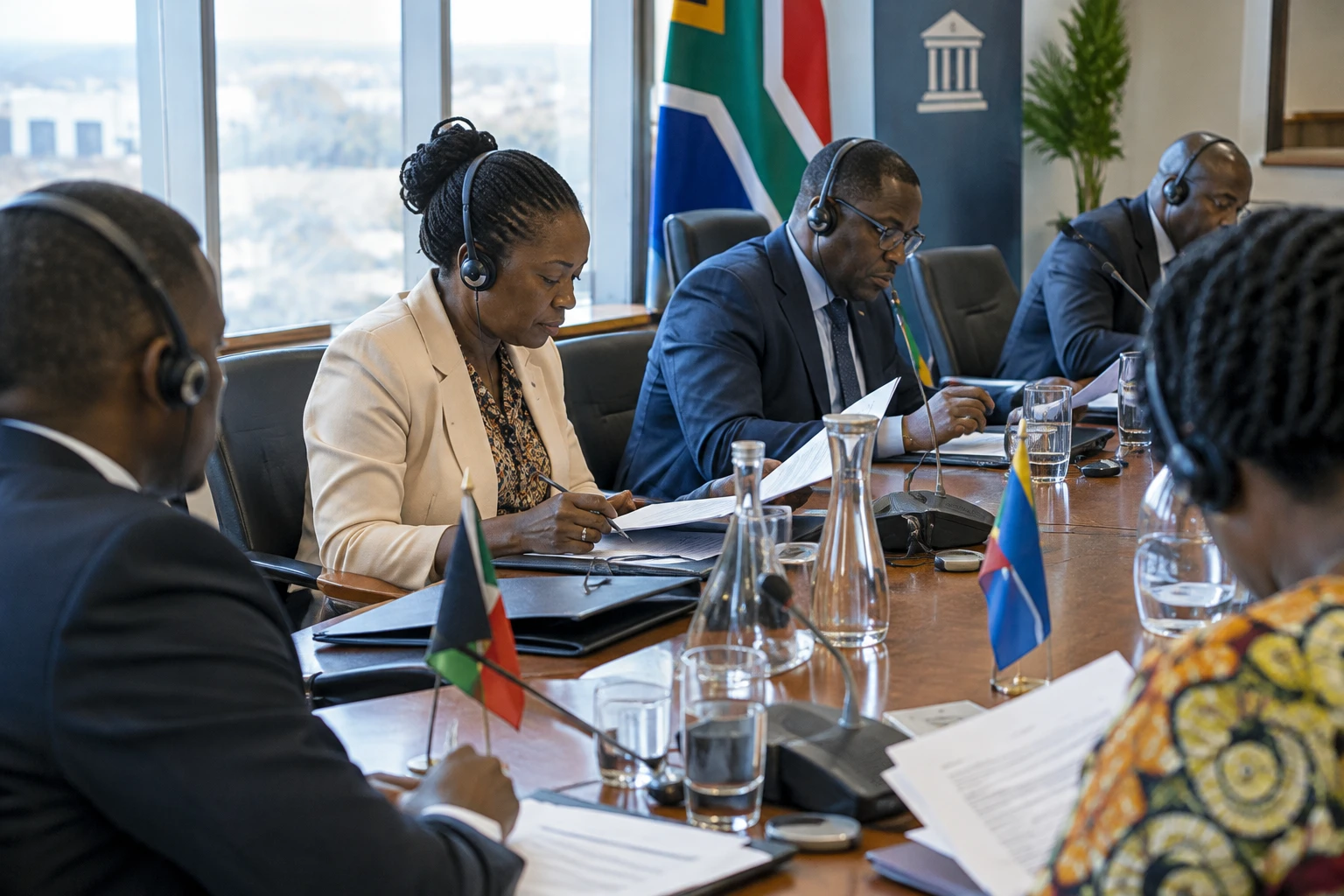
In a South African municipality, the national vote share is not enough to determine the next mayor. Seats won on each council, followed by alliances between elected representatives, will decide how water, waste, roads and electricity are managed. The still-partial results of the 4 November local elections nevertheless confirm a major political shift: the African National Congress (ANC) remains the country’s leading party, but its support has fallen sharply.
A local vote in a fragmented political landscape
South Africa has nine provinces and several hundred municipal councils. Local elections determine the composition of these councils, which oversee essential services and some aspects of urban development. Pretoria, the administrative capital, is the seat of the national government; municipalities, by contrast, face very different realities, from large metropolises to small towns.
The election comes after a national turning point. In 2024, the ANC won 40.18% of the vote in the general election and lost its parliamentary majority for the first time since 1994. It subsequently formed a government of national unity with the Democratic Alliance (DA) and other parties. Local voters are therefore assessing a party that remains in government but now has to share power at national level.
The ANC’s decline had already marked the 2021 local elections, when it won about 45.6% of the vote. Several large cities had become difficult to govern without coalitions. This fragmentation also has a regional dimension: within the Southern African Development Community (SADC), South Africa remains a major economy and political actor. The stability of its institutions and major cities therefore matters beyond its borders.
The ANC retreats, but no successor emerges everywhere
As of 6 November, about 96% of voting districts had been counted, according to results compiled from the South African Independent Electoral Commission (IEC) feed. The ANC then had nearly 31% of the vote nationally. This is a provisional result: the count and declaration of final results were still under way. The detailed state of municipal results as of 6 November listed 184 of 213 councils as declared.
The result confirms a further decline from the 2021 local elections. But the national figure alone does not show who will govern. Votes are distributed among councils, and results vary sharply from one province to another. The DA remains particularly strong in Cape Town, in the Western Cape, while the uMkhonto weSizwe (MK) party, formed around former president Jacob Zuma, has scored strongly in KwaZulu-Natal, its home region. Trends published during the count also put ActionSA in contention in Tshwane, the municipality that includes Pretoria.
In councils where no party holds a majority, elected representatives will have to negotiate. Finishing first in the vote therefore guarantees neither the mayoralty nor a stable majority. The tracking of results by council and possible coalitions shows the importance of these local discussions. The contest is about seats and agreements, not just the national ranking.
Municipal services at the heart of the vote
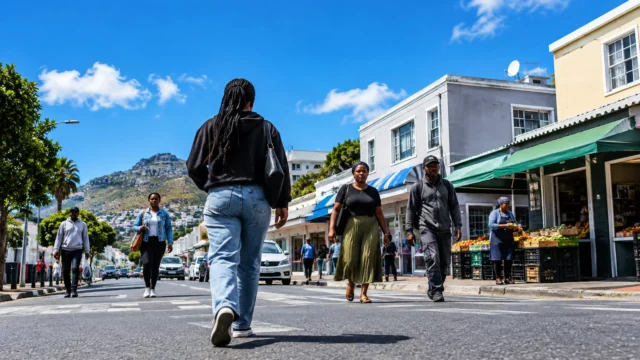
Failures in basic services and allegations of mismanagement were among the grievances reported during the campaign. Their impact is not uniform. In urban neighbourhoods, waste collection, road maintenance and water supply are everyday concerns. In rural areas, access to infrastructure and municipalities’ ability to plan investment carry greater weight. Formal businesses also depend on reliable networks, while informal activities are directly affected by power cuts or unreliable transport.
A change in the majority can alter priorities and the allocation of responsibilities. It will not automatically repair a water pipe, reduce maintenance delays or resolve funding or administrative capacity problems on its own. Coalitions can broaden representation, but they can also make decisions harder if their partners fall out. The continuity of services will therefore depend as much on political agreements as on municipal administrations’ ability to implement them.
Anger at the ANC has not benefited a single party. Provisional results point to an opposition divided between the DA, the MK party and other formations, depending on the provinces and cities. This diversity reflects distinct political choices; it does not justify concluding that the country has shifted uniformly. Parties will also have to clarify which agreements they are prepared to enter into, particularly where their positions diverge on immigration or local governance.
Coalitions tested by everyday needs
The next steps will be finalising the results and constituting municipal councils. Where seats are divided, negotiations will determine who leads, who controls budgets and which priorities make it into programmes. These choices will be closely watched in major metropolitan areas, where alliances have already been necessary in previous elections.
At national level, the election extends the political realignment that began in 2024: the ANC can no longer count on automatic electoral dominance and must contend with rivals that have stronger local roots. For SADC and the African Union, the issue is not just the decline of a historic party. It is also whether electoral institutions and fragmented councils can produce administrations capable of meeting their commitments. For residents, the first test will be the very concrete decisions made by the new majorities.