
 Algeria
 Egypt
 Libya
 Morocco
 Sudan
 Tunisia
 Benin
 Burkina Faso
 Cabo Verde
 Côte d'Ivoire
 Ghana
 Guinea
 Guinea-Bissau
 Liberia
 Mali
 Mauritania
 Niger
 Nigeria
 Senegal
 Sierra Leone
 The Gambia
 Togo
 Cameroon
 Central African Republic
 Chad
 DR Congo
 Equatorial Guinea
 Gabon
 Republic of the Congo
 São Tomé and Príncipe
 Burundi
 Comoros
 Djibouti
 Eritrea
 Ethiopia
 Kenya
 Madagascar
 Malawi
 Mauritius
 Mozambique
 Rwanda
 Seychelles
 Somalia
 South Sudan
 Tanzania
 Uganda
 Angola
 Botswana
 Eswatini
 Lesotho
 Namibia
 Zambia
 Zimbabwe
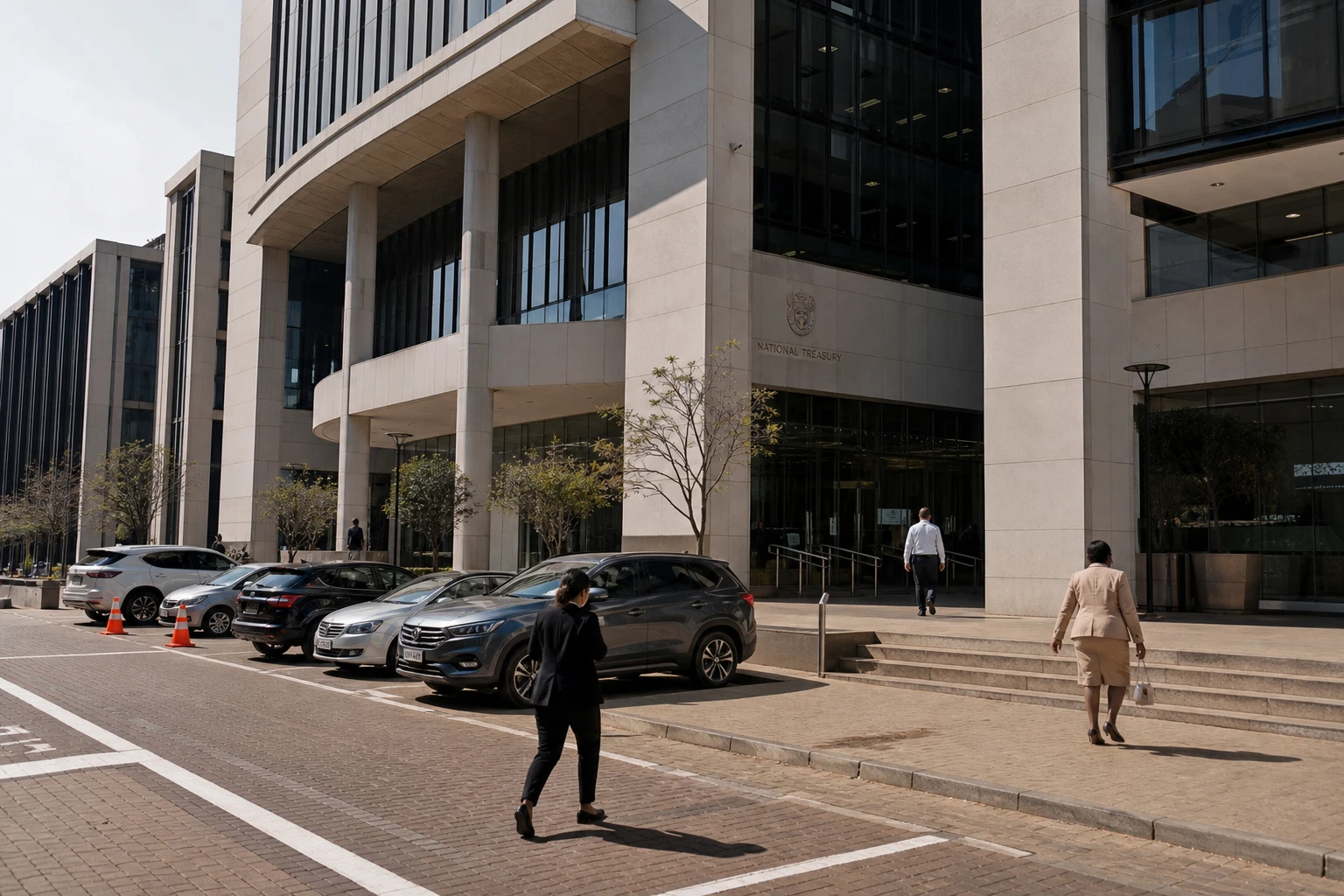
Funding aimed at more than just construction
In Pretoria, the debate is no longer just about major projects. It now concerns the state’s ability to repair the systems that keep South Africa’s economy running: electricity, water, freight and sanitation. In a country where infrastructure is ageing and businesses and households alike are paying the price for an overstretched system, a $1.5bn loan can have an impact far beyond its book value. It serves as a lever to accelerate reforms that the authorities now consider urgent.
The signal matters for southern Africa. South Africa remains the SADC region’s most industrialised economy, and its transport and energy networks underpin some regional trade. When ports are congested, rail slows down or water networks deteriorate, the effects do not stop at the borders. They ripple through supply chains, mining exports and prices paid elsewhere in the region.
What exactly the agreement covers
The financing was approved on 5 June 2025 as a World Bank development policy loan. On 23 June 2025, Pretoria and the Washington-based institution signed the agreement. The programme covers structural reforms in infrastructure services. Its stated priority is clear: improve the efficiency, sustainability and climate resilience of networks while supporting growth and employment.
This is not the first support of its kind. The World Bank says it is the fourth loan granted to South Africa since 2022. The operation forms part of a broader sequence: in 2022, a loan supported the response to the Covid-19 crisis; in 2023, another targeted the energy transition and security of supply; in 2025, the new support widened its scope to infrastructure, freight and urban services. The approach is therefore cumulative, combining the recovery of the electricity system, logistics modernisation and the strengthening of public services.
The South African government presents the loan as an instrument for reform and job creation. In its communications, it says it is aiming for around 600,000 jobs by 2032 through infrastructure improvements and the removal of constraints holding back economic activity. The World Bank, for its part, links the operation to the challenges of weak growth and high unemployment.
Why Pretoria is seeking room to manoeuvre
The domestic context explains why these reforms are a priority. In the first quarter of 2026, South Africa’s official unemployment rate rose to 32.7%, from 31.4% in the previous quarter. Among 15- to 24-year-olds, unemployment stands at 60.9%. These figures are a reminder that an infrastructure deficit is not a technical issue reserved for engineers. It leads to businesses running below capacity, delayed investment and even greater difficulty for young people entering the workforce.
The electricity sector remains central to this equation, even though the situation has improved. Eskom says the country has had no load-shedding since 16 May 2025 and that system availability is improving. The state-owned company now speaks of a path to stabilisation, with more reliable generation than at the height of the crisis. That does not mean the problem is solved. The government continues to manage localised outages, modernise smart meters and reduce losses on local networks.
Water and sanitation present a different set of challenges. Pressure is being felt on municipal networks, the maintenance of treatment plants and the state’s ability to fund assets that generate little in the short term but are essential to public health and economic activity. South Africa’s 2026 budget confirms that public infrastructure spending remains a priority, with substantial amounts earmarked for water, transport and essential services.
A test of reform, not a miracle solution
The loan will not erase debt, implementation delays or municipal weaknesses. It does, however, give Pretoria political and financial room to advance reforms the country has been postponing for years: better service governance, lower technical losses, stronger rail freight, water network upgrades and improved sanitation. For businesses, the expected gain is more predictable logistics costs. For households, the stakes are even more tangible: fewer outages, less water loss and more continuity in basic services.
The impact also extends beyond South Africa. In a region where trade corridors connect ports, mines, industrial zones and neighbouring markets, any improvement in South African services has a knock-on effect across SADC. It also matters to the African Union, which has for several years urged states to invest in infrastructure to support the African Continental Free Trade Area (AfCFTA). Smoother logistics and more reliable networks facilitate intra-African trade. Conversely, persistent bottlenecks undermine the competitiveness of the entire continent.
What happens next will depend on implementation. The coming months will show whether this financing supports a genuine acceleration of reforms or merely extends an effort already under way. In South Africa, the question is no longer just how to find money. It is how to turn that money into visible services, more consistent production and sustainable jobs. That is what will determine the agreement’s real impact.



