
 Algeria
 Egypt
 Libya
 Morocco
 Sudan
 Tunisia
 Benin
 Burkina Faso
 Cabo Verde
 Côte d'Ivoire
 Ghana
 Guinea
 Guinea-Bissau
 Liberia
 Mali
 Mauritania
 Niger
 Nigeria
 Senegal
 Sierra Leone
 The Gambia
 Togo
 Cameroon
 Central African Republic
 Chad
 DR Congo
 Equatorial Guinea
 Gabon
 Republic of the Congo
 São Tomé and Príncipe
 Burundi
 Comoros
 Djibouti
 Eritrea
 Ethiopia
 Kenya
 Madagascar
 Malawi
 Mauritius
 Mozambique
 Rwanda
 Seychelles
 Somalia
 South Sudan
 Tanzania
 Uganda
 Angola
 Botswana
 Eswatini
 Lesotho
 Namibia
 Zambia
 Zimbabwe
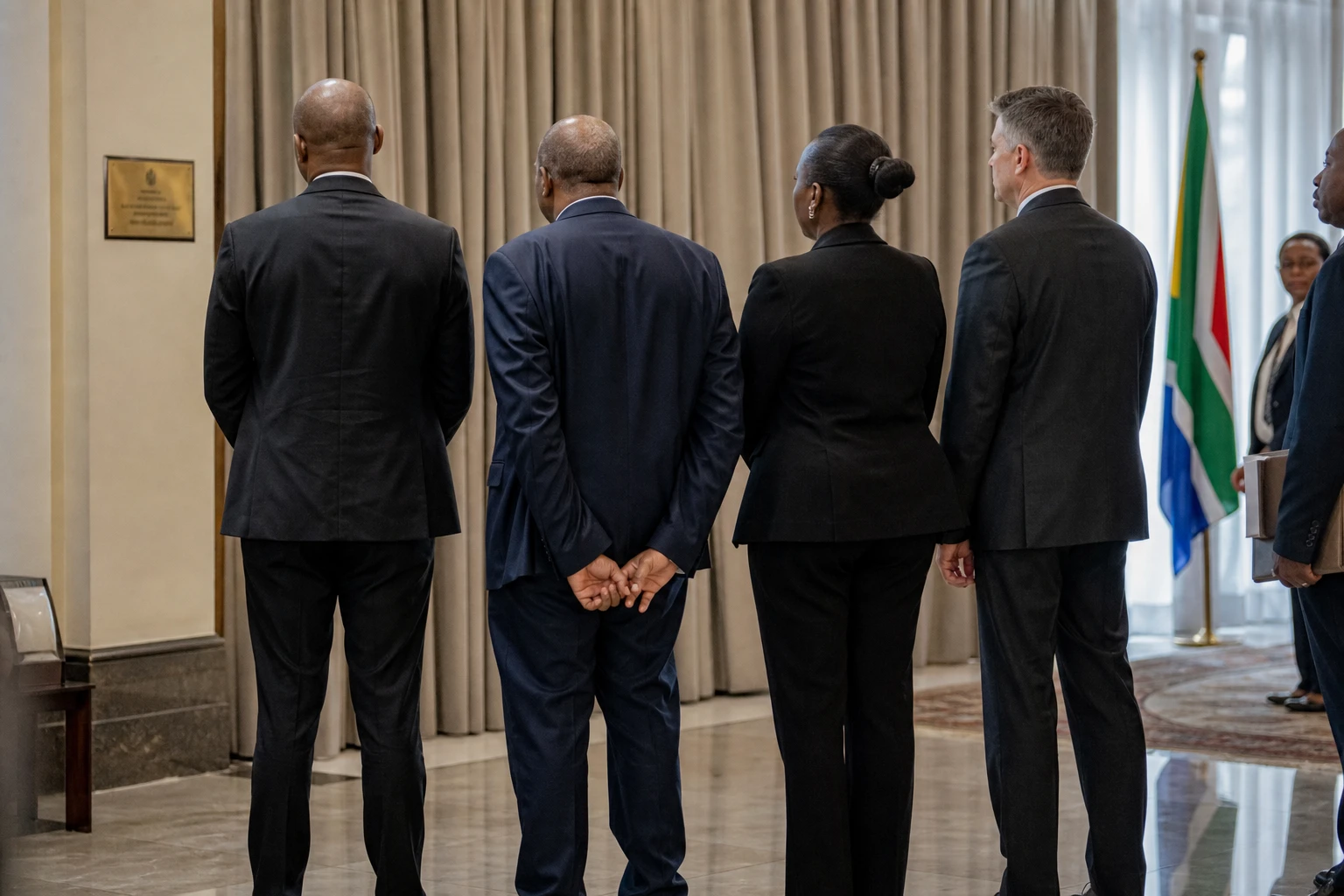
International summit, then a slowdown in Pretoria
In Pretoria, an absence at the highest levels of government can quickly become a political signal. When South African President Cyril Ramaphosa temporarily steps back after travelling abroad, the issue is not just his health. It also concerns the continuity of the executive, at a time when the national agenda remains busy and local elections on 4 November 2026 are approaching.
The presidency said Cyril Ramaphosa had been “signed off” from public engagements for health reasons after returning from the BRICS summit in India, and that his medical team had advised him to rest and recover. The 73-year-old head of state took part in this diplomatic event as Pretoria seeks to exert greater influence in debates about the Global South.
Meanwhile, Vice-President Paul Mashatile is also recovering after a medical procedure described as minor. The presidency and the South African government confirmed that he was resting on medical advice and that his responsibilities continued to be managed by his team. The unavailability of both men is exceptional at this level of government.
The electoral calendar adds weight to this episode
On 4 November 2026, South Africans are due to elect their municipal councils. The country’s Electoral Commission has confirmed the date, saying these will be the seventh local elections since the end of apartheid. These polls carry considerable weight in South Africa. They measure the real strength of parties in cities, suburbs, small towns and rural areas.
The election comes in a country where local government is under constant scrutiny. Municipalities manage water, roads, rubbish collection and some everyday services. When the national executive falters or slows down, even briefly, attention quickly shifts to the governing alliance’s ability to maintain the political and administrative pace. This is all the more true during a campaign, when every absence prompts partisan interpretations.
The health of the president and vice-president therefore has implications beyond a simple public health issue. It is a reminder that South African institutional stability depends on the availability of its leading figures, but also on a robust administrative apparatus. In a democracy with regular election cycles, continuity of government depends on capable deputies who can prevent a vacuum.
BRICS, southern Africa and continental significance
The BRICS summit is no peripheral event for South Africa. Pretoria advances a diplomatic vision there that emphasises Africa, multilateralism and the influence of the Global South. In his official remarks, Ramaphosa has presented BRICS as a forum for solidarity and reform of the international order, with an explicit focus on the African continent.
This matters at regional level. South Africa remains a major political and economic hub in the Southern African Development Community, SADC, and its diplomatic choices often shape regional positions. When its president temporarily steps off the stage, neighbouring countries watch closely to see whether Pretoria can stay on course with its external commitments and domestic priorities.
The signal is also continental. At a time when the African Union is seeking to strengthen the continent’s place in global forums, the health of key leaders such as Cyril Ramaphosa takes on political significance. The coming weeks will show whether this unavailability remains a brief episode or forces Pretoria to delegate more of the conduct of public affairs ahead of November’s municipal elections.



