
 Algeria
 Egypt
 Libya
 Morocco
 Sudan
 Tunisia
 Benin
 Burkina Faso
 Cabo Verde
 Côte d'Ivoire
 Ghana
 Guinea
 Guinea-Bissau
 Liberia
 Mali
 Mauritania
 Niger
 Nigeria
 Senegal
 Sierra Leone
 The Gambia
 Togo
 Cameroon
 Central African Republic
 Chad
 DR Congo
 Equatorial Guinea
 Gabon
 Republic of the Congo
 São Tomé and Príncipe
 Burundi
 Comoros
 Djibouti
 Eritrea
 Ethiopia
 Kenya
 Madagascar
 Malawi
 Mauritius
 Mozambique
 Rwanda
 Seychelles
 Somalia
 South Sudan
 Tanzania
 Uganda
 Angola
 Botswana
 Eswatini
 Lesotho
 Namibia
 Zambia
 Zimbabwe
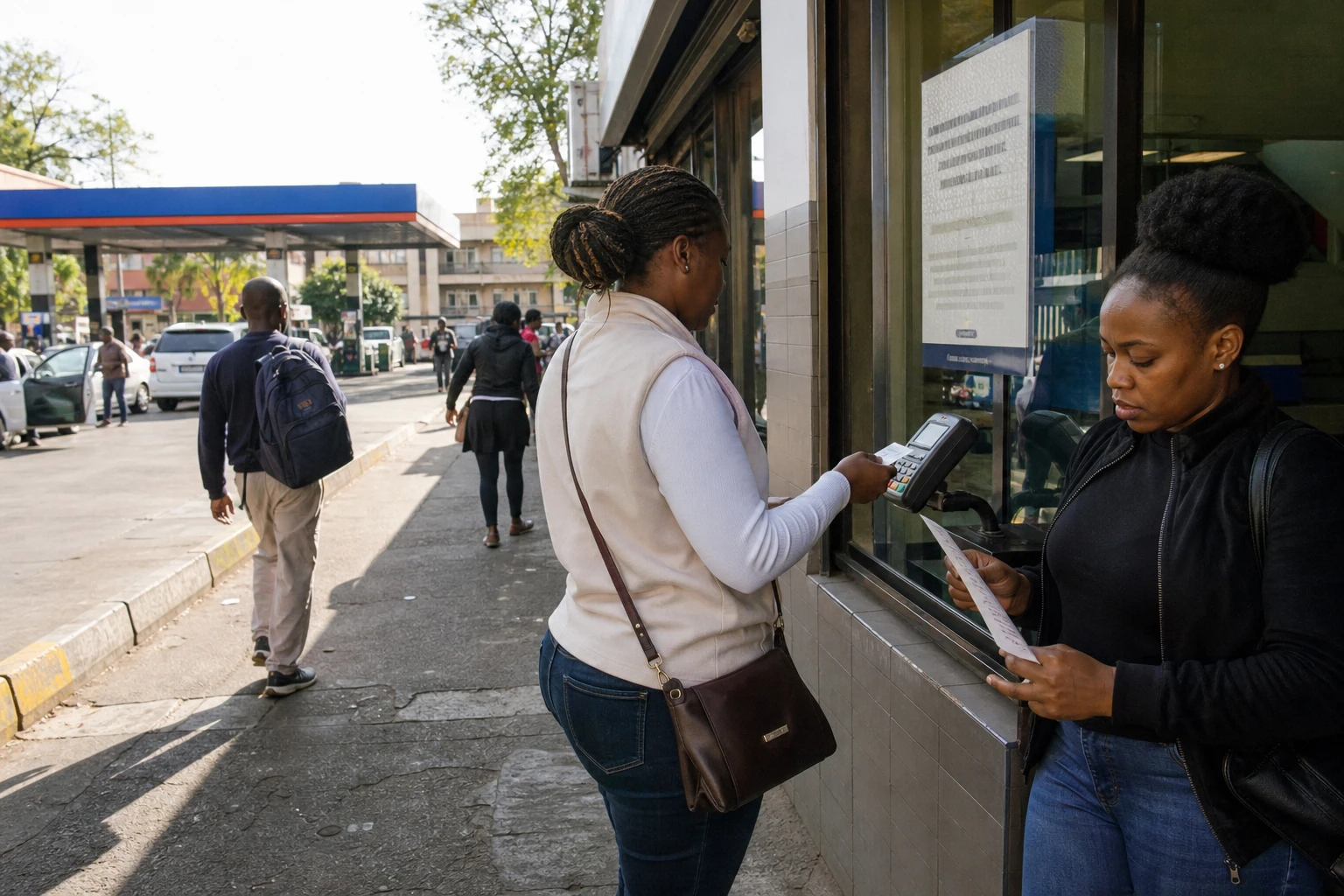
In Pretoria, the economic debate is no longer just about the pace of the recovery. It is now focused on a more difficult balance: supporting economic activity without allowing the fuel shock to become entrenched in prices, wages and everyday spending.
The South African Reserve Bank has cut its annual growth forecast to 1.2%, from 1.4% previously. At the same time, its Monetary Policy Committee raised the policy rate by 25 basis points to 7.25%, effective from 25 September 2026. The decision was unanimous.
An economy held back by the second-quarter contraction
The revision follows a downturn in economic activity. According to Statistics South Africa, real gross domestic product contracted by 0.2% in the second quarter of 2026, after growing by 0.4% in the first quarter. The decline covers the period from April to June.
The slowdown is not coming from just one sector. Mining output fell by 3%, while manufacturing production declined by 1.8%. Trade, which includes wholesale trade and motor vehicle activity, fell by 1.9%. These three branches weighed heavily on national performance.
Domestic demand nevertheless held up in some areas. Household spending rose by 0.4% in the second quarter. This increase does not mean purchasing power has remained intact. It also reflects unavoidable spending, particularly on food, non-alcoholic beverages and other everyday goods.
Investment, by contrast, showed signs of weakness. Gross fixed capital formation fell by 0.2%. Private businesses and public corporations cut spending on equipment, even though transport and construction remain essential to improving the country’s productivity.
The South African central bank nevertheless believes a rebound is still possible in the second half of the year. It also maintains a medium-term growth outlook of close to 2%. This assumption, however, depends on a stabilisation of the international environment and progress on domestic reforms.
Fuel at the heart of inflation risks
The main new source of pressure concerns energy prices. The SARB forecasts inflation above 5% towards the end of 2026 and at the start of 2027. It then expects a return towards 3% by the end of 2027, which is now the midpoint of its long-term target.
Rising fuel prices quickly affect households. They make commutes, the transport of goods and the running of small businesses more expensive. They can also feed through to food prices, especially when logistics costs rise in areas far from major urban centres.
The central bank nevertheless distinguishes energy-driven pressures from other components of inflation. Food prices have recently moved more favourably. The strength of the rand has also limited the cost of some imports. Services inflation, however, remains high, particularly in transport and several categories of everyday spending.
The policy rate increase is therefore aimed at preventing a temporary price shock from becoming persistent. Higher rates make home loans, consumer loans and business financing more expensive. The measure can thus slow demand, but it weighs more heavily on indebted households and companies that depend on bank lending.
The SARB’s decision illustrates the current dilemma. Tighter monetary policy protects price stability and can support confidence in the currency. However, it reduces businesses’ room for manoeuvre and risks delaying some investment, even as growth is already weak.
Global difficulties compound domestic vulnerabilities
The central bank links this deterioration to geopolitical tensions. Conflicts in the Middle East and between Russia and Ukraine are disrupting oil flows, food trade and supply chains. For an open economy such as South Africa’s, these disruptions can quickly alter import costs and financing conditions.
The external shock is meeting domestic vulnerabilities. The country still needs to improve the reliability of its electricity supply, strengthen its transport networks and ease bottlenecks affecting ports and rail freight. These infrastructure systems directly determine the competitiveness of mines, factories, farms and exporting businesses.
Public debt adds a further constraint. When global interest rates rise, the cost of financing for the state and businesses increases. Controlling spending, keeping public revenues stable and ensuring the quality of investment then become crucial to maintaining market confidence without cutting essential services.
The effects will not be the same for all South Africans. Heavily indebted urban households will quickly feel the higher cost of borrowing and transport. In rural areas, energy bills and distance from markets can push up consumer prices. Informal workers, who are often less protected by fixed incomes, have fewer ways to absorb these fluctuations.
SADC faces a less predictable environment
South Africa’s trajectory matters beyond its national borders. South Africa is the largest economy in the Southern African Development Community, SADC, which brings together several countries committed to regional economic and political co-operation. Its ports, banks, businesses and supply chains play an important role for its neighbours.
Limited growth could reduce demand for regional suppliers. Conversely, stabilising South Africa’s electricity, rail and ports would improve trade with Botswana, Eswatini, Lesotho, Namibia, Mozambique and Zimbabwe. Domestic reforms therefore have a regional dimension, particularly for trade corridors and flows of raw materials.
The next step will be to see whether the expected rebound in the second half of the year materialises. Markets will also monitor fuel prices, the rand and services inflation. For Pretoria, the challenge goes beyond an annual forecast: it is about turning a still-fragile recovery into steadier growth without abandoning price stability or the investment on which the country’s competitiveness depends.



