Algeria
 Egypt
 Libya
 Morocco
 Sudan
 Tunisia
 Benin
 Burkina Faso
 Cabo Verde
 Côte d'Ivoire
 Ghana
 Guinea
 Guinea-Bissau
 Liberia
 Mali
 Mauritania
 Niger
 Nigeria
 Senegal
 Sierra Leone
 The Gambia
 Togo
 Cameroon
 Central African Republic
 Chad
 DR Congo
 Equatorial Guinea
 Gabon
 Republic of the Congo
 São Tomé and Príncipe
 Burundi
 Comoros
 Djibouti
 Eritrea
 Ethiopia
 Kenya
 Madagascar
 Malawi
 Mauritius
 Mozambique
 Rwanda
 Seychelles
 Somalia
 South Sudan
 Tanzania
 Uganda
 Angola
 Botswana
 Eswatini
 Lesotho
 Namibia
 Zambia
 Zimbabwe
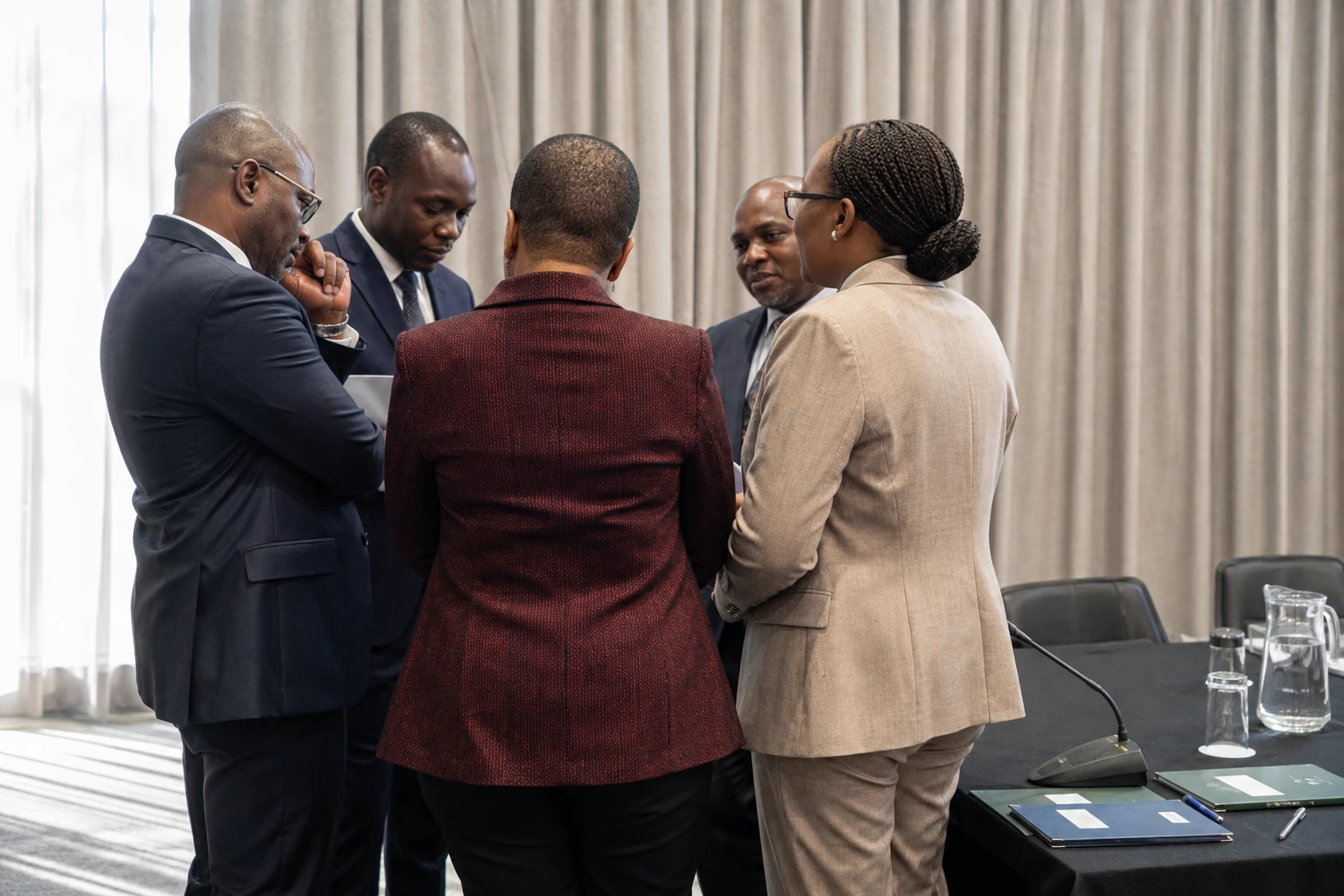
For South Africa, debt plays out on two fronts. Pretoria takes part in discussions among creditors, while also defending the interests of borrowing countries. In October 2026, this position explains its choice not to join the Paris Club as a permanent member immediately.
A choice that preserves room for manoeuvre
South Africa’s National Treasury confirmed the decision taken at the end of the period during which the country held prospective status. South Africa is returning to ad hoc participant status, a formula that allows it to join certain meetings and negotiations when it holds relevant claims.
This position is less restrictive than full membership. A permanent member must take part in the Paris Club’s work on an ongoing basis, share information about its claims and apply the group’s common principles. These are based in particular on solidarity among creditors, consensus and the coordination of debt treatments.
The Paris Club brings together 22 permanent creditor states. It deals mainly with bilateral public debt, meaning loans taken out directly from another state. Ad hoc participants, by contrast, can choose which cases to take part in, according to their interests and claims.
South Africa was granted prospective member status on 8 July 2022. The step was intended to allow a possible full membership to be assessed. The Paris Club noted at the time that Pretoria had taken part in 13 negotiations as a creditor since 1982. These operations involved six debtor countries.
The Paris Club’s information on South Africa’s status confirms this trajectory, as well as South Africa’s growing role among emerging creditors.
An African creditor that is also a borrower
South Africa’s distinctive position stems from this dual role. The country lends in some cases, particularly when it takes part in official creditors’ committees. At the same time, its economy depends on access to international markets and remains exposed to the high cost of financing.
This situation sets Pretoria apart from major advanced creditors. South Africa does not have the same financial clout as the Paris Club’s leading economies. It shares more of the concerns of other countries in the Global South about interest rates, capital volatility and the fiscal space needed for investment.
Ad hoc status therefore allows it to retain access to discussions without being locked into permanent institutional membership. It does not mean a withdrawal. When it takes part in a restructuring, South Africa remains bound by the rules accepted for the case in question.
The country also continues to participate in creditors’ committees set up under the G20 Common Framework. This mechanism coordinates G20 and Paris Club public creditors when a debtor state requests debt treatment. It does not replace the Paris Club, but broadens coordination to include countries such as China, India and South Africa.
Zambia’s case illustrates this involvement. The Paris Club’s tracking sheet indicates that discussions between Lusaka and Pretoria were still under way on 17 June 2026, while several other creditors had already signed bilateral agreements. The case is a reminder that restructurings move at different speeds depending on the countries, amounts and domestic procedures involved.
The official tracking of Zambia’s debt treatment also shows the complexity of negotiations involving multiple public and private creditors.
The Borrowers’ Platform as a complementary forum
In explaining its choice, Pretoria highlighted its commitment to the Borrowers’ Platform. Launched on 15 April 2026 during the spring meetings of the International Monetary Fund and the World Bank, the initiative brings together developing countries facing common financing challenges.
The platform does not negotiate restructurings directly on behalf of states. Instead, it is intended to help governments manage their debt more effectively, share experience and coordinate their positions in international discussions. UNCTAD, the United Nations agency for trade and development, provides its secretariat.
Its governance is led by the participating states. Finance ministers and public debt officials can exchange data, methods and practical solutions. The aim is to reduce the imbalance between creditors that are already highly organised and borrowing countries, which are often forced to negotiate separately.
UNCTAD’s introduction to the Borrowers’ Platform says it aims to strengthen South-South cooperation, transparency and the representation of developing countries in global financial debates.
A decision tied to Pretoria’s diplomatic trajectory
The choice comes after South Africa’s G20 presidency, which ran from 1 December 2024 to 30 November 2025. Pretoria had made debt, the cost of capital and reform of the international financial architecture priorities of its term.
The presidency gave the country a platform to raise African concerns with the major economies. The South African government notably argued for more predictable financing, greater recognition of the cost of capital and increased participation by African institutions.
The official review of the financial track of South Africa’s G20 presidency says the work gave significant attention to debt sustainability and the continent’s economic interests.
For African countries, the issue goes beyond Pretoria’s administrative status. South Africa remains one of the continent’s few powers able to operate both in creditor circles and in coalitions of borrowing countries. This gives it a bridging role, but also a delicate responsibility.
A signal for Southern Africa and the African Union
In the Southern African Development Community, or SADC, financing pressures have a direct impact on public budgets, infrastructure and social spending. Countries in the region often have to choose between debt service, long-term investment and people’s immediate needs.
South Africa’s choice could strengthen a two-pronged approach. Pretoria retains access to creditor coordination mechanisms while taking part in building a collective voice for borrowers. The strategy’s success will, however, depend on its ability to deliver concrete results, particularly greater contract transparency and faster restructurings.
Upcoming debt cases will provide a measure of this influence. Developments in G20 Common Framework committees, negotiations involving Zambia and the implementation of the Borrowers’ Platform’s first technical work will all bear watching. Pretoria’s challenge will be to remain a credible interlocutor for creditors without losing legitimacy among countries of the Global South.