Algeria
 Egypt
 Libya
 Morocco
 Sudan
 Tunisia
 Benin
 Burkina Faso
 Cabo Verde
 Côte d'Ivoire
 Ghana
 Guinea
 Guinea-Bissau
 Liberia
 Mali
 Mauritania
 Niger
 Nigeria
 Senegal
 Sierra Leone
 The Gambia
 Togo
 Cameroon
 Central African Republic
 Chad
 DR Congo
 Equatorial Guinea
 Gabon
 Republic of the Congo
 São Tomé and Príncipe
 Burundi
 Comoros
 Djibouti
 Eritrea
 Ethiopia
 Kenya
 Madagascar
 Malawi
 Mauritius
 Mozambique
 Rwanda
 Seychelles
 Somalia
 South Sudan
 Tanzania
 Uganda
 Angola
 Botswana
 Eswatini
 Lesotho
 Namibia
 Zambia
 Zimbabwe
South African tourism enters a more practical phase
In Pretoria, the question is no longer simply how to attract visitors. It is now how to turn those visitors into passable roads, sites ready to receive capital and sustainable jobs for South Africans. In a country where major conferences often produce plenty of announcements but few visible building projects, the issue is less about potential than the ability to deliver.
This shift comes amid favourable conditions. In 2025, South Africa welcomed 10.5 million international tourists, a historic record that surpasses pre-pandemic levels. The sector has also regained weight in the national economy, contributing an estimated 4.9% of GDP in 2024, according to South African tourism authorities.
For South Africa, whose capital is Pretoria, tourism is not merely a matter of image. It affects transport, hotels, restaurants, guides, small businesses and local authorities. It is also part of the SADC’s trajectory, since more than three-quarters of tourists arriving in 2025 came from neighbouring countries in the region.
An agreement to get projects off the page
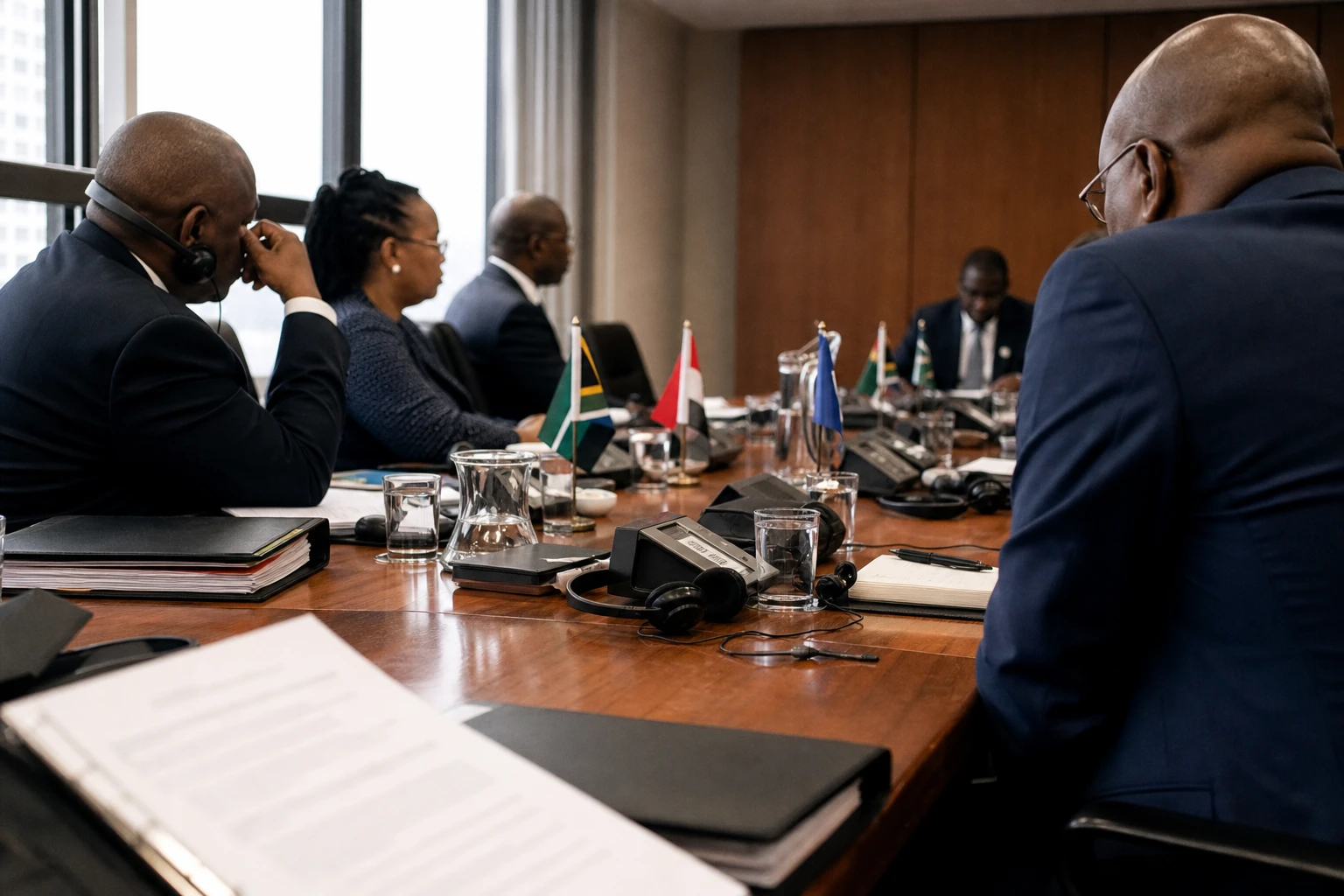
On 26 August 2026, the South African government formalised a strategic partnership between the Department of Tourism and the Department of Public Works and Infrastructure. The agreement runs for three years. It provides for the Public Works administration to make investment, project structuring and transaction advisory expertise available. The stated aim is clear: to make priority tourism projects more “bankable”, meaning sufficiently prepared to convince private investors and financiers.
The arrangement is built around Infrastructure South Africa, a programme of the Department of Public Works and Infrastructure responsible for planning, managing and implementing infrastructure projects. This connection is not an administrative detail. It shows that Pretoria is seeking to address a recurring weakness: projects that are announced but poorly prepared, badly phased or held back by slow implementation.
Tourism Minister Patricia de Lille summed up the ambition in direct terms: the country must turn tourism potential into bankable projects, then into investment and finally into jobs. Her counterpart in Public Works, Dean Macpherson, advocates the same practical approach: moving projects “from plans on paper” to actual construction sites.
This effort is not starting from scratch. In early August 2026, Parliament’s Tourism Committee received an update on 71 tourism infrastructure projects already implemented with support from the Development Bank of Southern Africa. According to the report, 54 projects had reached practical completion, 30 had reached administrative closure, and infrastructure worth about 885 million rand had been delivered. The same report cites 1,323 jobs created and 299 benefiting SMEs and subcontractors.
What Pretoria is really seeking to fix
The partnership between the two departments addresses a familiar constraint in South Africa: the country knows how to attract visitors, but still struggles to turn some sites into robust tourism products. The obstacles are also very tangible. Parliament has flagged delays linked to poor contractor performance, budgetary pressures, vandalism, municipal delays and community disputes. In other words, the problem is not only financial. It is also technical, local and institutional.
For the authorities, the challenge is twofold. On the one hand, they need to improve the quality of the project pipeline to attract private capital. On the other, they must prevent tourism investment from remaining concentrated in a few established hubs, as the government seeks to expand the map of destinations and increase benefits for communities. Parliament has recommended prioritising fewer, larger and more transformative projects rather than spreading resources thinly.
For small businesses, the impact could be significant if projects are completed. South African tourism sustains a broad value chain: construction, maintenance, local transport, crafts, accommodation, restaurants, security and guiding services. But these effects remain fragile if sites are not maintained, municipalities do not follow through, or projects are built without local consultation. The case of several sites cited by MPs, including infrastructure awaiting completion in Limpopo, shows that coordination with local areas is crucial.
The economic context is also driving efforts to speed things up. At the South Africa Investment Conference 2026, held on 31 March, the country recorded 889.8 billion rand in commitments across 81 projects, with the national target raised to 3 trillion rand in new investment over five years. Tourism now wants to capture a more visible share of this broader momentum, alongside energy, logistics and industry.
In the immediate term, one event will serve as a test. The second Tourism Infrastructure Investment Summit is due to take place in Johannesburg from 30 September to 1 October 2026. The summit will show whether the new partnership produces a credible pipeline of projects ready for financing, or merely extends the language of promises. For Southern Africa, the stakes go beyond South Africa: if Pretoria can link infrastructure, investment and regional visitor flows, it can strengthen a tourism model that is more integrated with the SADC and more beneficial to local economies.