
 Algeria
 Egypt
 Libya
 Morocco
 Sudan
 Tunisia
 Benin
 Burkina Faso
 Cabo Verde
 Côte d'Ivoire
 Ghana
 Guinea
 Guinea-Bissau
 Liberia
 Mali
 Mauritania
 Niger
 Nigeria
 Senegal
 Sierra Leone
 The Gambia
 Togo
 Cameroon
 Central African Republic
 Chad
 DR Congo
 Equatorial Guinea
 Gabon
 Republic of the Congo
 São Tomé and Príncipe
 Burundi
 Comoros
 Djibouti
 Eritrea
 Ethiopia
 Kenya
 Madagascar
 Malawi
 Mauritius
 Mozambique
 Rwanda
 Seychelles
 Somalia
 South Sudan
 Tanzania
 Uganda
 Angola
 Botswana
 Eswatini
 Lesotho
 Namibia
 Zambia
 Zimbabwe
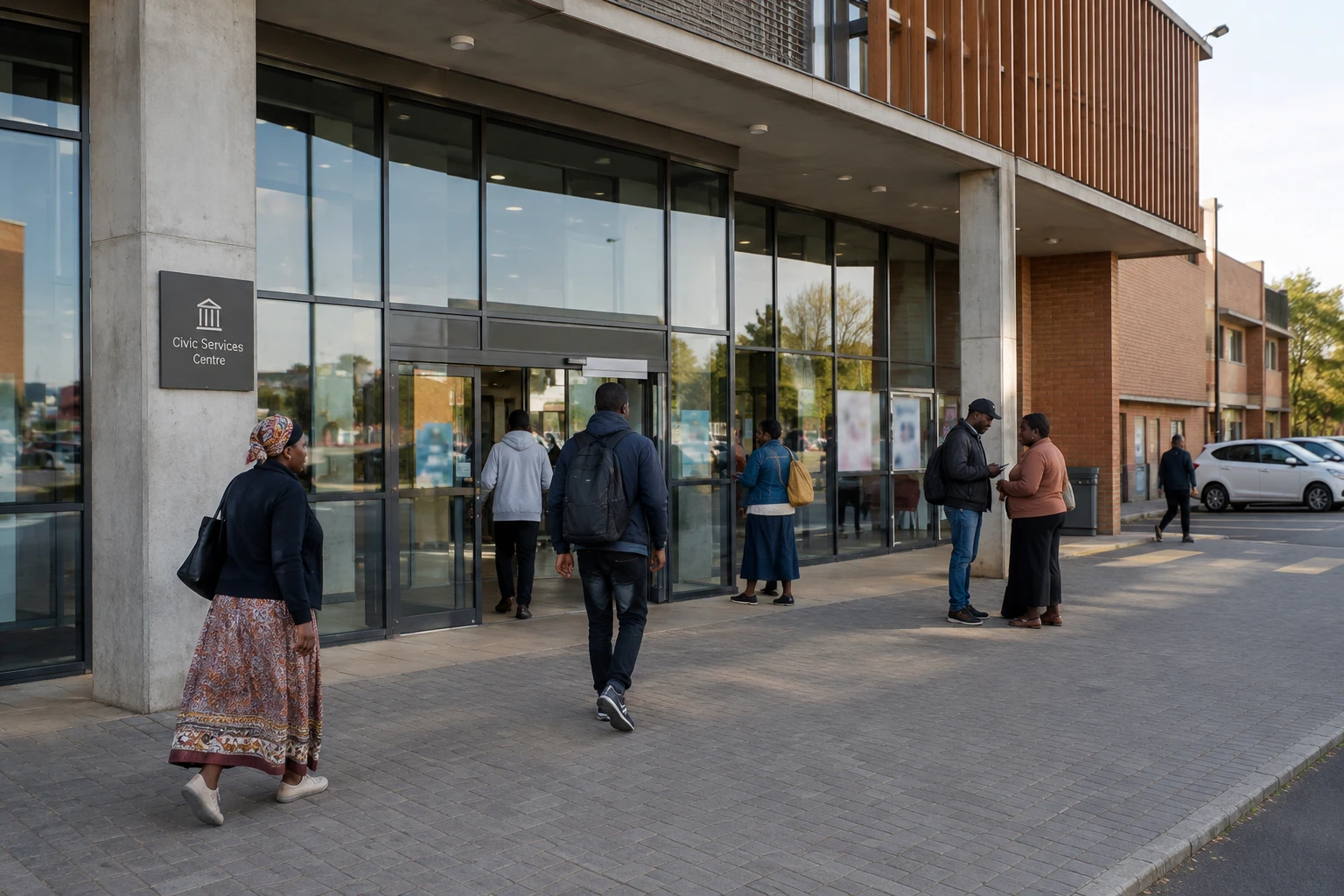
In Soweto, a procedural rule on asylum was enough to reignite a much broader question: who can seek protection in South Africa, and how can the political debate be prevented from becoming a threat to foreign nationals? The violence on 8 and 9 October shows how explosive the issue has become ahead of the local elections.
A court ruling at the heart of the controversy
On 7 July 2026, South Africa’s Constitutional Court struck down several barriers that could prevent people from having an asylum application considered. The ruling concerns, in particular, people who entered without passing through an official entry point, or who failed to report to a refugee reception office in time. It does not automatically grant them refugee status or a permanent right to stay. Each case must be examined. The Constitutional Court ruling on access to the asylum procedure
The government initially said the ruling did not automatically regularise anyone’s status. But administrative guidance intended to implement it was withdrawn after the clashes. The Department of Home Affairs cited overwhelmed reception offices and security concerns, while announcing that it was seeking a new approach. This reversal leaves an immediate question: how can the court’s ruling be respected while applications are managed? The withdrawal of the guidance and the department’s explanations
The asylum procedure allows a person who fears persecution in their country to seek protection. Submitting an application does not mean it will be accepted. The authorities must assess the evidence in each case, in line with the country’s constitutional and international obligations.
Violence hits Soweto and Durban
On Thursday 8 October, protests against the court ruling turned violent in Soweto, in the Johannesburg region, and in Durban, in KwaZulu-Natal province. Shops were looted and vehicles set alight. Police reported that 24 vehicles were burned, ten in Soweto and 14 in Durban, and that three people were arrested in the latter city. These figures were reported by the Associated Press and South African media outlet Sowetan. The damage figures reported by the Associated Press Sowetan’s report on the incidents
Protesters challenged access to the asylum procedure and called for foreign nationals they believe to be in the country illegally to leave. Residents interviewed in the neighbourhoods also voiced their anger. These accounts reflect local tensions, but do not show that foreign nationals are responsible for unemployment or insecurity.
At the same time, the government says it wants to strengthen border controls, combat human trafficking and speed up the deportation of people who do not meet the requirements for staying in the country. These migration management objectives do not alter the obligation to process asylum applications in accordance with the court ruling.
Local grievances exploited in the debate
Anger resonates with concrete problems: access to jobs, the cost of living, the provision of municipal services and trust in institutions. But foreign nationals, whether asylum seekers, refugees or migrant workers, are not a uniform group. Their legal status varies, as do their activities and life journeys. Blaming them collectively diverts attention from economic choices and service failures for which public authorities and municipalities are also responsible.
In Soweto and Durban, traders, residents and people targeted by anti-immigration slogans are directly affected by the violence. Small businesses, often part of neighbourhood economies, may lose their stock or be forced to close. Foreign nationals may be afraid to go to administrative services, precisely where they need to submit or renew their applications. Public safety and access to justice then become everyday concerns, not just a dispute between parties.
The authorities must therefore meet two demands at once: organise an asylum system capable of examining applications without becoming overwhelmed, and prevent demonstrations from turning into de facto expulsions or attacks. Suspending administrative guidance does not solve either the offices’ capacity problem or the uncertainty facing applicants.
Local elections, the next political test
The electoral context matters. South Africa’s local elections are scheduled for 4 November 2026. They will determine the local councils responsible, among other things, for local services. During campaigns, immigration can become a rallying issue, particularly when residents feel that the authorities are not addressing their concerns. The election date has been confirmed by the Electoral Commission and the government. The Electoral Commission confirms the date of the local elections
The political challenge is to address local concerns without conflating regular migration, irregular stay and applications for protection. Municipal councillors can act on some services and neighbourhood cohesion, but asylum policy is the responsibility of the national government and is governed by the framework set by the courts. This division of responsibilities deserves to be clearly explained during the campaign.
The issue also extends beyond South Africa’s borders. South Africa is a major destination for regional mobility, particularly in southern Africa, where work, trade and family ties cross borders. The Southern African Development Community (SADC), a regional organisation of southern African countries, advocates coordination of migration policies and safer, more orderly movement. How Pretoria reconciles migration control, access to asylum and the prevention of violence will therefore affect its relations with its neighbours. The SADC regional framework on migration governance
Over the coming weeks, two points will be worth watching: the introduction of new asylum guidance and the authorities’ ability to secure reception offices. As the 4 November vote approaches, the response to these questions will also show whether the migration debate remains a matter of public policy or fuels further confrontation in neighbourhoods.



