
 Algeria
 Egypt
 Libya
 Morocco
 Sudan
 Tunisia
 Benin
 Burkina Faso
 Cabo Verde
 Côte d'Ivoire
 Ghana
 Guinea
 Guinea-Bissau
 Liberia
 Mali
 Mauritania
 Niger
 Nigeria
 Senegal
 Sierra Leone
 The Gambia
 Togo
 Cameroon
 Central African Republic
 Chad
 DR Congo
 Equatorial Guinea
 Gabon
 Republic of the Congo
 São Tomé and Príncipe
 Burundi
 Comoros
 Djibouti
 Eritrea
 Ethiopia
 Kenya
 Madagascar
 Malawi
 Mauritius
 Mozambique
 Rwanda
 Seychelles
 Somalia
 South Sudan
 Tanzania
 Uganda
 Angola
 Botswana
 Eswatini
 Lesotho
 Namibia
 Zambia
 Zimbabwe
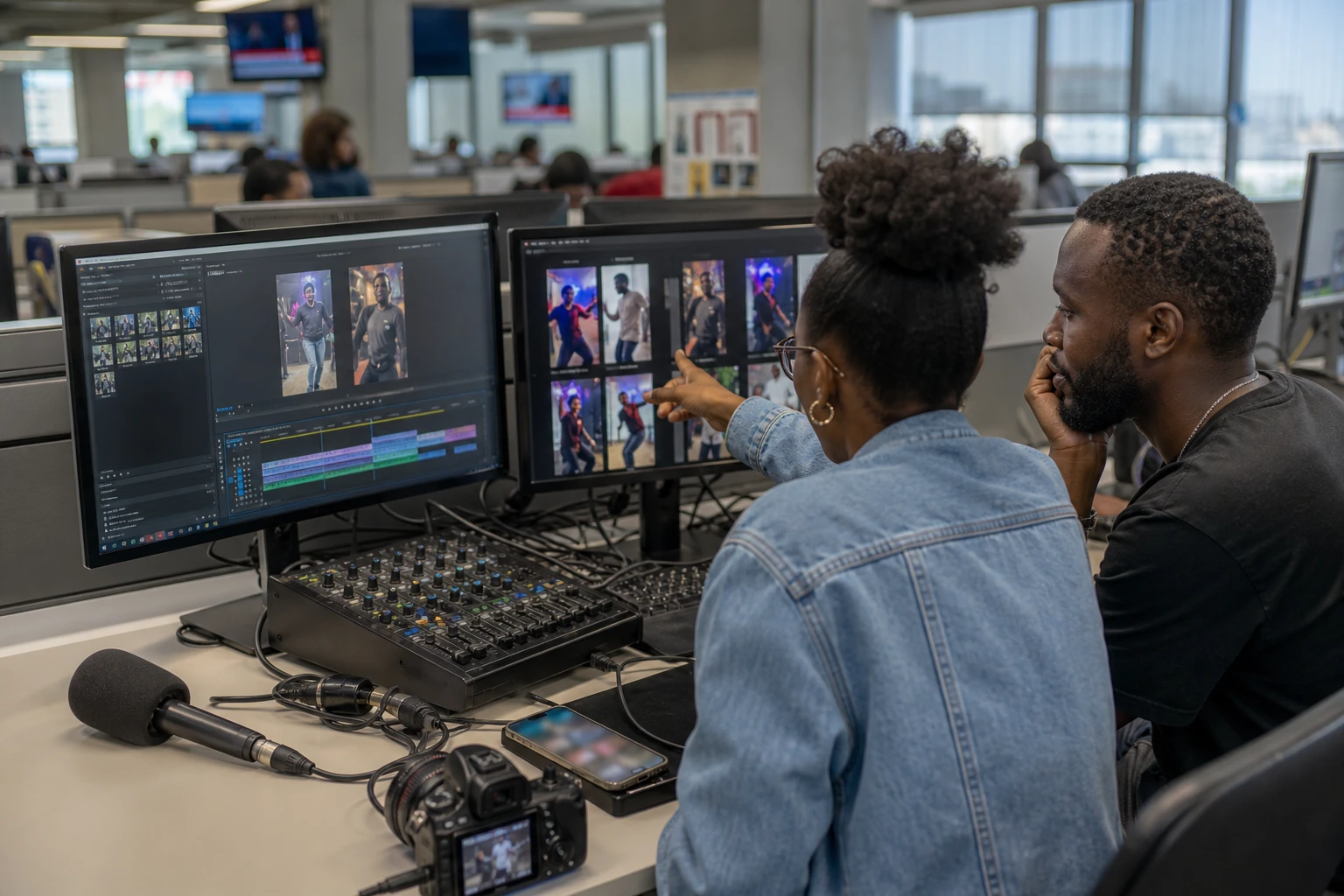
When dance becomes a showcase
In Johannesburg, a dance routine lasting just a few seconds can now do what a poster, a tour or a local radio station could not always guarantee: catch someone’s ear, then their attention. In the amapiano ecosystem, dance is no longer merely an accompaniment. It is also a gateway to a track, an artist and sometimes an audience far beyond South Africa.
This shift says a lot about the times. On TikTok, content is recommended primarily on the basis of interactions, sounds, hashtags, language and, to some extent, the country where it is posted. The platform also says its “For You” feeds prioritise what keeps users engaged, rather than simple geographical proximity. In other words, a dance that starts in a Johannesburg township can travel quickly if enough people recreate it.
A South African genre already part of the cultural economy
Amapiano is no longer a niche phenomenon. South Africa’s Department of Sport, Arts and Culture now includes it among the “modern sounds” the country aims to develop as an economic sector, alongside pop, rock and hip-hop. The government also presents the creation of cultural clusters as a way to formalise the sector, create jobs and improve access to local and international markets.
This growth is part of a broader trajectory. In its 2024 music strategy, South Africa’s Department of Sport, Arts and Culture said amapiano had played a major role in the growth of music listening, with nearly 2 billion streams and substantial circulation beyond the country’s borders. The same document notes that more than 40% of amapiano streams come from outside the country.
In a country with one of the continent’s largest recorded-music markets, this momentum matters. It feeds revenue from platforms, live shows and neighbouring rights, as well as the careers of young artists, dancers and content creators. South Africa’s department also notes that the sector employs more than 20,000 people.
What viral challenges tell us
Dance challenges are more than simple entertainment. They have transformed how a song circulates. A track can first exist as a short, easy-to-recreate clip before becoming a familiar song. In South Africa, the format has already helped several amapiano hits, from “Dakiwe” to “Umlando”, both of which gained traction on social media before reaching a wider audience.
This mechanism favours artists who can plan a release as a visual campaign. Producers and DJs are no longer selling just a sound. They are creating material for people to reuse, simplify and imitate. This is an important shift for South African popular music, where the local scene is already engaging with short-form video, automated recommendations and mass sharing.
The results can be seen in how some artists build their profile. TikTok itself has highlighted the global breakthrough of Johannesburg-born Tyla, noting that her international success was driven by millions of dance recreations around “Water”. The platform presents this as one sign of the global circulation of South African sounds.
Young people, phones and a bigger stage
In neighbourhoods such as Alexandra, east of Johannesburg, the logic is tangible. A phone is enough. A living room, courtyard or school corridor can become a set. For many teenagers and young adults, a challenge requires neither a studio, a large budget nor an established distribution network. Above all, it calls for some skill with the steps, repetition and a stable internet connection. This low barrier to entry is precisely what explains the format’s power.
But this model does not erase inequality. At times, it sidesteps it. A young woman filming a dance in a confined space can gain visibility without going through conventional channels. An emerging artist can find an audience without a powerful label. But monetisation remains uncertain, and visibility does not automatically translate into lasting income. This is where the debate becomes economic, not just cultural.
South African public institutions appear to have understood this. The National Youth Development Agency recently announced a partnership with amapiano figures to create economic opportunities for young people in the creative sector. The message is clear: digital success must amount to more than virality. It must be able to lead to jobs, skills and stronger value chains.
A South African trend with regional reach
The reach extends far beyond Pretoria, South Africa’s administrative capital. In the Southern African Development Community (SADC), cultural industries are circulating ever faster, driven by social media, streaming platforms and regional mobility. Born in South Africa, amapiano is now part of this wider circulation, where sounds from Johannesburg, Durban and Pretoria meet those from Maputo, Gaborone, Harare and Lusaka.
For South Africa, the stakes are also diplomatic and symbolic. The country is exporting an aesthetic, an energy and a way of dancing and producing music. The government sees this as a resource for creative growth. Artists, meanwhile, see a bigger stage, but also fiercer competition in a market where anyone can publish—and where anyone can be copied.
What happens next will depend on three factors. First, artists’ ability to turn views into careers. Second, institutions’ capacity to regulate a creative economy that remains largely informal. Finally, the way TikTok, YouTube Shorts and other platforms continue to shape music discovery in southern Africa. In this landscape, amapiano is not just a genre in vogue. It is a social, economic and digital laboratory.



