Algeria
 Egypt
 Libya
 Morocco
 Sudan
 Tunisia
 Benin
 Burkina Faso
 Cabo Verde
 Côte d'Ivoire
 Ghana
 Guinea
 Guinea-Bissau
 Liberia
 Mali
 Mauritania
 Niger
 Nigeria
 Senegal
 Sierra Leone
 The Gambia
 Togo
 Cameroon
 Central African Republic
 Chad
 DR Congo
 Equatorial Guinea
 Gabon
 São Tomé and Príncipe
 Burundi
 Comoros
 Djibouti
 Eritrea
 Ethiopia
 Kenya
 Madagascar
 Malawi
 Mauritius
 Mozambique
 Rwanda
 Seychelles
 Somalia
 South Sudan
 Tanzania
 Uganda
 Angola
 Botswana
 Eswatini
 Lesotho
 Namibia
 South Africa
 Zambia
 Zimbabwe
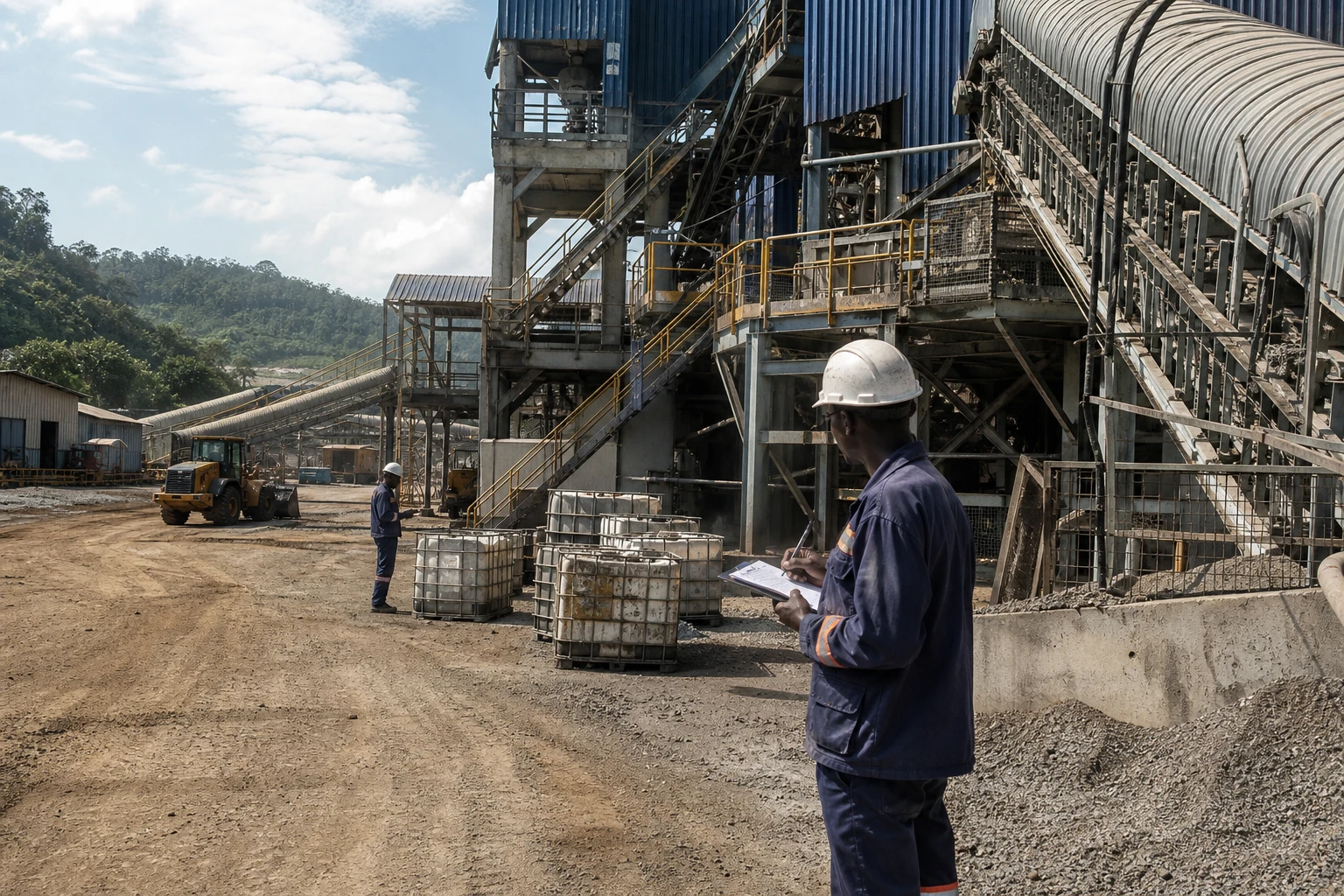
At M’Fouati, in the Bouenza department, the stakes go beyond a change of shareholder. Soremi mine must now prove it can restore regular copper and zinc production after several years of legal tensions and industrial slowdown.
A mining dispute resolved
US group Gerald Group has regained control of the entity that owns Soremi, according to information made public in Brazzaville on 24 September 2026. This development brings to an end, at least legally, a long-running dispute with China National Gold Group, the Chinese company that had run the project since 2014.
The mine is in southern Congo, close to several polymetallic licences. It produces copper cathodes and zinc ingots. Soremi is active in the M’Fouati resources in particular, while also conducting mining and exploration activities around Boko-Songho and Yanga-Koubanza.
Gerald Group is not a new entrant. The US commodities trader was involved in the project’s early years. An agreement concluded with the Congolese state in 2008 covered the exploitation of the region’s polymetallic resources. Data from the Extractive Industries Transparency Initiative also show that the Congolese state has historically held a 10% stake in Soremi.
In December 2013, Gerald Group sold its majority stake to China National Gold Group. The takeover was completed in March 2014. The Chinese group said at the time that it had invested more than $145m in the mine and its infrastructure.
Industrial copper production began in 2017. Zinc production followed a few years later. The project aimed for annual capacity of between 12,000 and 15,000 tonnes of copper. However, this target has not been achieved on a sustained basis.
Production remains the main test
Gerald Group’s return does not automatically resolve Soremi’s difficulties. The site still needs to secure its supplies, reserves and processing facilities. It must also restore sufficient certainty for employees, subcontractors and communities around the mining areas.
Available figures illustrate the gap between announced capacity and recent results. In 2024, Soremi produced 8,234.9 tonnes of copper cathodes and 15,084.1 tonnes of zinc ingots. In the first nine months of 2025, production stood at 4,134 tonnes of copper and 8,753 tonnes of zinc, according to data published by the Congolese Employers’ and Interprofessional Union.
These results do not necessarily mean that operations have stopped. Rather, they point to a mine under pressure. Soremi has continued work around Boko-Songho and stepped up the search for new reserves. The company has also begun building a module for lead processing. There is also a gold exploration permit in the Lékoumou department, but its environmental and social impact assessment still needed approval.
Reserves will be a decisive factor. The Employers’ Union’s annual report notes that the gradual depletion of some deposits and falling metal grades can reduce output, even when facilities remain operational. In a polymetallic mine, performance therefore depends as much on the plant as on the quality and accessibility of the ore.
The dispute between shareholders added another constraint. Gerald Group says it exercised a right to buy out the Chinese stake in 2020. China National Gold is alleged to have subsequently refused to transfer the shares in question. The dispute was brought before arbitral bodies and several courts, including in Hong Kong and the British Virgin Islands.
Arbitration awards issued in 2023, followed by court rulings through to 2025, upheld Gerald Group’s claims. On 16 July 2025, a British Virgin Islands court ordered the shareholder register to be rectified. The decision was intended to restore Gerald Group as the owner of the entity controlling Soremi.
A weakened Congolese sector
Soremi’s difficulties have weighed on Congo’s metallurgical industry. In the first quarter of 2026, sector output is reported to have fallen by 55.9% year on year, according to figures from the Directorate-General for the Economy cited in the available material. Copper cathode production is said to have fallen from 1,520 tonnes to 482.8 tonnes over the same period.
These figures should be treated with caution until all detailed statistical series are available. Nevertheless, they point to a broader problem for Brazzaville: mining diversification is advancing, but remains concentrated around a limited number of projects and exposed to industrial delays, shareholder disputes and the maturity of deposits.
For the Congolese state, the expected recovery must therefore deliver tangible results. The priorities are to preserve direct and indirect jobs, maintain mining revenues and ensure exports continue. Workers at the site and local service companies will be the first to gauge whether the restart is real.
The benefits will not be distributed evenly across the different areas. M’Fouati and communities near the facilities benefit directly from operations, while people further away depend more on indirect effects: transport, trade, subcontracting and local tax revenues. This disparity underscores the importance of transparent governance of revenues and the company’s social obligations.
Congolese copper in the metals race
The change of control comes amid growing competition for metals needed for electricity networks, industrial equipment and the energy transition. Copper is particularly sought after for its conductive properties. Zinc remains essential for steel galvanising and a range of industrial applications.
Congo does not play the same role as the Democratic Republic of the Congo, whose copper and cobalt industry is on a very different scale. However, Soremi’s revival is a reminder that Central Africa also has polymetallic assets capable of attracting international capital and operators.
The development also fits with the closer economic ties sought between Brazzaville and Washington. For the US, Gerald Group’s presence offers a foothold in a more diversified supply chain. For Congo, it could open a new phase of investment, provided the relationship is based on verifiable commitments on production, jobs and local processing.
What happens next will depend less on the announcement of a change in shareholder than on the site’s results. The next indicators to watch will be the pace of exports, the resumption of work at Boko-Songho, progress on lead processing and Soremi’s ability to replace depleted reserves. For Brazzaville, the real challenge is now to turn a legal victory into a lasting industrial recovery.