Algeria
 Egypt
 Libya
 Morocco
 Sudan
 Tunisia
 Benin
 Burkina Faso
 Cabo Verde
 Côte d'Ivoire
 Ghana
 Guinea
 Guinea-Bissau
 Liberia
 Mali
 Mauritania
 Niger
 Nigeria
 Senegal
 The Gambia
 Togo
 Cameroon
 Central African Republic
 Chad
 DR Congo
 Equatorial Guinea
 Gabon
 Republic of the Congo
 São Tomé and Príncipe
 Burundi
 Comoros
 Djibouti
 Eritrea
 Ethiopia
 Kenya
 Madagascar
 Malawi
 Mauritius
 Mozambique
 Rwanda
 Seychelles
 Somalia
 South Sudan
 Tanzania
 Uganda
 Angola
 Botswana
 Eswatini
 Lesotho
 Namibia
 South Africa
 Zambia
 Zimbabwe
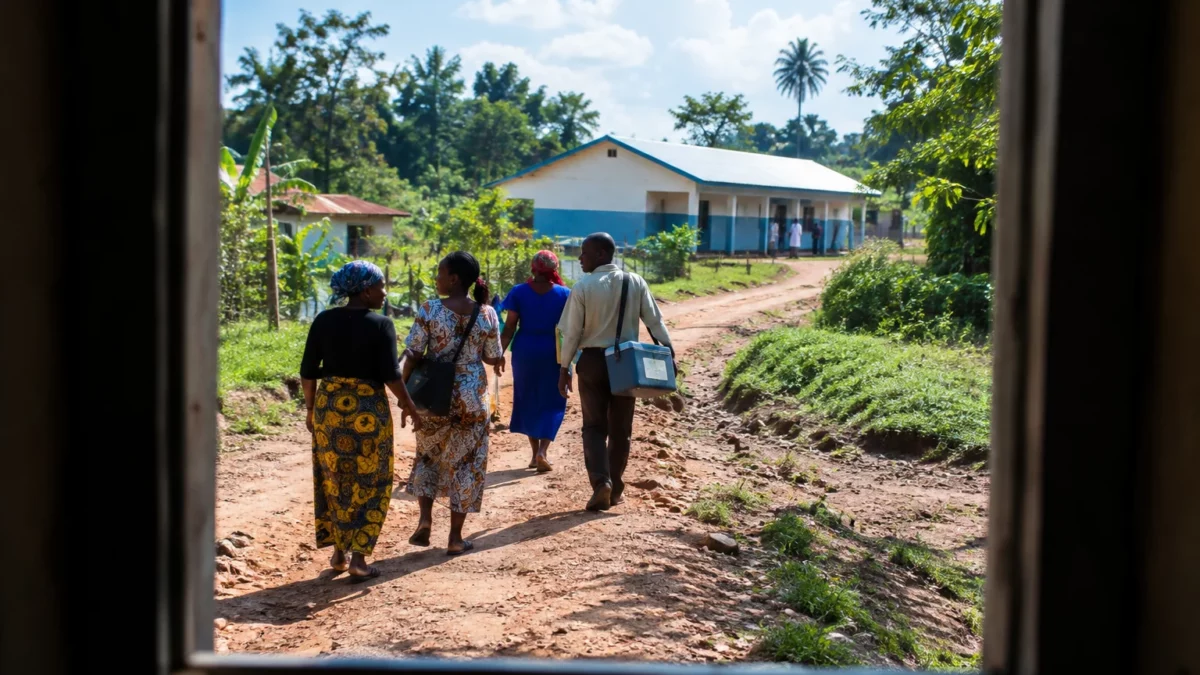
In Freetown and rural districts alike, reducing pregnancy-related deaths depends as much on the quality of care as on the ability to reach a health centre in time. In Sierra Leone, indicators are improving significantly, but unofficial fees and difficult roads are a reminder that access to free care remains unequal.
Progress measured over more than two decades
The maternal mortality ratio fell from 1,603 deaths per 100,000 live births in 2000 to 354 in 2023, a drop of nearly 80%. This ratio estimates deaths related to pregnancy or childbirth per 100,000 live births. Data from the World Health Organization (WHO) and the World Bank confirm the figure of 354 for 2023. These are estimates, not a comprehensive count of deaths for each year.
This change is part of a gradual transformation of health services. Since 2010, maternal and child healthcare has officially been free for the groups covered by the national programme. The WHO links the decline in mortality to expanded services, the training of skilled professionals and better management of complications. UNFPA, the United Nations agency responsible for population issues, also highlights the growing role of midwives.
In Freetown, midwives at Princess Christian Maternity Hospital have been trained in ultrasound. Strengthening their skills can help identify certain risks before they become emergencies. The availability of medicines for post-partum haemorrhage — severe bleeding after childbirth — is also crucial. The country has also developed specialist training programmes at its higher education institutions.
National campaign targets preventable deaths
In March 2026, the Ministry of Health launched a 300-day national campaign called “Triple Zero”. It aims to prevent avoidable maternal and child deaths, as well as reach children who have received no routine vaccinations. The initiative combines awareness-raising, improved stocks of medical supplies, staff training and community outreach.
On 30 October, the ministry announced a 31.3% fall in maternal deaths and a 12.7% fall in child deaths compared with the same period in 2025. These figures come from hospital data presented by the authorities. They point to an encouraging trend, but should not be confused with the national maternal mortality ratio, which is based on comparable estimates covering several years. Without details on the exact period, the coverage of facilities and data-collection methods, hospital comparisons do not necessarily describe the situation across the whole country.
United Nations organisations are supporting the strengthening of systems to monitor and respond to maternal and perinatal deaths. The aim is to examine the circumstances of every recorded death in order to identify delays, gaps in care and possible corrective measures. This work is particularly important when national statistics draw on information from different facilities.
Free on paper, obstacles on the ground
Officially free care does not always mean there are no costs. Patients report being charged for services or medicines that are supposed to be covered, as well as making unofficial payments. For families on low incomes, these costs can delay a consultation or make antenatal care harder to access. They can also undermine trust in health facilities.
Distance is another obstacle. Poor roads can make it difficult to transport a woman facing complications quickly, especially outside the capital. Strengthening maternity units is therefore not enough: people must also be able to reach them, there must be enough staff, and medicines must be consistently available. The challenges differ between Freetown, where hospitals are closer, and rural areas, where journeys and transport options can be a greater burden.
The government campaign aims to reduce delays in receiving care, but its results will need to be assessed beyond interim announcements. The ministry itself has stressed the importance of accountability at facilities and the quality of the welcome patients receive. Reports of unjustified payments show that putting the rules into practice remains a challenge, even when the national programme provides for free care.
A public health issue for West Africa
Sierra Leone is a member of the Economic Community of West African States (ECOWAS), which brings together countries facing common challenges in public health, patient mobility and staff training. National progress does not remove the need to examine disparities between areas or the demand for midwives. However, it offers useful lessons on the importance of combining free care, medical expertise and monitoring of results.
Looking ahead, two benchmarks will be important: the publication of comparable national data after 2023 and the final assessment of the 300 days of action. The declines announced in 2026 warrant monitoring, but do not replace harmonised statistical series. The challenge for the Sierra Leonean authorities will be to turn the progress already measured into accessible and reliable care, including for women living far from major centres.
Figures on maternal mortality and information on the reasons for its decline are documented by the WHO indicator for Sierra Leone, the World Bank data and the UNFPA analysis in Sierra Leone. Announcements about the campaign and its results have been reported by the Sierra Leonean media outlet Sierraloaded and the Ministry of Information and Civic Education.