Algeria
 Egypt
 Libya
 Morocco
 Sudan
 Tunisia
 Benin
 Burkina Faso
 Cabo Verde
 Côte d'Ivoire
 Ghana
 Guinea
 Guinea-Bissau
 Liberia
 Mali
 Mauritania
 Niger
 Nigeria
 Senegal
 The Gambia
 Togo
 Cameroon
 Central African Republic
 Chad
 DR Congo
 Equatorial Guinea
 Gabon
 Republic of the Congo
 São Tomé and Príncipe
 Burundi
 Comoros
 Djibouti
 Eritrea
 Ethiopia
 Kenya
 Madagascar
 Malawi
 Mauritius
 Mozambique
 Rwanda
 Seychelles
 Somalia
 South Sudan
 Tanzania
 Uganda
 Angola
 Botswana
 Eswatini
 Lesotho
 Namibia
 South Africa
 Zambia
 Zimbabwe
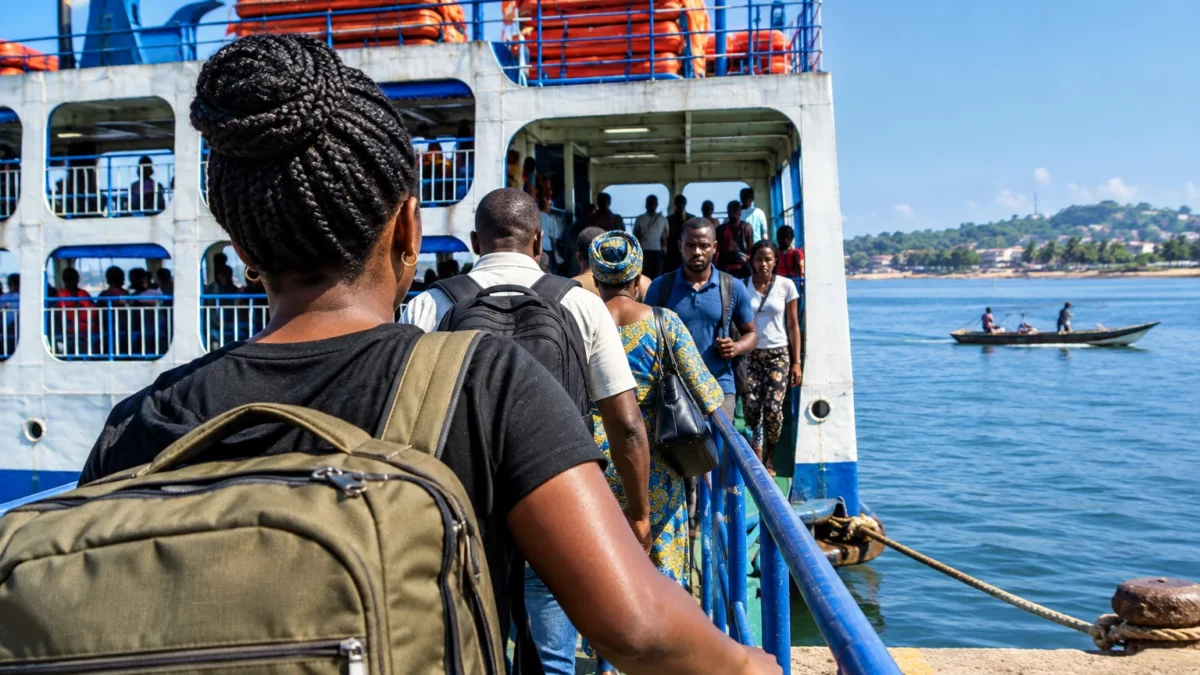
For travellers arriving in Sierra Leone, the journey between Lungi International Airport and Freetown often begins with a crossing of the estuary. A proposed direct road link between the two banks could change how that journey is made. But the technical assessment presented in November is not yet a construction project: its funding, final cost and effects on users remain to be established.
A study milestone, not yet a decision to build
On Friday 20 November 2026, experts from Acrow Corporation of America and partner companies presented a preliminary engineering assessment to the National Investment Board (NIB), the Sierra Leonean body responsible for promoting investment. According to local media reports, the study focuses in particular on the route between Tagrin and Portee, in Freetown.
The presentation forms part of the memorandum of understanding signed by the government and Acrow on 19 June 2025. The announced framework provides for the design, construction and operation of the structure, followed by its transfer to the state. It does not, in itself, confirm that funding has been secured or that construction will begin.
The next phase is expected to run from January to June 2027. It is to include feasibility studies, detailed plans and a bill of quantities and cost estimate, setting out the work and materials required. These elements should make it possible to clarify the cost and assess whether the project is technically and financially feasible.
The timetable and details of the 20 November meeting were reported by Sierra Leonean outlet Sierraloaded. The public documents consulted do not make it possible to independently confirm the full contents of this preliminary assessment. The announcement should therefore be distinguished from final approval of the project.
Lungi, the country’s gateway and a regional hub
Sierra Leone’s international airport is in Lungi, on the other side of the estuary from Freetown, the capital. Passengers currently rely on maritime services or, for some journeys, air transfers. A direct road could reduce this dependence and also make it easier for goods and workers to travel.
The stakes have grown with the airport’s modernisation. The new terminal, financed and operated through a partnership with the Summa Group, was inaugurated in 2023, according to a state planning document. However, improving facilities for travellers will not be enough if the connection with the country’s main administrative and economic centre remains difficult.
Lungi is also home to infrastructure with a regional role. In July 2026, ECOWAS, the Economic Community of West African States, inaugurated a logistics depot and conference centre in the area. The organisation presents these facilities as tools for integration, humanitarian response and regional trade. Improved access could therefore benefit institutions and activities based around Lungi as well as air travellers.
Cost and business model still to be decided
The NIB provisionally estimates the roughly seven-kilometre bridge will cost between $600 million and $700 million. The range appears in its presentation of investment opportunities for 2026. It remains a feasibility estimate, not a final budget: the studies still need to clarify the cost, expected revenue and allocation of risks.
The proposed model could mobilise private capital, including long-term debt and equity. Tolls or a mixed payment formula have been discussed, but no final decision has been made public. The crucial question will be who pays, under what rules, and how to prevent the cost of using the link from putting it beyond the reach of some travellers or businesses.
In September 2026, presidential chief of staff David Moinina Sengeh announced $1.6 million in funding from the US Trade and Development Agency (USTDA) for preparatory studies, local media reported. This sum is for project preparation; it is not construction funding, which would be considerably larger. The overall financing arrangements and any public guarantees remain to be clarified.
The NIB publishes the indicative cost and describes the project as an investment opportunity. This institutional presentation provides insight into the state’s ambitions, but does not replace an independent demand study or an analysis of affordability. Experience from other major infrastructure projects highlights the importance of comparing traffic forecasts, maintenance costs and ability to pay before signing a long-term commitment.
A national promise to be assessed in a West African context too
For Freetown residents, the anticipated benefit is more predictable access to the airport. For communities near the route, questions will also concern land acquisition, displacement, jobs and compensation. The planned environmental and social studies will need to set out these effects, rather than treating the structure as merely a link between two points on a map.
The project comes as Sierra Leone seeks to strengthen its transport infrastructure and its role in West African trade. But regional benefits will depend on the quality of connections beyond the bridge, particularly roads to other districts and neighbouring countries. A faster crossing alone does not guarantee lower logistics costs or equitable access to services.
The next phase to watch is therefore the studies planned between January and June 2027. Their publication should clarify the route, environmental and social impact, updated cost and commercial terms. Until then, the Lungi bridge remains a project in preparation: potentially transformative infrastructure for Sierra Leone and ECOWAS, whose viability will depend as much on its financing as on its actual usefulness to users.