Algeria
 Egypt
 Libya
 Morocco
 Sudan
 Tunisia
 Benin
 Burkina Faso
 Cabo Verde
 Côte d'Ivoire
 Ghana
 Guinea
 Guinea-Bissau
 Liberia
 Mali
 Mauritania
 Niger
 Nigeria
 Senegal
 The Gambia
 Togo
 Cameroon
 Central African Republic
 Chad
 DR Congo
 Equatorial Guinea
 Gabon
 Republic of the Congo
 São Tomé and Príncipe
 Burundi
 Comoros
 Djibouti
 Eritrea
 Ethiopia
 Kenya
 Madagascar
 Malawi
 Mauritius
 Mozambique
 Rwanda
 Seychelles
 Somalia
 South Sudan
 Tanzania
 Uganda
 Angola
 Botswana
 Eswatini
 Lesotho
 Namibia
 South Africa
 Zambia
 Zimbabwe
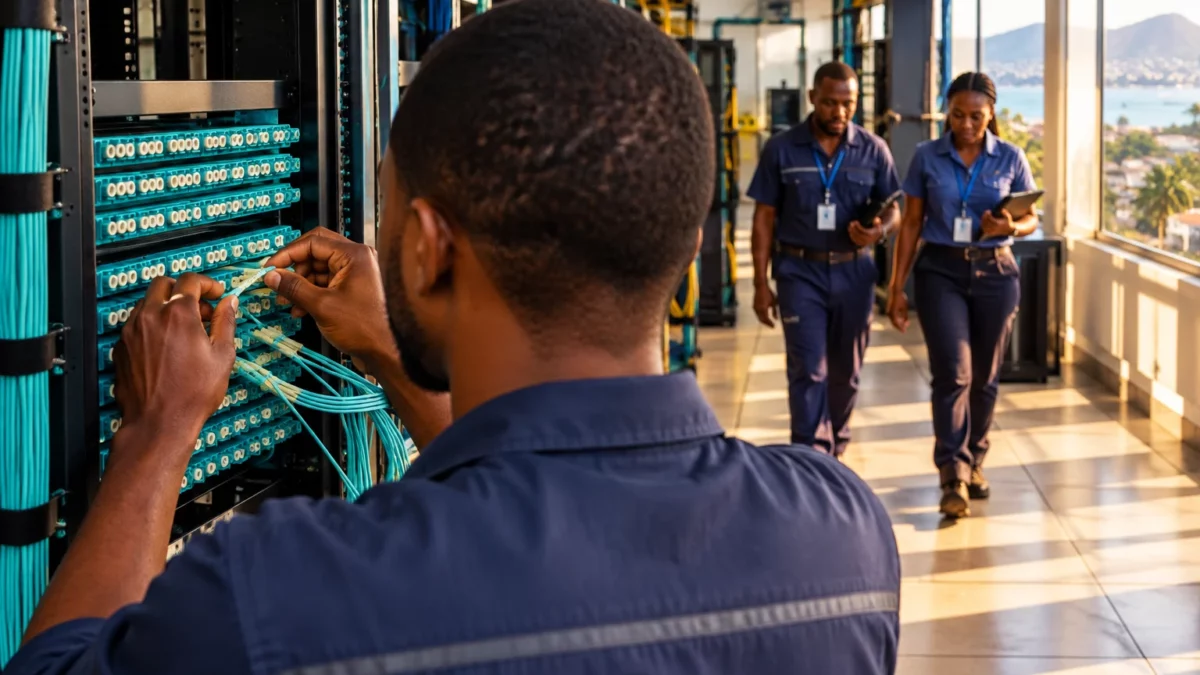
For residents and businesses in Freetown, an internet outage can quickly affect more than telecommunications: payments, public services and commercial exchanges also depend on a stable connection. Sierra Leone wants to reduce this risk by preparing a second undersea link to international networks.
National cooperation in a regionally connected sector
The country is a member of the Economic Community of West African States (ECOWAS), which supports several cross-border connectivity initiatives. But service continuity also depends on national decisions: financing, equitable access to infrastructure and alternative routes.
The national broadband strategy for 2023-2028 already provides for strengthening network redundancy. In other words, it aims to ensure alternative routes are available when the main link is interrupted. It also refers to shared access to infrastructure and the possibility of new landing points outside Freetown.
This priority comes amid a West African context in which undersea cables connect national economies to global networks, but damage to one link can disrupt several countries. In March 2024, breaks affecting several cables off the West African coast caused service interruptions across the region. Reliance on a limited number of routes therefore makes redundancy essential.
A consortium to advance the project
Sierra Leone’s Ministry of Communication, Technology and Innovation has announced the creation of a national consortium. It brings together the government and companies Orange Sierra Leone, Africell, QCell and Zoodlabs, which specialises in digital infrastructure. The announcement was made on 18 November, according to local reports published in Freetown.
Bringing operators and authorities together is intended to help coordinate preparations for the project and mobilise investment. However, the creation of a consortium does not mean that the cable has been financed, built or is already in service. The route, landing point, technical capacity and timetable remain key factors.
Initial options were explored before this announcement. The national broadband strategy had included a second connection among its objectives. In 2024, regulator NatCA said operators and Zoodlabs were examining various options, including a connection to the 2Africa system. At the time, this was an option under consideration, not a final decision.
The project has also been discussed at regional level. The authorities took part in talks on Amilcar Cabral, a cable project intended to connect several West African countries, and later in a workshop devoted to a feasibility study for a second link. These initiatives show that Sierra Leone’s connection depends both on national decisions and on regional interconnections. The publicly available information does not yet establish that the consortium has selected any of these options.
Resilience and cost: what is at stake for users
Sierra Leone currently relies on the Africa Coast to Europe, or ACE, cable for its international undersea connection. A second route would provide an alternative in the event of an outage or degradation of the terrestrial network linking the country to its neighbours. It would not, on its own, guarantee freedom from outages: national links, electricity supply and network management also matter.
The issue is also an economic one. According to a project brief published by the Commonwealth, Sierra Leonean operators were buying about 95.5 gigabits per second of international capacity. Demand could grow by around 40% a year through to 2030. These estimates indicate anticipated needs, but do not guarantee tariffs or the capacity that will actually be delivered.
Additional capacity could strengthen competition in the wholesale market, where operators buy bandwidth before supplying it to businesses and individuals. But lower costs are not automatic. They will depend on the terms of access to the cable, commercial agreements, regulation and how operators pass on any savings.
The potential benefits will not be the same everywhere. Businesses and digital services in Freetown may benefit more quickly from greater international capacity. In rural areas, improvements will also depend on the roll-out of terrestrial networks and the cost of subscriptions. The national strategy specifically provides for extending coverage beyond major urban centres and improving shared access to infrastructure.
Financing and timetable remain unclear
Figures reported after the announcement do not fully match. One Sierra Leonean media outlet reports a $45 million project, with a $15 million government contribution announced and support from the World Bank. Another report gives a cost of $40 million and $15 million in World Bank financing. A Commonwealth brief, published before the announcement, puts the estimated cost at $38 million and describes the project as still at the conceptual stage. These figures reflect different presentations and do not make it possible to conclude that the full financing has been secured.
The next steps will therefore need to clarify the contributions of the government, operators and financial partners, as well as each party’s responsibilities. The infrastructure access model will also need to be specified. Transparent governance will be important to ensure the new link benefits the market as a whole, rather than only its investors.
For Sierra Leone, the issue goes beyond the arrival of a cable: it is about making communications less vulnerable and supporting a growing digital economy. At ECOWAS level, the case is a reminder that regional connectivity depends as much on shared infrastructure as on each country’s ability to secure its own access. The next concrete step will be the publication of verifiable information on financing, the route and the timetable.