Algeria
 Egypt
 Libya
 Morocco
 Sudan
 Tunisia
 Benin
 Burkina Faso
 Cabo Verde
 Côte d'Ivoire
 Ghana
 Guinea
 Guinea-Bissau
 Liberia
 Mali
 Mauritania
 Niger
 Nigeria
 Sierra Leone
 The Gambia
 Togo
 Cameroon
 Central African Republic
 Chad
 DR Congo
 Equatorial Guinea
 Gabon
 Republic of the Congo
 São Tomé and Príncipe
 Burundi
 Comoros
 Djibouti
 Eritrea
 Ethiopia
 Kenya
 Madagascar
 Malawi
 Mauritius
 Mozambique
 Rwanda
 Seychelles
 Somalia
 South Sudan
 Tanzania
 Uganda
 Angola
 Botswana
 Eswatini
 Lesotho
 Namibia
 South Africa
 Zambia
 Zimbabwe
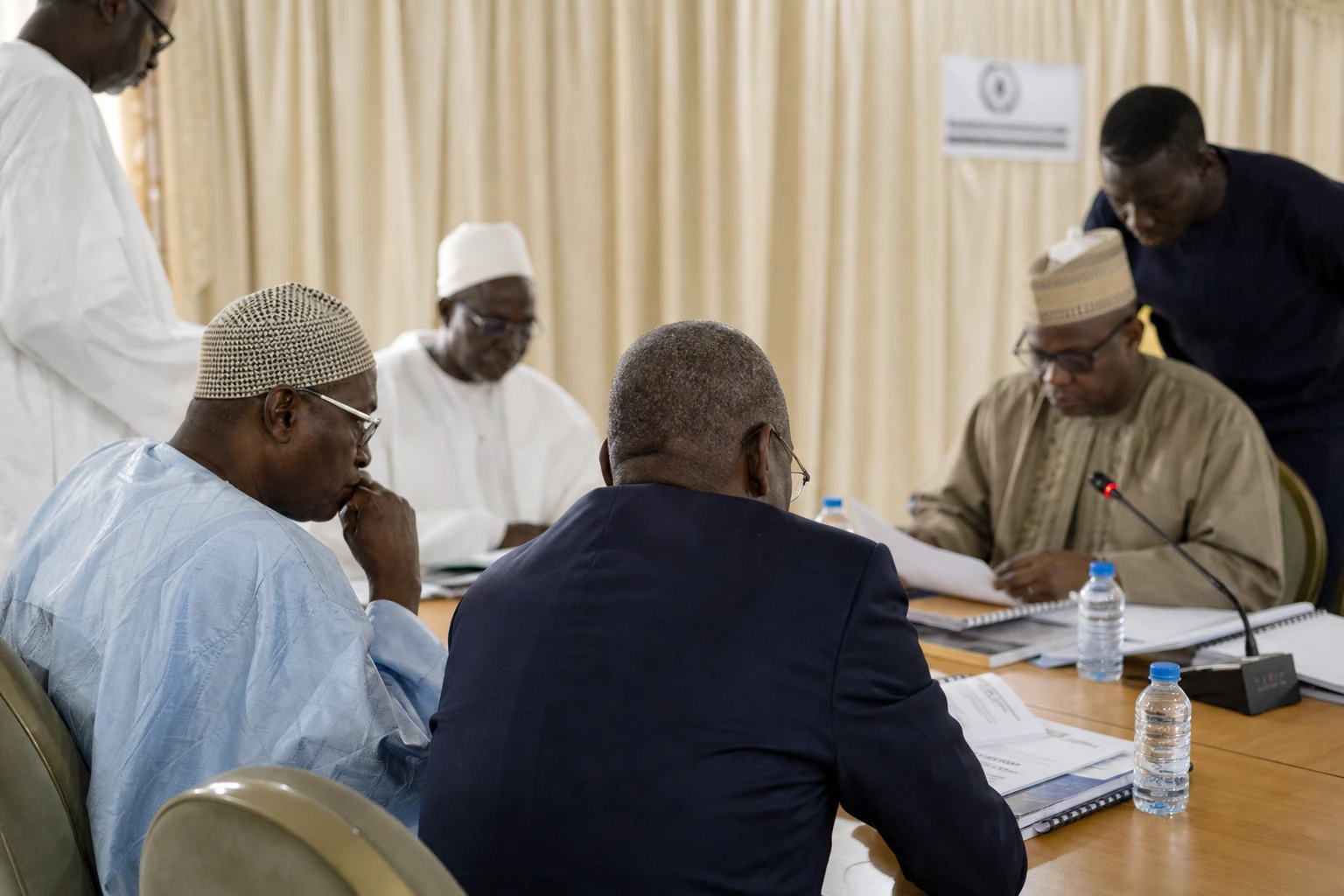
In Touba, religious fervour also demands exceptional logistical organisation
Every August, Touba grows to a different scale. The city becomes a centre of reflection, but also a live test of water supply, sanitation, mobility and public safety. In 2026, the Grand Magal is expected to take place on Sunday 2 August, at the height of the rainy season, adding a further challenge to a city already under heavy demographic pressure. State services have stepped up hydraulic and drainage measures in the days before the event.
This reality extends beyond the religious sphere. Presented by the Municipal Development Agency as Senegal’s second-largest city after Dakar, Touba faces urban, social and environmental needs that go far beyond the Magal. In a municipality this densely populated, each gathering highlights a central issue in contemporary Senegal: the ability to bring together a major spiritual event, a rapidly growing city and infrastructure that remains under strain.
On 2 August 2026, the commemoration of Cheikh Ahmadou Bamba’s exile puts history centre stage
The Grand Magal is not an obligatory Islamic rite. It is a commemoration specific to the Mouride brotherhood, founded around Cheikh Ahmadou Bamba Mbacké, who was born in 1853 and died in 1927. The celebration recalls his departure into exile in Gabon, imposed by the French colonial administration in 1895, an episode that Mouride memory interprets as a spiritual trial transformed into a moral victory.
The general khalif of the Mourides, Serigne Mountakha Mbacké, has set the date of 18 Safar 1448 in the Hijri calendar as Sunday 2 August 2026. This lunisolar calendar explains why the Magal shifts by about ten days each year in the Gregorian calendar. As the date approaches, religious authorities have focused above all on spiritual preparation and preserving Touba’s sacred character.
The city is therefore preparing to receive a massive influx of pilgrims as the state steps up support projects. APS reported the commissioning of new boreholes, the deployment of 50 water tankers and progress on drainage works intended to limit flooding. These measures are not merely a matter of comfort; they are essential to traffic flows, access to drinking water and the gathering itself.
A holy city that functions as an urban, economic and social hub
Touba is more than a pilgrimage destination. It is also a city organised around a distinct religious framework, with a central spiritual authority and moral rules governing daily life. This distinctive character gives the Magal particular institutional weight: the event brings together the Khalif, administrative authorities, state technical services, traders, transport operators and thousands of volunteers.
The ceremony’s logistical scale is also reflected in the flow of people and vehicles. After the 2025 edition, the organising committee announced that about 6.5 million pilgrims had attended, while a study presented that year gave the precise figure of 6,583,278 participants, a 12% increase over two years. The same edition also recorded 235,919 vehicles, excluding motorcycles and carts. Figures on this scale show how the Magal has become an urban, economic and social phenomenon, rather than simply a religious date.
As commercial activity intensifies around the celebration, the Magal also supports the informal economy, transport, catering and temporary accommodation. Dakar Dem Dikk, for example, said it had transported nearly 28,000 pilgrims to Touba in 2025. This gives a concrete sense of the role played by public and private companies in the logistics chain for an event that extends well beyond the municipality’s boundaries.
What the Magal says about Senegal today, and why it matters across West Africa
The Grand Magal of Touba reveals the balance of forces in Senegal. It shows the enduring place of brotherhoods in public life, as well as how the state works with them on practical issues including roads, water, security, health and sanitation. At its meeting on 1 July 2026, the Council of Ministers also mentioned the Maouloud, scheduled for August, alongside the Magal, showing that major religious gatherings remain a national issue of scheduling and organisation.
For Senegalese people, the stakes are twofold. On the one hand, the celebration fosters a strong sense of belonging, supported by solidarity networks that extend to the Mouride diaspora. On the other, it puts public services under strain and exposes the gap between Touba’s pace of urbanisation and the speed at which its infrastructure can adapt. This is precisely where part of the story’s wider African significance lies: in the strength of a social model capable of mobilising people, and in the need to invest in lasting facilities for a city that has become indispensable to the country’s economy.
Across West Africa, the Magal also shows how a major religious celebration can shape regional mobility, commercial flows and practices of solidarity that cross national borders. Senegal belongs to ECOWAS, and Touba embodies those flows in its own way: of worshippers, traders, transport, donations and services. On 2 August 2026, the challenge will not only be to commemorate a historic exile; it will also be to bring memory, faith and the lived reality of the city together.