Algeria
 Egypt
 Libya
 Morocco
 Sudan
 Tunisia
 Benin
 Burkina Faso
 Cabo Verde
 Côte d'Ivoire
 Ghana
 Guinea
 Guinea-Bissau
 Liberia
 Mali
 Mauritania
 Niger
 Nigeria
 Sierra Leone
 The Gambia
 Togo
 Cameroon
 Central African Republic
 Chad
 DR Congo
 Equatorial Guinea
 Gabon
 Republic of the Congo
 São Tomé and Príncipe
 Burundi
 Comoros
 Djibouti
 Eritrea
 Ethiopia
 Kenya
 Madagascar
 Malawi
 Mauritius
 Mozambique
 Rwanda
 Seychelles
 Somalia
 South Sudan
 Tanzania
 Uganda
 Angola
 Botswana
 Eswatini
 Lesotho
 Namibia
 South Africa
 Zambia
 Zimbabwe
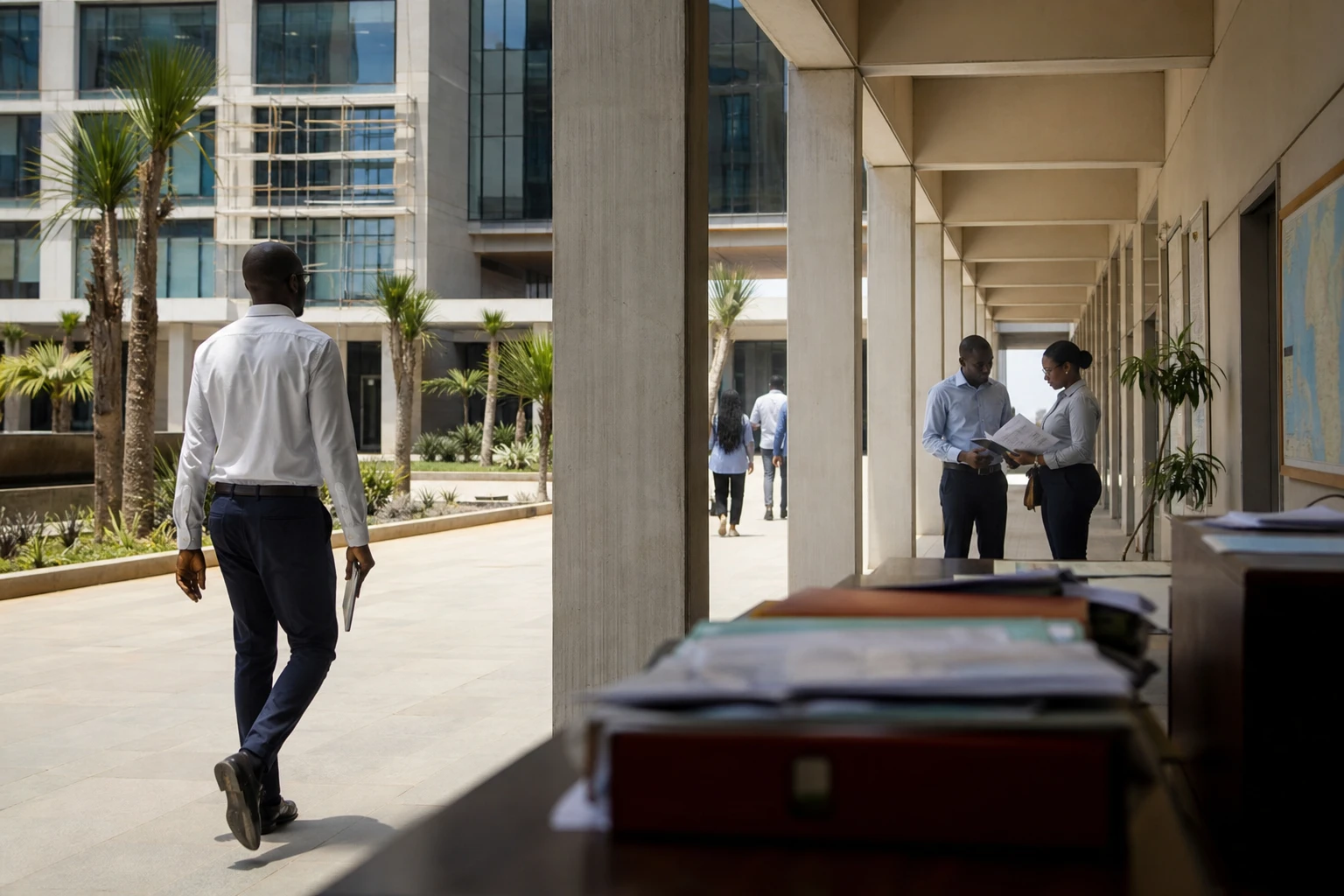
Senegal puts its blocks on show, with ambitions beyond a simple bidding round
In Dakar, the question is no longer simply whether Senegal has oil and gas. It is now about who sets the rules, who captures the value and how to prevent the new revenue stream from flowing out of the country too quickly. In this sector, the authorities want to combine openness to investors with public oversight and the development of local champions.
This comes as the country has already crossed a symbolic threshold with Sangomar, Senegal’s first offshore oil project, which began production in June 2024, and with Grand Tortue Ahmeyim, a gas project shared with Mauritania that began production in late 2024, ahead of its first liquefied natural gas exports in 2025. Dakar is therefore no longer approaching hydrocarbons as an abstract promise, but as an operating sector, with its revenues, disputes and trade-offs.
On 9 September 2026, the Ministry of Energy announced that 109 oil and gas blocks would be put on the market as part of a roadshow targeting local and foreign investors. The operation covers most of the available portfolio: of 113 blocks, only four are currently under contract. This is a strong signal. After years of exploration without a meaningful revival in licence awards, the state is injecting momentum into a sedimentary basin that had long remained dormant.
The political message is clear. Since 2024, the new administration has launched an audit of mining, oil and gas contracts to assess whether they serve the national interest and, where possible, reopen discussions on terms deemed too unbalanced. President Bassirou Diomaye Diakhar Faye has also pledged greater transparency over contracts and the beneficial ownership of extractive companies. In other words, the state no longer wants simply to sign agreements. It wants to know from the outset what they actually bring to the country.
What the new doctrine changes: more room for the state, but no doing without capital or compromise
The shift is significant, but it has its limits. Senegal cannot develop offshore blocks, deep-water wells, pipelines or processing facilities on its own. Capital, technology and experience remain essential. That is why the roadshow is also targeting international majors. The government is not seeking to shut the door. It wants to negotiate from a stronger position, with rules known in advance, before operators come in.
The financial context weighs heavily on this strategy. On 1 September 2026, the IMF announced a staff-level agreement with Dakar on a 36-month programme worth about $2.2bn. The institution said the Senegalese economy had remained resilient, with growth of 6.7% in 2025, but also reiterated the need to restore the sustainability of public finances. The Senegalese state therefore faces a dual challenge: attracting investment and increasing the share of value captured locally, without holding up projects that require substantial financial arrangements.
This equation also affects very concrete sectors. Fishing, which supports hundreds of thousands of Senegalese people, is watching offshore expansion closely. In the Saint-Louis region, discussions around GTA now involve fishers, women processors and government services. Hydrocarbon development is not experienced in the same way everywhere: for the administration, it is a matter of energy sovereignty; for coastal communities, it is also about access to maritime space, the safety of livelihoods and compensation for impacts.
The government has also begun to build support mechanisms. A 5bn CFA franc guarantee fund was announced between PETROSEN and FONGIP to help affected communities. Such a tool does not solve everything, but it shows that the debate is no longer limited to how profits are divided between the state and companies. It also extends to the benefits for local economies, particularly in fishing areas, coastal towns and small-scale processing businesses.
The precedent set by Sangomar also offers a guide to what comes next. Production began in June 2024 and has already served as a full-scale test of the state’s ability to oversee a major project, monitor revenues and manage tensions between the public interest and industrial returns. Since then, the extractive sector has carried greater weight in public accounts. EITI Senegal reported an increase in extractive revenues in the first half of 2025, which it linked to the start of production at oil and gas projects. The new block licensing round should therefore be seen as an attempt to move from being a nascent producer to becoming a country seeking to build a genuine industry.
Official rhetoric is framed in the same terms. Senegal’s 2050 national transformation document sets out an ambition to diversify industry, with greater value added—from refining to petrochemicals—and a revised approach to sector governance. This framework gives the roadshow a scope that goes beyond exploration alone. Dakar is seeking to turn its subsoil into a driver of industrialisation, jobs and import substitution, in an economy where the energy bill and refined products remain a significant burden.
A Senegalese moment that matters across West Africa
At the regional level, the issue extends beyond Senegal alone. GTA is a cross-border project with Mauritania, and therefore a test of co-operation between two West African coastal states. More broadly, the way Dakar reshapes its contracts, incorporates local content and opens new blocks will be watched across ECOWAS, where several countries are also seeking to better align investor appeal with economic sovereignty.
The signal to investors is therefore less doctrinaire than it might seem. Senegal is not closing its sector. It wants to make it clearer, more profitable for the state and more useful to the real economy. If the next licences attract bidders, the issue will not simply be the number of blocks awarded, but the quality of the clauses on local content, taxation, contract duration and value sharing. That is where the credibility of Senegal’s new doctrine will be tested.
What happens next will also be decided in the near term. Between consolidating GTA, operating Sangomar, engaging with the IMF and preparing new licences, Dakar is advancing on several fronts at once. It is often at such moments that a producer country defines its real model. Senegal is not short of resources. It still has to show that it can turn them into a sustainable, transparent and sovereign framework.