Algeria
 Egypt
 Libya
 Morocco
 Sudan
 Tunisia
 Benin
 Burkina Faso
 Cabo Verde
 Côte d'Ivoire
 Ghana
 Guinea
 Guinea-Bissau
 Liberia
 Mali
 Mauritania
 Niger
 Nigeria
 Sierra Leone
 The Gambia
 Togo
 Cameroon
 Central African Republic
 Chad
 DR Congo
 Equatorial Guinea
 Gabon
 Republic of the Congo
 São Tomé and Príncipe
 Burundi
 Comoros
 Djibouti
 Eritrea
 Ethiopia
 Kenya
 Madagascar
 Malawi
 Mauritius
 Mozambique
 Rwanda
 Seychelles
 Somalia
 South Sudan
 Tanzania
 Uganda
 Angola
 Botswana
 Eswatini
 Lesotho
 Namibia
 South Africa
 Zambia
 Zimbabwe
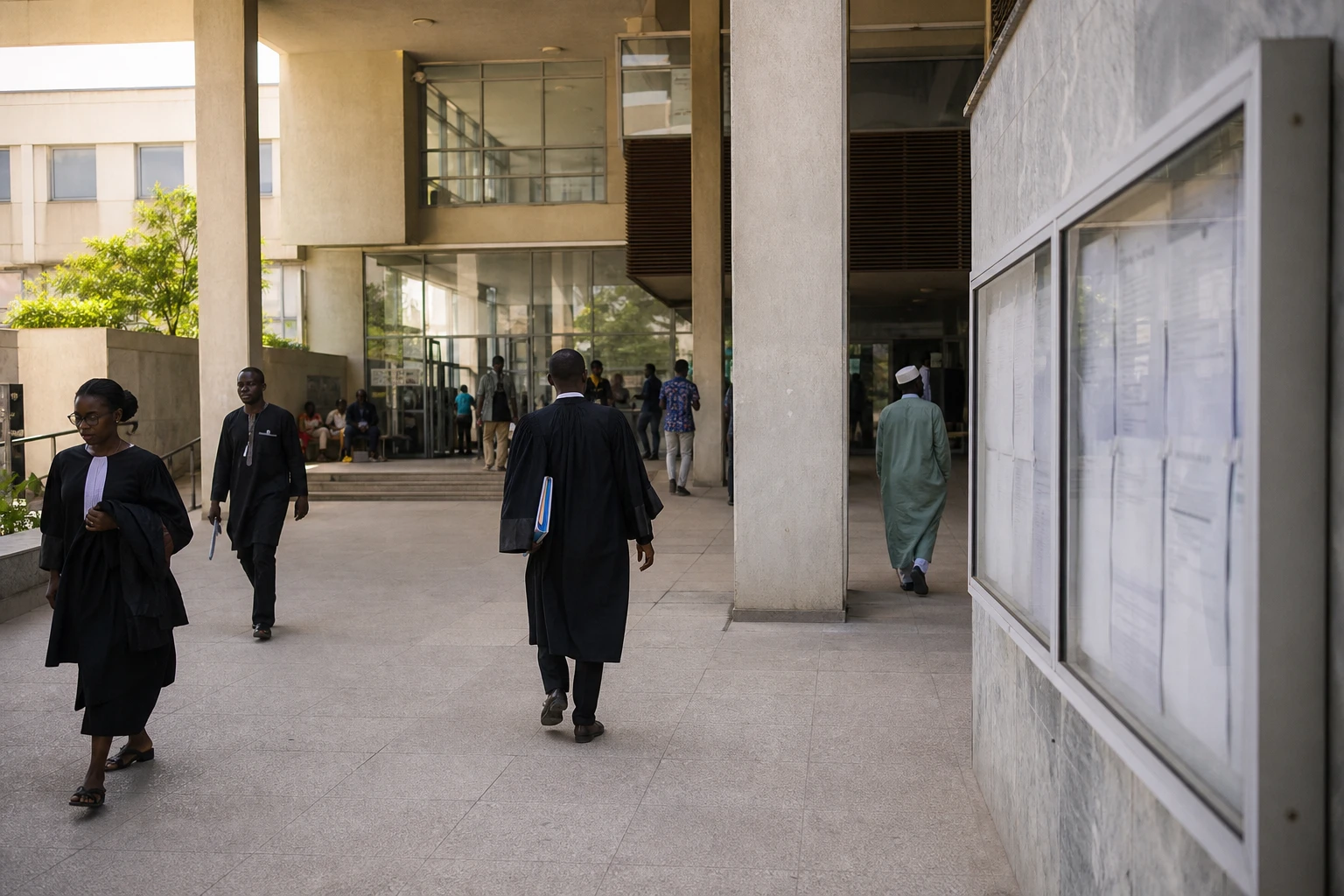
In Dakar, the wheels of justice are gradually catching up with the political violence that rocked Senegal between 2021 and 2024. Four people have been charged in a case concerning alleged unlawful confinement, kidnapping, torture and violence committed in June 2023.
First proceedings over the violence of June 2023
The charges relate to an investigation into the abuse allegedly suffered by Pape Abdoulaye Touré, an activist and founder of the Zero Impunity Initiative. He says he was arrested and then assaulted during the June 2023 protests, after Ousmane Sonko was sentenced to two years in prison for “corruption of youth”.
The charges in the proceedings include unlawful confinement, kidnapping, acts of torture, inhuman, cruel or degrading treatment, and intentional assault and battery. At this stage, being charged does not constitute a conviction. It means the investigating judge considers there to be sufficiently serious evidence to continue investigating the possible involvement of the people concerned.
The identities of the four people charged and whether they are in detention have not been specified in the information made public. The proceedings will therefore have to establish the exact circumstances of the arrests, each person’s role and the chain of responsibility surrounding the alleged violence.
The civil parties’ lawyers describe this step as a “modest and belated step forward”. They are now calling for the investigation to be completed and for a trial to be held. Amnesty International has also welcomed the opening of prosecutions, while calling on the Senegalese authorities to ensure truth, justice and reparations for victims.
The heavy toll of a national political crisis
The prosecutions come amid a political period that began in March 2021. The arrest of Ousmane Sonko, then a rising opposition figure, triggered several days of protests in Dakar and other cities. Demonstrations recurred in 2023 and then in 2024, amid tensions over Sonko’s candidacy, the succession to Macky Sall and the postponement of the presidential election.
In June 2023, the announcement of Sonko’s conviction sparked deadly clashes. The Senegalese authorities cited destruction and attacks on public infrastructure. Opposition figures and several human rights organisations, for their part, denounced excessive use of force and arbitrary arrests.
The death toll remains disputed, depending on the sources and periods considered. A count compiled by the CartograFreeSenegal collective, comprising journalists, cartographers and researchers, identified 65 deaths between March 2021 and February 2024. The collective says 51 people, or 81% of those recorded, were allegedly shot dead. The figures were reported by the Senegalese daily Sud Quotidien.
Amnesty International had previously documented a lower toll for certain periods, notably during the June 2023 protests. These discrepancies illustrate the difficulty of recording victims amid intense political polarisation. They also underline the need for an independent investigation capable of verifying deaths, injuries, disappearances and individual responsibility.
An amnesty law at the centre of the debate
The legal question remains linked to the amnesty law adopted in March 2024, under Macky Sall’s presidency. The legislation covers criminal and misdemeanour offences committed between 1st February 2021 and 25 February 2024 when linked to demonstrations or political motives. The bill was presented as a means of easing tensions ahead of the presidential election.
The law enabled the release of several political detainees, including Ousmane Sonko and Bassirou Diomaye Faye, who was elected president a few days later. But it also prompted strong opposition from victims’ families, who feared the amnesty would prevent responsibility from being established for deaths, acts of torture and alleged disappearances.
The debate took on a new dimension with the new authorities’ intention to amend the measure. In April 2025, the National Assembly adopted a revision excluding certain serious crimes, including murder, torture and enforced disappearance, according to information reported by Associated Press. The precise scope of these changes nevertheless depends on how they are interpreted by the competent courts.
The Constitutional Council has also ruled that the amnesty law does not prevent prosecutions for homicides and acts of torture committed during the period in question. This interpretation opens a path to justice for the most serious cases, without prejudging the guilt of those charged.
A test for justice and the political transition
For families, the issue goes beyond securing the conviction of alleged perpetrators or officials. They want missing relatives to be located, their harm to be recognised and reparations to be made available. Injured or detained victims are also calling for their accounts to be examined in adversarial proceedings.
The case is also testing the new authorities’ ability to distinguish justice from political revenge. Bassirou Diomaye Faye and Ousmane Sonko won the March 2024 presidential election after themselves experiencing detention and political repression. Their government must therefore respond to demands for truth without giving the impression that it is using the justice system to settle a partisan dispute.
This requirement also applies to the defence and security forces. Investigations will have to determine whether the violence resulted from isolated acts or orders passed down a chain of command. They will also have to examine abuses by some protesters, so that the establishment of responsibility does not rely on a one-sided reading of events.
A signal watched by ECOWAS
Senegal holds a special place in the Economic Community of West African States, ECOWAS. Long portrayed as a stable democracy in the region, the country has experienced a crisis that has undermined confidence in its institutions, the police and the justice system.
The outcome of these proceedings will therefore be watched beyond Dakar. It will show whether Senegal can address political violence through the law, at a time when several West African states are experiencing military transitions, restrictions on civil liberties or electoral disputes.
The next step will be to pursue the investigation. Hearings, medical examinations, testimony and the identification of hierarchical responsibility will show whether these initial charges can lead to a trial. For families, the judicial timetable will matter as much as the final decision: after years of waiting, they want the violence of 2021 to 2024 to cease being merely a political episode and become a case fully addressed by the Senegalese justice system.