
 Algeria
 Egypt
 Libya
 Morocco
 Sudan
 Tunisia
 Benin
 Burkina Faso
 Cabo Verde
 Côte d'Ivoire
 Ghana
 Guinea
 Guinea-Bissau
 Liberia
 Mali
 Mauritania
 Niger
 Nigeria
 Sierra Leone
 The Gambia
 Togo
 Cameroon
 Central African Republic
 Chad
 DR Congo
 Equatorial Guinea
 Gabon
 Republic of the Congo
 São Tomé and Príncipe
 Burundi
 Comoros
 Djibouti
 Eritrea
 Ethiopia
 Kenya
 Madagascar
 Malawi
 Mauritius
 Mozambique
 Rwanda
 Seychelles
 Somalia
 South Sudan
 Tanzania
 Uganda
 Angola
 Botswana
 Eswatini
 Lesotho
 Namibia
 South Africa
 Zambia
 Zimbabwe
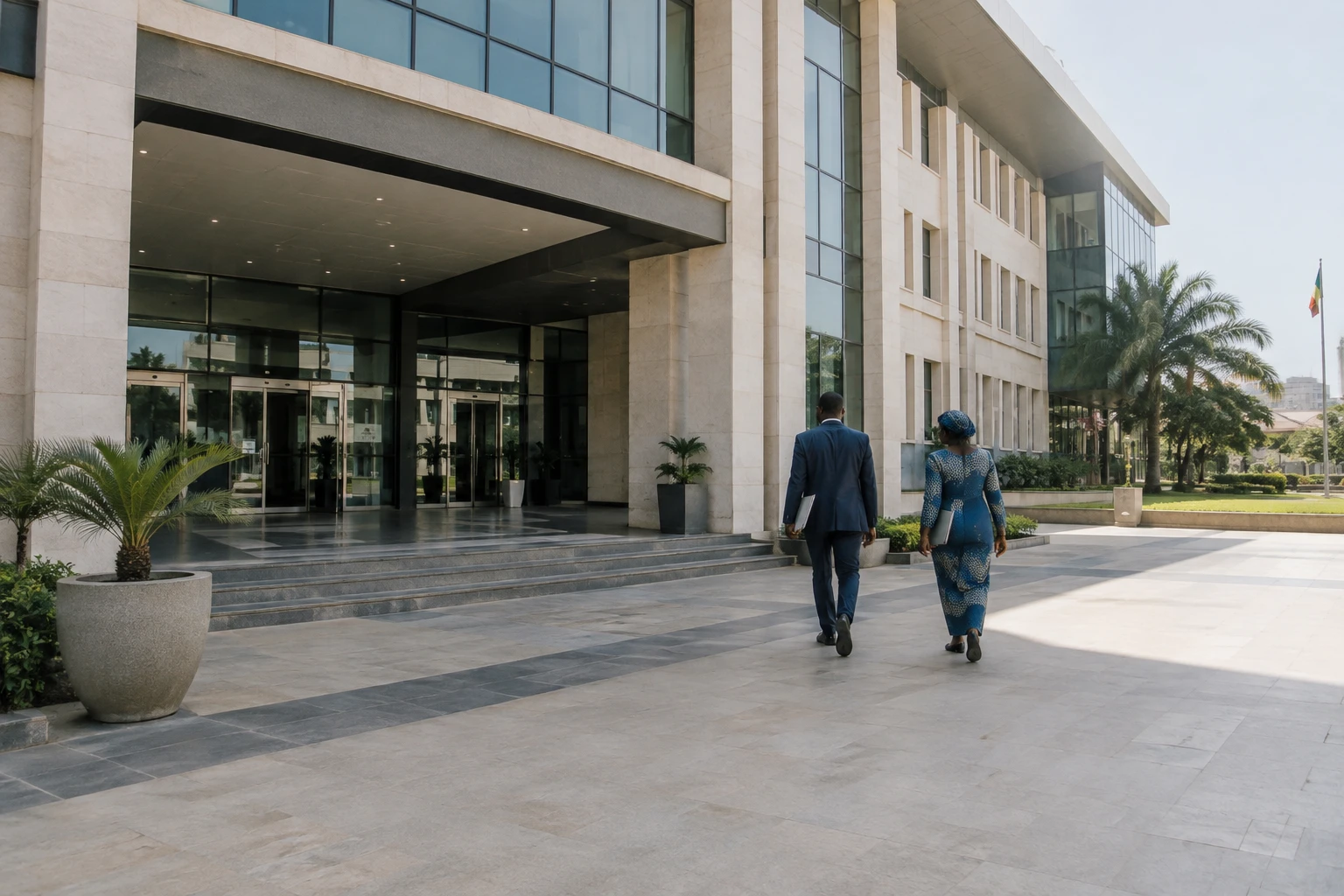
Reducing the deficit without curbing public services: in Senegal, debate over the 2026 budget highlights a trade-off affecting both state finances and the investment citizens expect. Sending the bill back to committee opens a period for discussion, but does not resolve the political disagreement.
A budget revision under constraint
Senegal is going through a period of intense budgetary pressure. The government is seeking to put public accounts right and preserve access to financing, while the country’s reassessed debt has made spending plans more difficult. This situation stems in particular from the revision of debt data reported for previous years.
The issue also sits within a regional framework. Senegal belongs to the West African Economic and Monetary Union (WAEMU), where member states share the CFA franc and a central bank, the BCEAO. Senegalese public debt is also financed on the regional market, where several countries’ borrowing needs converge.
On 1 September 2026, the International Monetary Fund (IMF) announced a staff-level agreement with Dakar on a 36-month programme worth about $2.2 billion. The technical agreement must still go through the institution’s approval procedures. Its aims include restoring macroeconomic stability and debt sustainability. The IMF statement sets out the main points of the agreement.
Disagreement centres on spending choices
On Tuesday 27 October, during consideration of the 2026 supplementary Finance Bill (LFR), Cheikh Diba, the Minister of the Economy, Finance and Planning, asked for the bill to be sent back to the finance committee. MPs agreed to the referral. The minister presented the move as a way to prioritise dialogue and avoid an institutional deadlock.
The LFR allows the government to revise forecast revenues and authorised spending during the year. Under the bill being considered, the public investment allocation would fall by CFA francs 555 billion, from CFA francs 2,803.9 billion to CFA francs 2,248.9 billion. The calculation was reported by the Senegalese daily Le Soleil. Details published on the revised budget and Senegalese reports on the parliamentary session confirm the scale of the announced cut.
The government justifies the revision by the gap between expected revenues and the spending to be financed. MPs from Pastef, the majority party in the National Assembly, dispute some of the trade-offs. They are particularly concerned about the reduction in investment appropriations and its possible effects on health and education. They are also calling for a legal framework governing the special funds available to the executive.
These positions are at odds within a political majority that does not automatically translate into agreement on budget choices. Sending the bill back to committee allows MPs and the government to resume talks in a smaller group. The plenary session will then have to be rescheduled. At this stage, the debate concerns possible amendments as much as the budget’s overall direction.
Limited room for manoeuvre
The parliamentary debate is taking place within a framework in which amendments cannot simply add spending. Under the budget rules recalled during the debate, they must help increase revenues or reduce other expenditure. This constraint complicates calls to retain or restore appropriations for priority sectors: any proposal must specify how it will be funded.
Investment cuts may affect public projects and the companies carrying out works or providing services to the state. The effects will not, however, be felt in the same way by everyone. Central government departments and large companies directly monitor the execution of appropriations; in the regions, local authorities, service users and small businesses may feel delays or project changes in their daily lives. The details of the budget lines and projects affected will therefore be decisive in assessing the practical consequences.
Conversely, retaining all planned spending without sufficient revenues would increase financing needs. The state must then choose between borrowing, adjusting its expenditure and mobilising additional revenues. These choices may affect public services, economic activity and the country’s ability to meet its financial obligations.
A political and regional process to watch
The budget debate is also a test of relations between the executive and its parliamentary majority. Sending the bill back to committee avoids an immediate confrontation in plenary, but leaves fundamental questions open: which spending will be protected, which projects will be delayed, and what safeguards will govern the use of special funds? The answer will depend on the amendments and compromises put forward before the bill returns to plenary.
For regional partners and investors, the stakes go beyond the passage of a law. Senegal borrows within a shared West African financial market. The credibility of its revenue and spending forecasts therefore matters for the terms on which it can raise funds. The programme negotiated with the IMF is another point of reference, without erasing domestic debate over the composition of the adjustment.
The next steps to watch are the timetable set by the Assembly, the content of the amendments and any decision by the IMF executive board on the programme announced in September. They will show whether a compromise can preserve a larger share of investment while addressing financing constraints. For Senegalese people, the stakes will be measured in the state’s accounts as well as in the continuity of public projects and services.



