Algeria
 Egypt
 Libya
 Morocco
 Sudan
 Tunisia
 Benin
 Burkina Faso
 Cabo Verde
 Côte d'Ivoire
 Ghana
 Guinea
 Guinea-Bissau
 Liberia
 Mali
 Mauritania
 Niger
 Nigeria
 Sierra Leone
 The Gambia
 Togo
 Cameroon
 Central African Republic
 Chad
 DR Congo
 Equatorial Guinea
 Gabon
 Republic of the Congo
 São Tomé and Príncipe
 Burundi
 Comoros
 Djibouti
 Eritrea
 Ethiopia
 Kenya
 Madagascar
 Malawi
 Mauritius
 Mozambique
 Rwanda
 Seychelles
 Somalia
 South Sudan
 Tanzania
 Uganda
 Angola
 Botswana
 Eswatini
 Lesotho
 Namibia
 South Africa
 Zambia
 Zimbabwe
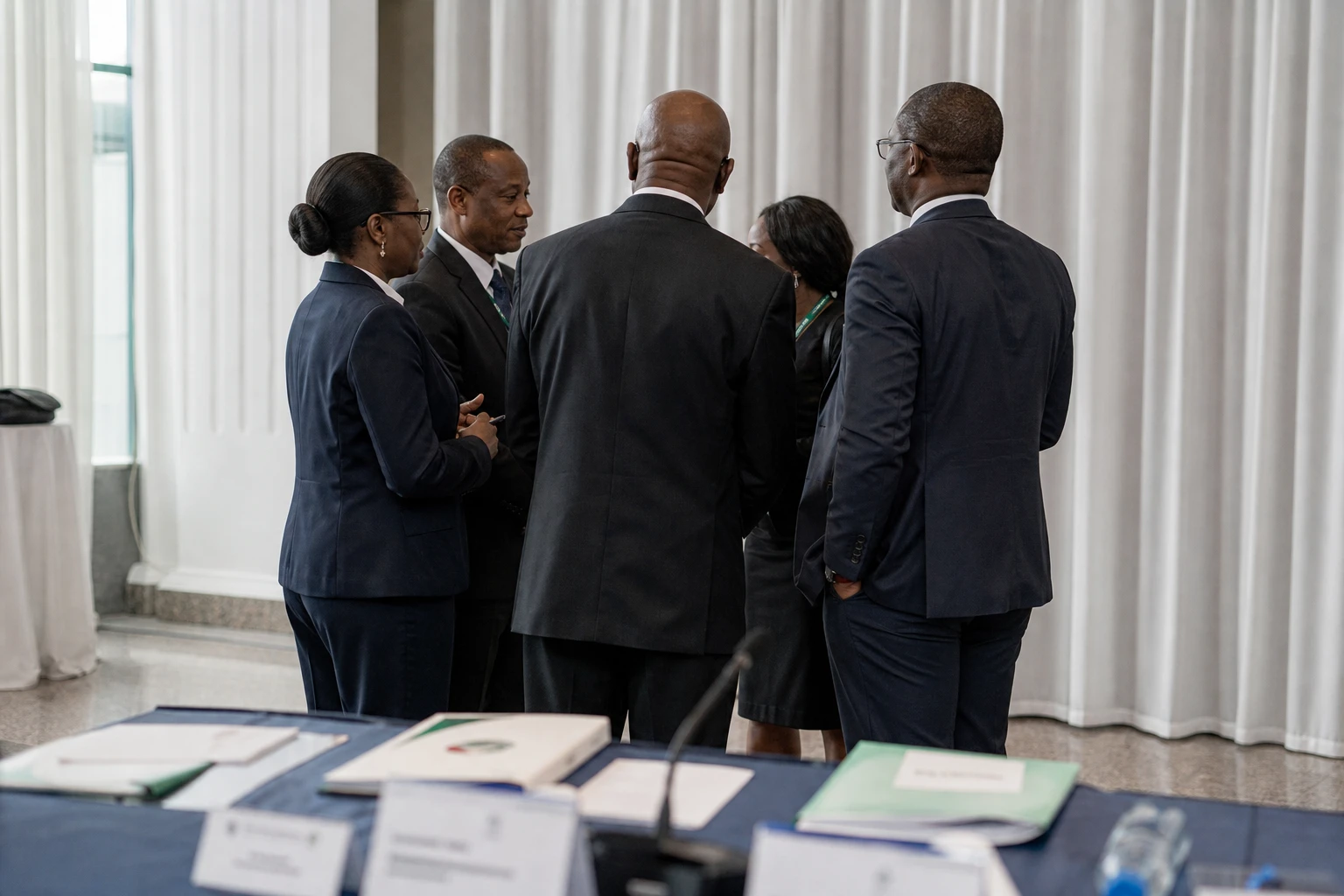
A regional post as West Africa seeks its bearings
In Dakar, the appointment of a Senegalese national to head the ECOWAS Commission goes beyond the mere allocation of posts. It says something about the current state of West Africa: a region that still wants to trade, move freely and cooperate, but must do so after the withdrawal of Burkina Faso, Mali and Niger, which took effect on 29 January 2025.
For Senegal, the stakes are twofold. The country is taking over the rotating chairmanship of the ECOWAS Authority of Heads of State and Government, while General Birame Diop is due to lead the Community’s executive from 1 September 2026, in Abuja, Nigeria. This arrangement puts Dakar at the centre of an organisation seeking to preserve its cohesion and give renewed substance to regional integration.
What ECOWAS expects of its new team
ECOWAS is more than a diplomatic forum. It was conceived as an area of free movement for people, goods, services and capital, with a shared monetary and trade ambition. But several of these initiatives are moving slowly, and the crisis with the Alliance of Sahel States (AES) countries has further heightened tensions.
Against this backdrop, the Commission has already appointed a chief negotiator to engage with Burkina Faso, Mali and Niger. In March 2026, the institution entrusted this mission to Lansana Kouyaté, a former Guinean prime minister and former ECOWAS executive secretary. This shows that the rift has not closed the door to dialogue, but that rebuilding relations will require a patient, political and technical approach.
The July 2026 summit in Freetown also focused on the region’s economic future. Member states called for faster industrialisation, the development of regional value chains and infrastructure, and the removal of barriers to trade and investment. This is no minor matter: without visible results for citizens, ECOWAS risks remaining a robust structure on paper but a fragile one in practice.
The career of a military officer turned diplomat and minister
Birame Diop was born on 29 March 1961 in Thiès, Senegal. His career has taken him through several institutions for training and positions of responsibility. He studied at the Prytanée Militaire de Saint-Louis, the Royal Air School of Morocco and the Joint Defence College in Paris.
Within Senegal’s military establishment, he headed the air force from 2015 to 2017, before being appointed chief of defence staff in 2020. His time at the helm of the armed forces gives his appointment an unmistakable security dimension, but his profile extends beyond that. He has also served at the multilateral level. In May 2021, the UN secretary-general appointed him military adviser in the Department of Peace Operations. Official United Nations lists subsequently confirmed that he still held a military adviser post for peace operations in 2024.
Returning to Senegal in April 2024, he joined the government of Bassirou Diomaye Faye as minister of the armed forces. A presidential decree of September 2025 still lists him in that role, confirming that he was one of the civilian faces of Senegalese defence before moving to ECOWAS.
Why his appointment matters for Senegal and the region
The choice of Birame Diop is not based solely on his individual skills. It also sends a political signal. Senegal, often seen as an actor of institutional stability in West Africa, now holds two key leadership positions: the chairmanship of the Authority of Heads of State and Government, held by Bassirou Diomaye Faye, and the presidency of the Commission, entrusted to Birame Diop.
For Dakar, this could strengthen the country’s diplomatic influence within ECOWAS. But that influence will have an impact only if it leads to concrete action: smoother trade, border security, mobility for Senegalese people and other West Africans, and protection of the commercial networks that sustain both the formal and informal economies. In a region where border markets play a major role in daily life, integration is no abstraction. It affects transport operators, traders, households and young people seeking work.
The new Commission president will also have to contend with the political reality created by the departures of Mali, Burkina Faso and Niger. ECOWAS has kept the door to dialogue open, but relations are now more fragile. Any progress on security, trade or movement will depend on a delicate balance between institutional firmness and diplomatic pragmatism.
A period to watch through to Abuja
1 September 2026 marks the real start of the test. It is in Abuja that Birame Diop will formally take up his duties, at the ECOWAS Commission headquarters. There, he will have to turn a symbolic appointment into a useful roadmap for a community increasingly tested by political divisions, security emergencies and economic pressures.
The continental significance is clear. If ECOWAS manages to remain credible despite the Sahelian withdrawals, it can still serve as a model for African integration. If it fails, other regional organisations will chiefly observe how difficult it is to sustain the free movement and political compromises on which African blocs are founded. For Senegal, this responsibility puts the country not at the pinnacle of abstract prestige, but at the heart of a test of regional governance.