
 Algeria
 Egypt
 Libya
 Morocco
 Sudan
 Tunisia
 Benin
 Burkina Faso
 Cabo Verde
 Côte d'Ivoire
 Ghana
 Guinea
 Guinea-Bissau
 Liberia
 Mali
 Mauritania
 Niger
 Nigeria
 Sierra Leone
 The Gambia
 Togo
 Cameroon
 Central African Republic
 Chad
 DR Congo
 Equatorial Guinea
 Gabon
 Republic of the Congo
 São Tomé and Príncipe
 Burundi
 Comoros
 Djibouti
 Eritrea
 Ethiopia
 Kenya
 Madagascar
 Malawi
 Mauritius
 Mozambique
 Rwanda
 Seychelles
 Somalia
 South Sudan
 Tanzania
 Uganda
 Angola
 Botswana
 Eswatini
 Lesotho
 Namibia
 South Africa
 Zambia
 Zimbabwe
In Pikine-Guédiawaye, Senegal’s justice system tests a simple promise: less waiting, more rights
In Dakar’s suburbs, access to justice often hinges on very practical details: a costly journey, a case that drags on, a postponed hearing, an overcrowded counter. In Senegal, the digitisation of public judicial services aims specifically to reduce these obstacles, starting with the Pikine-Guédiawaye Palace of Justice, presented as a pilot site for an e-Justice system.
This project is part of a broader trajectory. Dakar and its outskirts absorb strong demand for public services, while judicial reform has remained a sensitive political issue since the National Justice Consultations. The country is also relying on its national digital tools, including an e-Services platform already interoperable with the e-Senegal portal for certain judicial documents.
A pilot site at the heart of a wider network
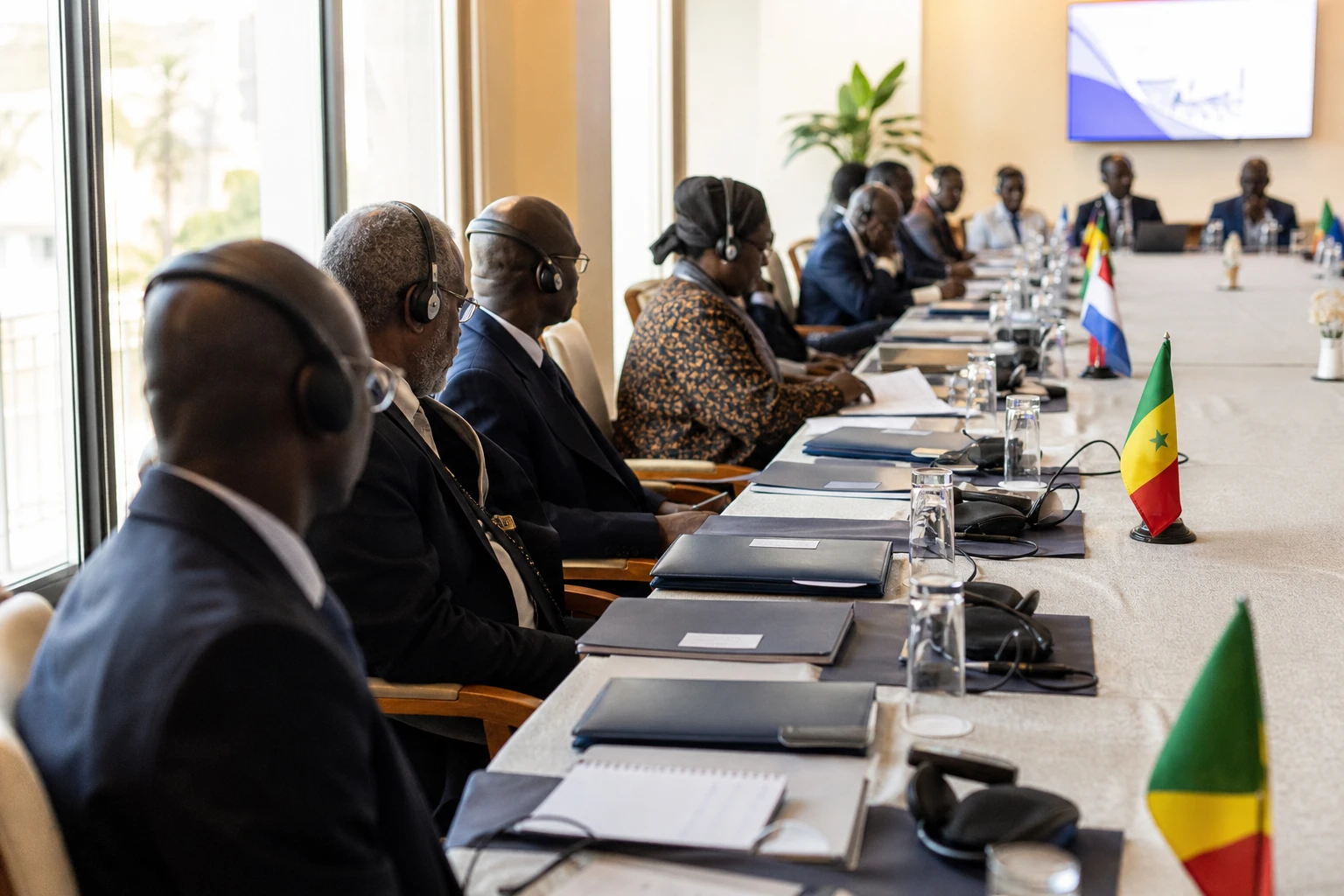
On 24 August 2026, Senegal’s justice minister met the UNDP resident representative in Senegal to discuss the full digital transformation of the Pikine-Guédiawaye Palace of Justice and the strengthening of the e-Justice system. The ministry describes this cooperation as a continuation of a partnership already under way with several United Nations agencies.
The meeting had been prepared in advance. In July 2025, the United Nations country team visited the new mini data centre and the station linking the Pikine-Guédiawaye courthouse to Dakar by radio link. The Joint SDG Fund financed Tier III equipment, a disaster recovery site, antennas, as well as computers, scanners and printers.
The project also targets specific uses: digitising procedures, equipping staff, and bringing judicial services closer to residents of the departments of Pikine and Guédiawaye. Justice Houses and Legal Advice Centres are to be integrated into the ecosystem to ensure that digital transformation does not benefit only users who are already connected.
What is changing beyond the technology
The issue at the heart of the project is not the equipment. It is judicial time. The programme has already digitised at least five procedures: judicial chains, correspondence management, e-rolls, e-appeals and electronic archiving. It has also trained more than 40 sector stakeholders, according to the UN programme report, and improved access for more than one million people in the Pikine and Guédiawaye areas, including 560,000 women, according to UNDP Senegal’s 2025 annual report.
For judges, court clerks and staff, the issue is traceability. For court users, it is fewer journeys and shorter queues. For households in the suburbs, where every lost day has a real cost, the expected impact is very tangible: less time in court, and greater continuity in daily life. The Justice Ministry says the e-Justice platform brings case processing together and strengthens the monitoring of deadlines.
The project has not, however, proceeded without delays. The Joint SDG Fund report cites delays linked to the arrival of equipment, acceptance of construction work and institutional changes following the installation of a new government. This detail matters: digitalisation does not replace administrative reforms; it requires them to be delivered.
A local reform with regional reach
Across the sub-region, modernising judicial administrations is becoming an issue of governance as well as sovereignty. In West Africa, where ECOWAS has long promoted good-governance standards, Senegal is seeking to show that digital public services can also extend to justice, not just civil registration, taxes or payments. This is an important distinction.
The Pikine-Guédiawaye project is therefore both a showcase and a political test. If it works, it could be extended to other courts. The UN programme notes that this is a pilot phase in one of Senegal’s 14 regions, with the aim of drawing lessons to cover the rest of the country. The ministry and its partners then want to confirm the expansion to other courts.
The next milestone will be decisive: the system’s full launch, followed by its possible rollout beyond Dakar’s suburbs. For Senegal, the stakes go beyond technology. They touch on confidence in the judiciary, equality of access to justice and the state’s ability to make its services clearer in a capital such as Dakar and its outskirts.



