Algeria
 Egypt
 Libya
 Morocco
 Sudan
 Tunisia
 Benin
 Burkina Faso
 Cabo Verde
 Côte d'Ivoire
 Ghana
 Guinea
 Guinea-Bissau
 Liberia
 Mali
 Mauritania
 Niger
 Nigeria
 Sierra Leone
 The Gambia
 Togo
 Cameroon
 Central African Republic
 Chad
 DR Congo
 Equatorial Guinea
 Gabon
 Republic of the Congo
 São Tomé and Príncipe
 Burundi
 Comoros
 Djibouti
 Eritrea
 Ethiopia
 Kenya
 Madagascar
 Malawi
 Mauritius
 Mozambique
 Rwanda
 Seychelles
 Somalia
 South Sudan
 Tanzania
 Uganda
 Angola
 Botswana
 Eswatini
 Lesotho
 Namibia
 South Africa
 Zambia
 Zimbabwe
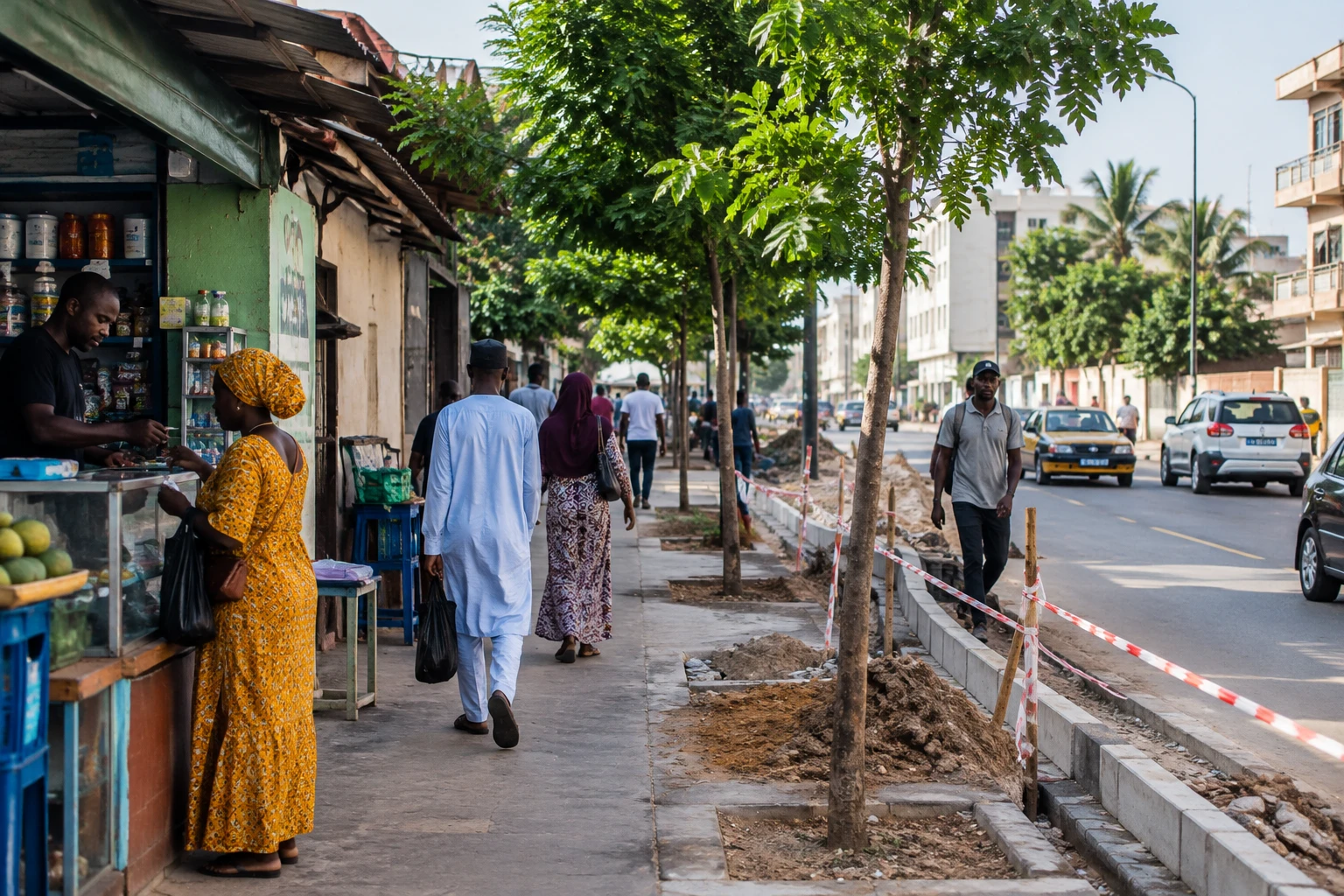
In Senegal, reducing the deficit while maintaining investment and social support is the central challenge of the 2027 budget. The draft presented to MPs plans lower spending, but debt servicing costs and slower economic growth limit room for manoeuvre.
A fiscal path constrained by regional rules
Senegal is preparing this budget during a period of public finance adjustment. The government is targeting a deficit of 4.7% of gross domestic product (GDP) in 2027, down from 7.6% in the adjusted 2026 budget. This improvement would bring the country closer to the 3% ceiling set by the West African Economic and Monetary Union (UEMOA), the organisation that coordinates, among other things, the economic and monetary policies of eight West African countries.
The stated target has changed. In November 2025, Finance Minister Cheikh Diba was still presenting a return to 3% as early as 2027 as a government objective. Since then, multi-year projections published in 2026 have pushed the achievement of that threshold back to 2029. The draft budget now submitted to MPs is therefore based on a slower path than previously indicated.
This revision comes as the state faces high financing needs and economic activity is expected to slow after the start of hydrocarbon production. Oil and gas revenues can support public finances, but they also leave forecasts exposed to changes in production and prices.
Spending down, revenues up
For 2027, budget expenditure is estimated at CFA francs 7,363.7 billion, compared with 7,583.9 billion in the adjusted 2026 Finance Act. The decline amounts to CFA francs 220.1 billion, or 2.9%. Revenues, by contrast, are projected to rise by 2.8%, to CFA francs 6,012.1 billion from 5,848.7 billion.
The overall deficit would thus fall to CFA francs 1,351.7 billion, from 1,735.2 billion in the adjusted 2026 budget. The draft also provides for financing needs of CFA francs 6,608.7 billion. This figure includes, among other things, debt repayments, the deficit and the clearing of domestic arrears. It therefore does not correspond to the annual deficit alone.
The proposals combine revenue mobilisation, spending restraint, debt management, protection for vulnerable households and support for priority investment. These are, however, broad objectives: their impact will depend on the appropriations ultimately approved, their implementation and the administration’s ability to collect the expected revenues.
The draft must still be examined by the National Assembly. MPs can amend the figures and make different trade-offs before final adoption. The announced figures are therefore forecasts, not spending already carried out or measures that have been secured.
Debt leaves less room for manoeuvre
Debt servicing weighs on budget choices. Interest and commissions are estimated at CFA francs 1,303.9 billion in 2027, compared with 1,285.2 billion in the adjusted 2026 budget. This sum remunerates creditors, but does not by itself include all the principal to be repaid.
The expected slowdown also complicates the equation. According to government forecasts reported alongside the draft, growth would fall from 6.5% in 2025 to 2.7% in 2026 and then 2.4% in 2027. The budget document links this trend to the consolidation effort, a negative contribution from hydrocarbons and the lasting effects of external shocks. Inflation is projected at 2.7%, despite the adjustment of energy tariffs.
Slower growth can curb revenue increases and make fiscal targets harder to meet. At the same time, containing spending requires concrete trade-offs involving public-sector pay, purchases of goods and services, transfers to households or investment. The consequences will not be the same for everyone. Formal businesses depend more heavily on public contracts and infrastructure, while vulnerable households feel changes in support and energy costs directly. Informal activities, which are widespread in cities and regions alike, are sensitive to purchasing power and demand.
The vote, then implementation, will be decisive
For Dakar and local authorities, the issue is not limited to the deficit figure: it also concerns the timing and distribution of investment. Infrastructure projects can support economic activity and improve services, but cuts to or delays in appropriations can affect local businesses, workers and users.
At regional level, Senegal’s fiscal path will be monitored by its UEMOA partners, which share a currency and a fiscal convergence framework. It is also of interest to the markets tapped to finance the state. A falling deficit can help strengthen lenders’ confidence, but financing needs and the cost of debt will remain important indicators.
The next step is parliamentary. Implementation will follow, and will often be decisive in establishing whether revenues materialise and priority spending is protected. The debate will therefore concern not only the pace of deficit reduction, but also how the effort is distributed among the state, economic sectors and Senegalese households.
The official draft Senegal Finance Act for 2027 sets out budget forecasts and priorities. The main figures have also been reported by Senegalese Radio and Television and the Senegalese media outlet Journal du Sénégal.