
 Algeria
 Egypt
 Libya
 Morocco
 Sudan
 Tunisia
 Benin
 Burkina Faso
 Cabo Verde
 Côte d'Ivoire
 Ghana
 Guinea
 Guinea-Bissau
 Liberia
 Mali
 Mauritania
 Niger
 Nigeria
 Sierra Leone
 The Gambia
 Togo
 Cameroon
 Central African Republic
 Chad
 DR Congo
 Equatorial Guinea
 Gabon
 Republic of the Congo
 São Tomé and Príncipe
 Burundi
 Comoros
 Djibouti
 Eritrea
 Ethiopia
 Kenya
 Madagascar
 Malawi
 Mauritius
 Mozambique
 Rwanda
 Seychelles
 Somalia
 South Sudan
 Tanzania
 Uganda
 Angola
 Botswana
 Eswatini
 Lesotho
 Namibia
 South Africa
 Zambia
 Zimbabwe
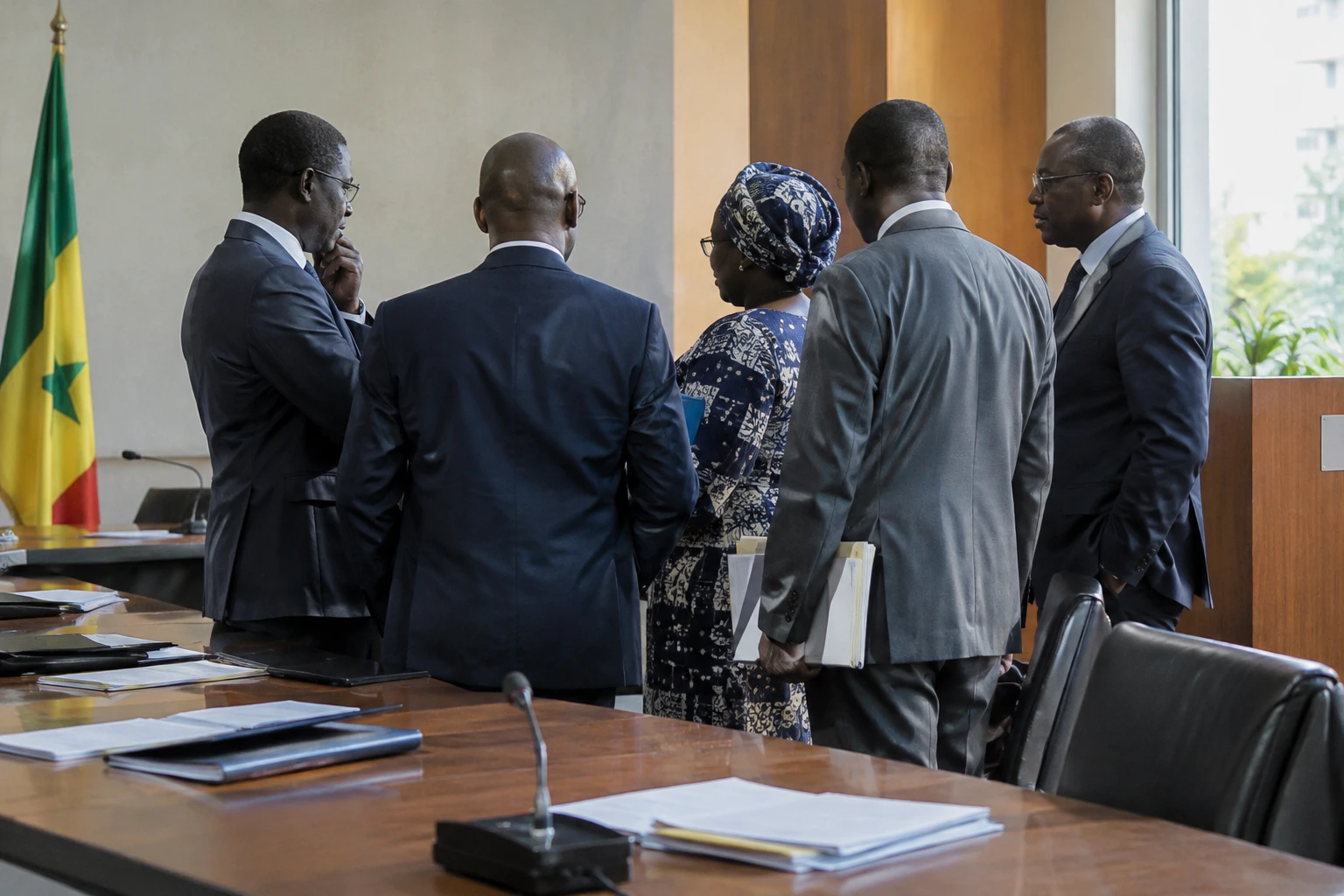
A budget can promise funds to businesses without guaranteeing that they will be paid on time. In Senegal, parliamentary debate on the 2027 finances puts state suppliers’ cash flow at stake, as well as confidence in public accounts.
A committee vote, but not the final word
On 7 November 2026, the National Assembly’s Finance and Budgetary Control Committee voted against the revenue and public debt proposals submitted for its review, as well as several institutional budgets. Committee members questioned the consistency of some forecasts and asked for supporting documents, including the 2025 budget settlement law, which makes it possible to compare announced budgets with actual spending. The National Assembly confirmed the vote and these reservations.
The committee’s rejection does not, in itself, amount to the definitive rejection of the initial finance bill (LFI), the text setting out the state’s revenue and expenditure for the coming year. It nevertheless signals serious disagreement over the proposal’s foundations. The Ministry of Finance had also indicated that the committee chair had called for the bill to be withdrawn. The stand-off is therefore also about procedure and the conditions under which the budget is scrutinised.
The parliamentary timetable announced in the available information provides for work to continue until 16 November. The steps and decisions ahead will determine whether the government can get its proposal adopted on time, and in what form. At this stage, budget targets remain forecasts, not guaranteed spending.
Arrears are a real cash-flow issue
The proposal provides for CFA480bn to settle arrears owed to the private sector in 2027. The Minister of the Economy and Finance, Cheikh Diba, describes this allocation as one stage in a CFA1,280bn arrears-clearance programme for 2025-2027. The government is also targeting a public deficit of 4.7% of gross domestic product (GDP), the total value of goods and services produced in the country.
For a business that has completed a public contract, an unpaid invoice ties up resources already committed to wages, materials and transport. Large companies can sometimes draw on credit lines. Small and medium-sized businesses often have less room to manoeuvre: a delayed payment can put their subcontractors under strain, delay wages or increase their borrowing. The impact thus spreads well beyond government accounts.
But including a sum in a draft budget does not, by itself, specify which claims will be settled first, on what timetable, or how the amounts owed will be verified. The parliamentarians’ request for documents therefore points to a practical issue: establishing the state’s outstanding commitments and tracking their execution. Without this information, businesses can hardly predict when the funds will arrive.
Credibility of the accounts at the heart of the debate
The controversy comes after the discovery of previously undeclared public debts, which prompted a reassessment of Senegal’s budget position. In September 2026, International Monetary Fund (IMF) staff announced a preliminary agreement with Dakar on a programme worth about $2.2bn. This staff-level agreement is not yet financing that has received final approval: it must, in particular, be endorsed by the IMF’s executive board.
The IMF has stressed the need to strengthen debt management and the monitoring of domestic arrears. In other words, the announced clearance concerns both suppliers and the credibility of financial information. The debate, however, is not limited to the demands of an external partner: Senegalese MPs are also calling for verifiable accounts so they can scrutinise the executive.
This tension is part of a national effort to restore public finances. The government is seeking to reduce the deficit while honouring commitments already made and funding public priorities. These objectives can compete when revenue is uncertain or debt-servicing costs weigh on available spending. The committee’s negative vote does not resolve these choices, but makes it more urgent to justify them.
Issues extending beyond Dakar
The consequences of delayed payments are not evenly distributed. Businesses based in Dakar and already integrated into banking networks may have more financing options than small firms operating in the regions. Likewise, a lead contractor may pass a problem on to less visible suppliers or workers. The overall amount announced therefore does not, by itself, show who will be paid or when.
At the West African level, Senegal operates within the West African Economic and Monetary Union (WAEMU), which shares the CFA franc and common fiscal convergence rules. Confidence in public figures therefore also matters to regional partners and investors assessing economic risk. For the African Union, the case highlights a broader challenge: reconciling transparent accounts and parliamentary oversight with states’ ability to pay businesses carrying out their contracts.
The next parliamentary steps and the IMF executive board’s decision will be two separate milestones. But for Senegalese businesses, the most immediate test will be implementation: publication of verifiable information on arrears, a payment timetable and adherence to the appropriations ultimately adopted. The budget’s practical impact will be measured by these factors, rather than by the announcement of an allocation.



