Algeria
 Egypt
 Libya
 Morocco
 Sudan
 Tunisia
 Benin
 Burkina Faso
 Cabo Verde
 Côte d'Ivoire
 Ghana
 Guinea
 Guinea-Bissau
 Liberia
 Mali
 Mauritania
 Niger
 Nigeria
 Senegal
 Sierra Leone
 The Gambia
 Togo
 Cameroon
 Central African Republic
 Chad
 DR Congo
 Equatorial Guinea
 Gabon
 Republic of the Congo
 Burundi
 Comoros
 Djibouti
 Eritrea
 Ethiopia
 Kenya
 Madagascar
 Malawi
 Mauritius
 Mozambique
 Rwanda
 Seychelles
 Somalia
 South Sudan
 Tanzania
 Uganda
 Angola
 Botswana
 Eswatini
 Lesotho
 Namibia
 South Africa
 Zambia
 Zimbabwe
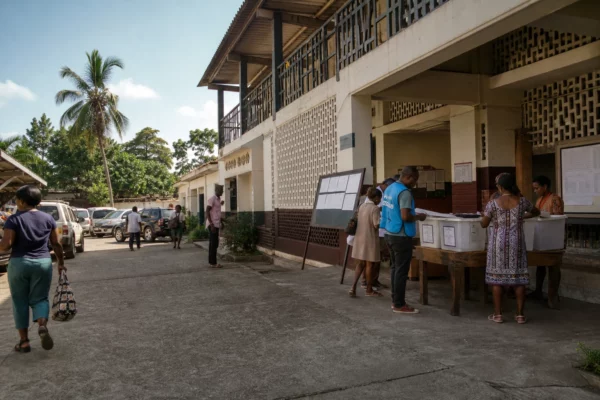
In São Tomé, the issue is not simply which party came first. The 27 September 2026 election opens a period of negotiations, with the balance of power still very tight between the two main political parties.
Result reverses the 2022 balance
The Movement for the Liberation of São Tomé and Príncipe – Social Democratic Party (MLSTP/PSD) won the most votes in the parliamentary elections, according to provisional results announced by the National Electoral Commission. The party received 17,551 votes, against 17,184 for the Independent Democratic Action (ADI), a margin of 367 votes.
The election was held on Sunday 27 September 2026 in the Portuguese-speaking archipelago in the Gulf of Guinea. The National Electoral Commission nevertheless said that the Constitutional Court was responsible for the final allocation of seats. The announced figures must therefore still be distinguished from the official declaration of mandates.
Initial projections put the MLSTP/PSD and ADI neck and neck in a 55-seat National Assembly. The Basta movement and the coalition of the Independent Citizens’ Movement – Socialist Party – National Unity Party (MCI-PUN) complete the parliamentary landscape, with 4,410 and 4,142 votes respectively. Other parties, including Nossa Terra, the Democratic Convergence Party and the MDFM, were well behind.
This configuration marks a change from the parliamentary elections of 25 September 2022. ADI won 30 of the 55 seats then, giving it an absolute majority. The MLSTP/PSD secured 18, while the MCI-PS/PUN and Basta won five and two seats respectively, according to parliamentary archives.
The MLSTP/PSD’s return to the top of the poll does not yet mean it will be able to govern alone. In a 55-member chamber, an absolute majority begins at 28 seats. The final composition will depend on the count validated by the relevant institutions, particularly for seats representing the diaspora.
Smaller parties’ choice will shape the next government
São Tomé’s political system gives the president a central role in appointing the government. The executive must, however, be able to secure support in the National Assembly. Without a coalition agreement or sustained parliamentary backing, the party that came first therefore risks governing under pressure.
Mid-sized parties could become kingmakers in the next majority. Their decision will not concern only the allocation of posts. It will also have to set out the future government’s policy commitments, in a country where social expectations remain high.
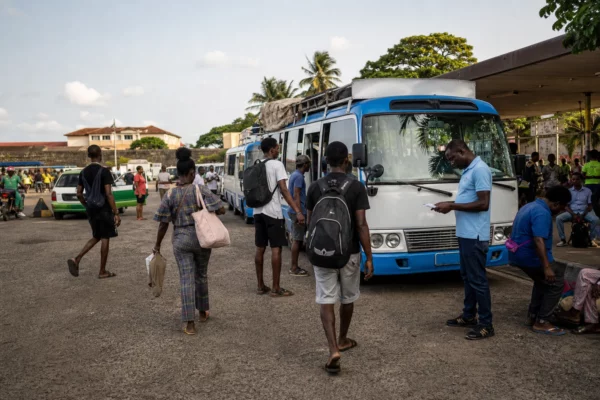
Employment is a leading concern. São Tomé’s economy still offers few stable opportunities in the private sector, while public services, infrastructure, access to water and electricity supply remain sensitive issues. These challenges affect the capital, São Tomé, other communities on the main island and the autonomous region of Príncipe in different ways.
Emigration also weighs on the national debate. A World Bank study estimates that about 39,773 São Toméans live abroad, or nearly 18% of the population. Portugal is home to most of the diaspora, followed by Angola and Gabon, among others. The trend reflects both young people’s search for opportunities and the country’s difficulty in retaining skilled workers.
For families who stay behind, departures can bring income and networks. But they can also deepen labour shortages and separate households for long periods. The next government will therefore have to treat emigration as an economic, social and demographic issue, not simply as a statistical indicator.
Political cohabitation under scrutiny
The parliamentary election results come after the re-election of President Carlos Vila Nova as head of state of São Tomé and Príncipe. The president must now appoint a prime minister able to command sufficient parliamentary support. The relationship between the presidency and the next government will be one of the first tests of the new legislature.
The issue is all the more important because São Tomé’s political life has seen several changes of power and periods of tension between institutions. In 2022, ADI’s clear victory enabled it to form a majority government. The 2026 election makes that process far less predictable.
If the MLSTP/PSD confirms its lead, it will have to turn its electoral advantage into a political agreement. ADI, for its part, retains an almost equally strong electoral base and could seek to win over smaller parties. The party that negotiates the most credible programme will have a decisive advantage.
The question of legitimacy will also be closely watched. The 367-vote gap between the two main parties makes clear publication of results by constituency and full validation of the seats essential. At this stage, party claims about the exact number of MPs cannot replace the official declaration by the electoral and judicial authorities.
Election watched beyond the archipelago
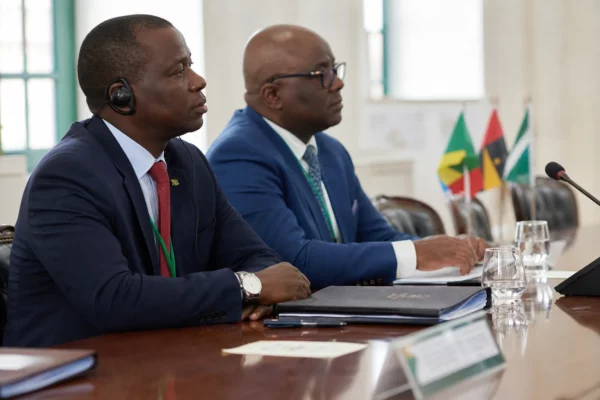
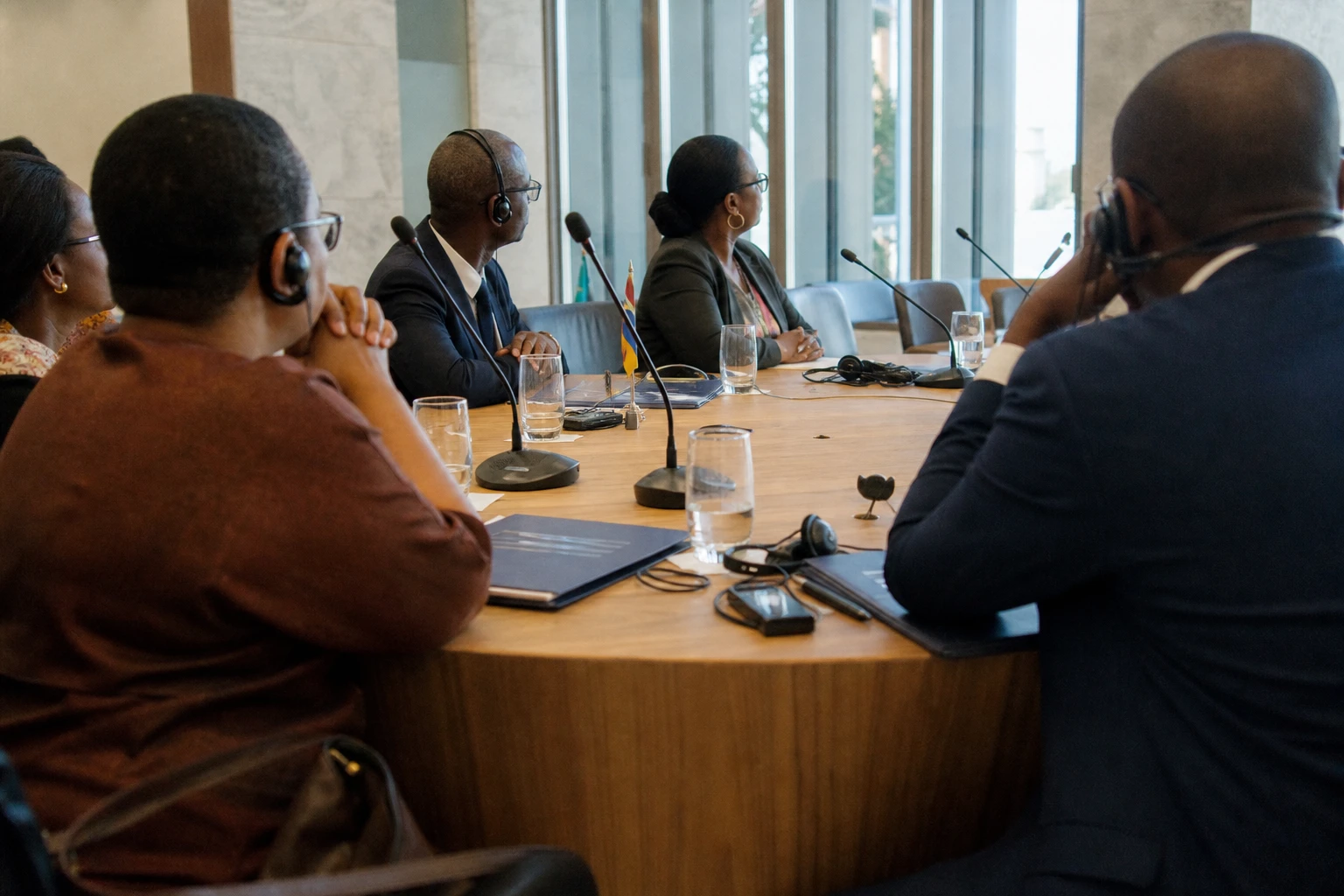
São Tomé and Príncipe belongs to the Economic Community of Central African States (ECCAS), although its historical, linguistic and economic ties with the Portuguese-speaking world are also very strong. The stability of its institutions is therefore of interest to Central Africa, Portuguese-speaking countries and its European partners alike.
In a region often marked by difficult political transitions, changes of power through the ballot box and respect for constitutional procedures are regional concerns. São Tomé’s election also shows the limits of focusing only on the winners: with a very narrow margin and no certain majority, democratic resilience will now depend on a transparent count and the quality of parliamentary agreements.
The next steps are clear: validation of the results by the Constitutional Court, final allocation of the 55 seats, presidential consultations and then formation of the government. For São Toméans, the priority will be to find out whether the new majority can address everyday challenges without repeating the deadlocks that marked previous periods of political life.