Algeria
 Egypt
 Libya
 Morocco
 Sudan
 Tunisia
 Benin
 Burkina Faso
 Cabo Verde
 Côte d'Ivoire
 Ghana
 Guinea
 Guinea-Bissau
 Liberia
 Mali
 Mauritania
 Niger
 Nigeria
 Senegal
 Sierra Leone
 The Gambia
 Togo
 Cameroon
 Central African Republic
 Chad
 DR Congo
 Equatorial Guinea
 Gabon
 Republic of the Congo
 Burundi
 Comoros
 Djibouti
 Eritrea
 Ethiopia
 Kenya
 Madagascar
 Malawi
 Mauritius
 Mozambique
 Rwanda
 Seychelles
 Somalia
 South Sudan
 Tanzania
 Uganda
 Angola
 Botswana
 Eswatini
 Lesotho
 Namibia
 South Africa
 Zambia
 Zimbabwe
In São Tomé, a second term also hinges on stability
In São Tomé, inauguration ceremonies are never merely protocol. In an island nation where the state must balance social expectations, budgetary fragility and promises of diversification, each swearing-in sets the political course for several years. Carlos Vila Nova’s new five-year term is part of this equation, with one central expectation: to turn real institutional stability into visible economic results.
São Tomé and Príncipe’s institutional framework gives the president an important role. He is head of state, guardian of the Constitution and commander-in-chief of the armed forces. The Constitution also provides that, in the event of a vacancy, the newly elected president takes office after the results are published, for a five-year term. At the same time, the government is led by a prime minister, requiring a balance within a system where the relationship between the presidency, the National Assembly and the executive remains decisive.
The facts: a clear re-election, followed by taking office on 3 September
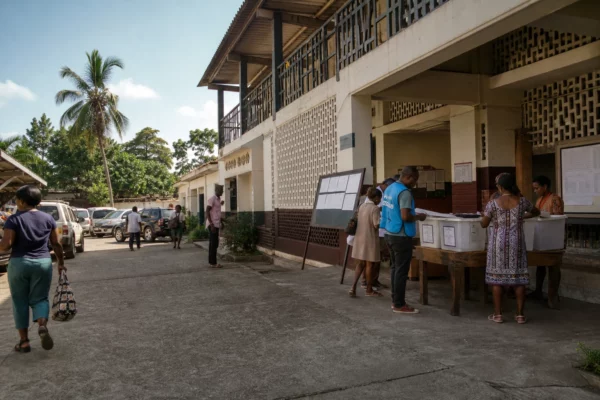
Carlos Vila Nova was sworn in on Thursday 3 September 2026 for a second term as head of the Democratic Republic of São Tomé and Príncipe. The election had been decided in the first round on 19 July, with 55.94% of the vote, according to preliminary results reported by the electoral commission and corroborated by several international and local sources. His main challenger, Nito Abreu, received 41.46% in figures ultimately reported by an electoral compilation source cross-checked against official announcements.
The São Toméan president, an independent candidate, thus retained the presidential palace without going to a second round. This electoral continuity is notable in a country that has built a reputation for generally peaceful electoral contests since the introduction of multiparty politics in 1990. This institutional sequence remains one of the few consistent markers of a political system often beset by partisan tensions, but rarely by violent ruptures.
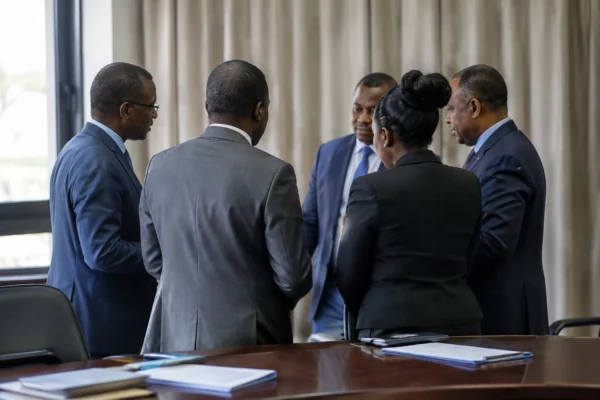
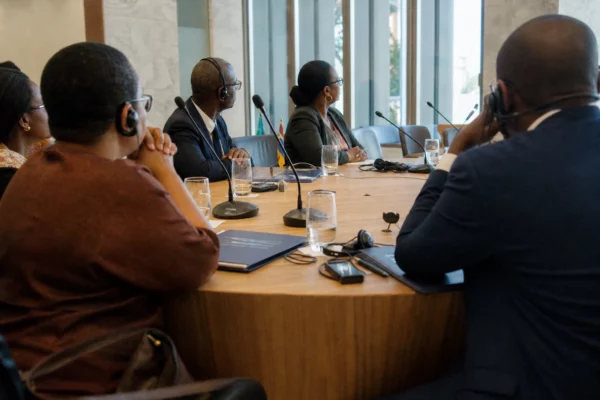
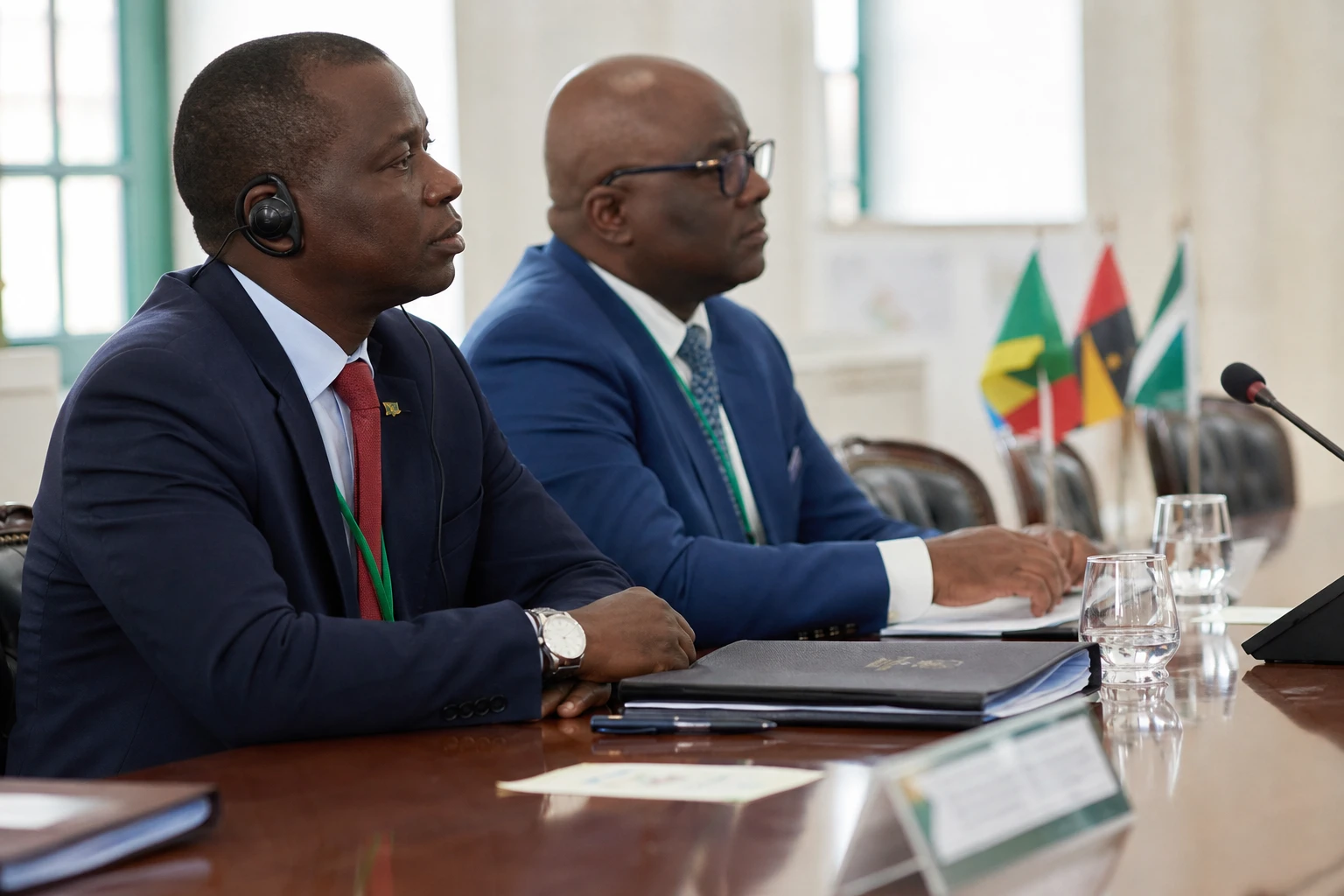
The 3 September ceremony also highlighted the regional significance of the occasion. Foreign officials, including the president of the Democratic Republic of the Congo, Félix Tshisekedi, attended the inauguration in São Tomé. The Congolese presidency confirmed his attendance at the ceremony, held in the National Assembly’s congress hall.
What the second term says about São Tomé and Príncipe’s economy
The core of the political message has remained the same for several years: reduce excessive dependence on cocoa, foreign aid and promises of oil wealth. São Tomé and Príncipe still relies heavily on sectors exposed to external shocks. Export crops, small-scale tourism, diaspora remittances and public services underpin the economy. The prospect of potential hydrocarbon resources remains, for now, more a horizon than an established source of revenue.
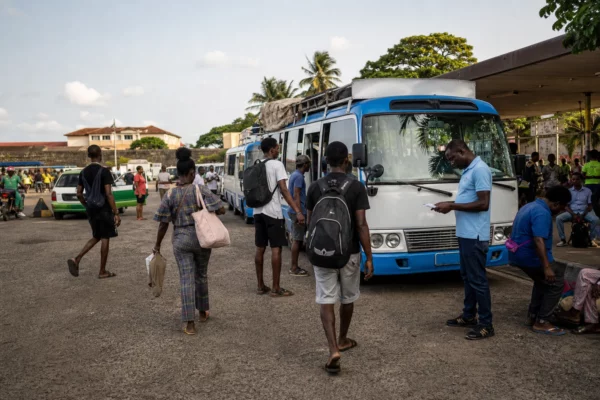
In this context, the promise of diversification is not an abstract slogan. For households, it means less precarious jobs. For young people in urban areas, particularly in São Tomé, it means the possibility of staying in the country without relying on poorly paid informal work. For rural producers, it entails better roads, market access and agricultural services. For the state, above all, it requires a more effective administration, capable of turning announcements into budgets and then into tangible projects.
In his recent political course, the re-elected president has emphasised the idea of national discipline and hard work. This emphasis resonates in a small country, where the formal economy is narrow and the state’s ability to mobilise the population matters as much as major strategic priorities. But room for manoeuvre will remain limited without sustained investment in energy, maritime transport, local cocoa processing and vocational training.
A regional perspective: ECCAS, Central Africa and the diplomacy of small states
São Tomé and Príncipe is not an isolated satellite off the Gulf of Guinea. The country is a member of the Economic Community of Central African States, CEEAC/ECCAS, which has eleven member states and provides a framework for political, economic and security integration in Central Africa. It also belongs to the African Union, which brings together 55 African states. This dual membership gives a local presidential inauguration a broader significance than might appear at first.
For ECCAS, São Tomé and Príncipe is a maritime and diplomatic foothold in a region where Gulf of Guinea security, the movement of goods and institutional resilience remain central issues. For the African Union, the country illustrates another reality of the continent: small but strategic states whose electoral stability affects the democratic image of their region. The fact that an election could conclude without an open crisis also strengthens this credibility.
The presence of African leaders at the inauguration is not merely protocol. It signals a form of political recognition. In a Central Africa often dominated by security emergencies and contested transitions, São Tomé and Príncipe serves as a reminder that an island state can also be a test case for institutional continuity. What follows will depend on the second term’s ability to turn that continuity into visible policies, particularly ahead of the next budget decisions and ECCAS regional meetings.