Algeria
 Egypt
 Libya
 Morocco
 Sudan
 Tunisia
 Benin
 Burkina Faso
 Cabo Verde
 Côte d'Ivoire
 Ghana
 Guinea
 Guinea-Bissau
 Liberia
 Mali
 Mauritania
 Niger
 Nigeria
 Senegal
 Sierra Leone
 The Gambia
 Togo
 Cameroon
 Central African Republic
 Chad
 DR Congo
 Equatorial Guinea
 Gabon
 Republic of the Congo
 Burundi
 Comoros
 Djibouti
 Eritrea
 Ethiopia
 Kenya
 Madagascar
 Malawi
 Mauritius
 Mozambique
 Rwanda
 Seychelles
 Somalia
 South Sudan
 Tanzania
 Uganda
 Angola
 Botswana
 Eswatini
 Lesotho
 Namibia
 South Africa
 Zambia
 Zimbabwe
In São Tomé, a second term that goes beyond institutional continuity
In São Tomé, a presidential re-election is never merely a handover. In a small island state in Central Africa, every inauguration also says something about the stability of institutions, the place of the real economy and the room for manoeuvre of a government facing very concrete expectations: jobs, energy, roads and the prices of imported goods.
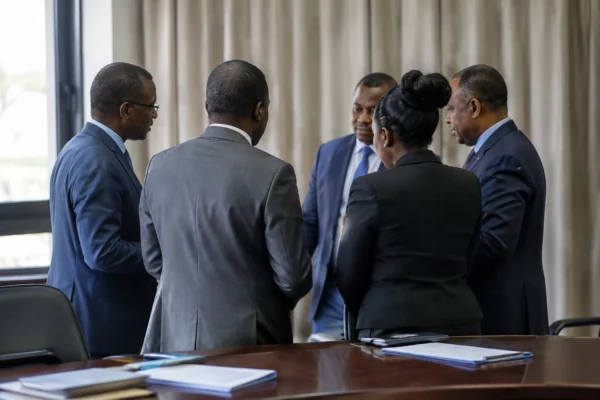
It was against this backdrop that Carlos Vila Nova was sworn in for a new term as president of the Democratic Republic of São Tomé and Príncipe. The ceremony was held on 3 September 2026, attended by Congolese President Félix Tshisekedi and Gabonese President Brice Clotaire Oligui Nguema. Their presence also served as a reminder of the archipelago’s regional ties to Central Africa and the Economic Community of Central African States (ECCAS).
Victory confirmed after the 19 July vote
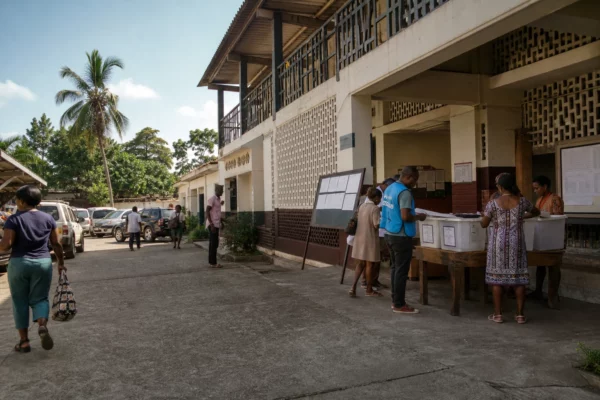
The São Toméan head of state emerged from the ballot strengthened. On 19 July 2026, he won the presidential election in the first round with 55.94% of the vote, according to provisional results published by the electoral commission and subsequently confirmed by the Constitutional Court, which declared him the winner. A São Toméan diplomatic source cited the same figure and described it as the start of a second five-year term.
The campaign produced an unusual political landscape: Carlos Vila Nova ran as an independent, while part of the local political scene remained riven by internal tensions within ADI, the country’s dominant party. His main rival, Nito Viegas d’Abreu, received 41.42% of the vote according to the same provisional results. This contest alone shows that in São Tomé and Príncipe, the stakes are not only about the president himself, but also the reshaping of alliances around the executive.
The institutional timetable matters, too. São Tomé’s constitution stipulates that the president-elect must be sworn in before the National Assembly no later than the final day of the incumbent’s term, or within eight days of the publication of the results in the event of a vacancy. The September ceremony therefore took place within a precise legal framework, an important consideration in a country where regular elections have been a defining feature of political life since the introduction of multiparty politics in 1990.
Diversifying the economy: the real test of the second term
Carlos Vila Nova’s speeches have for several years revolved around one word: diversification. The country remains heavily dependent on cocoa, a historically central industry, while tourism and services are seeking to expand. In 2024, the FAO recognised São Tomé and Príncipe’s cocoa agroforestry system as a Globally Important Agricultural Heritage System, underscoring both the crop’s importance and its potential for sustainable development.
But São Tomé’s economy is no longer just about cocoa. The World Bank Group estimates that economic activity grew by 2.1% in 2025, driven by improved electricity supply and tourism, with growth expected to average around 3.7% a year between 2026 and 2028. The African Development Bank, meanwhile, highlights an economy that remains fragile, even as its budget support and projects seek to improve access to energy, infrastructure and productive diversification.
In this second term, the question will therefore be practical rather than symbolic: how can a highly import-dependent archipelago, reliant on external aid and a narrow range of sectors, become more resilient? The answer will lie in energy, fisheries, coastal tourism and agroforestry, and potentially in offshore oil resources. But for now, these remain a prospect rather than a guarantee. In July 2026, the national oil agency announced that Petrobras had become operator of Block 3, a development to watch without treating it as a sure bet in the short term.
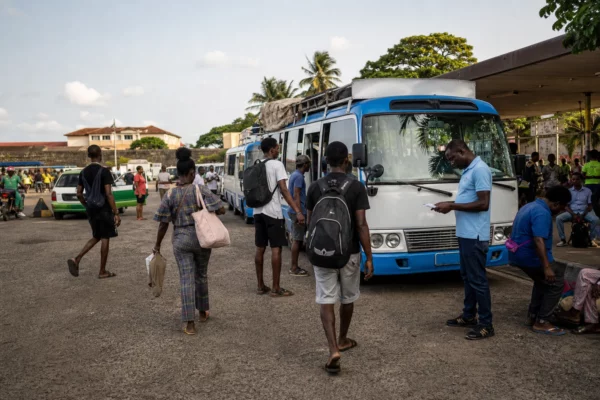
The social stakes for households are immediate. In a small country where logistics costs weigh heavily on prices, the benefits of growth do not automatically reach everyone. Cities, particularly São Tomé, concentrate public services, formal employment and the movement of goods. Rural areas, by contrast, remain more exposed to access constraints, irregular agricultural incomes and dependence on external markets.
What the re-election means for Central Africa
São Tomé and Príncipe’s political trajectory matters beyond its borders. Since the adoption of multiparty politics in 1990 and the first pluralist elections in 1991, the archipelago has often been cited as an example of a relatively stable democratic transition in Central Africa. The World Bank Group even describes it as a model of the transfer of power in the region. That reputation does not erase partisan rivalries or institutional crises, but it shapes how the election is viewed regionally.
The presence of Félix Tshisekedi and Brice Clotaire Oligui Nguema at the inauguration was more than a protocol detail. It was a reminder that São Tomé and Príncipe engages with its Gulf of Guinea neighbours as well as regional institutions. In a Central African region often marked by more turbulent transitions, a peaceful inauguration preceded by constitutional confirmation of the result sends a political signal that ECCAS capitals are watching closely.
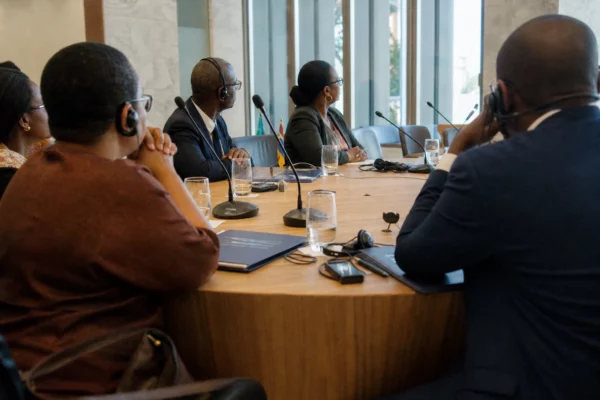
For the African Union and the sub-region, the next point to watch will be less the oath-taking ceremony than the translation of the election into public policy: the budget, youth employment, energy, governance of the cocoa industry, monitoring of oil projects and relations with donors. In São Tomé, the real balance of power is now being tested between the promise of stability and the state’s ability to improve daily life without losing what makes its democracy distinctive.