
 Algeria
 Egypt
 Libya
 Morocco
 Sudan
 Tunisia
 Benin
 Cabo Verde
 Côte d'Ivoire
 Ghana
 Guinea
 Guinea-Bissau
 Liberia
 Mali
 Mauritania
 Niger
 Nigeria
 Senegal
 Sierra Leone
 The Gambia
 Togo
 Cameroon
 Central African Republic
 Chad
 DR Congo
 Equatorial Guinea
 Gabon
 Republic of the Congo
 São Tomé and Príncipe
 Burundi
 Comoros
 Djibouti
 Eritrea
 Ethiopia
 Kenya
 Madagascar
 Malawi
 Mauritius
 Mozambique
 Rwanda
 Seychelles
 Somalia
 South Sudan
 Tanzania
 Uganda
 Angola
 Botswana
 Eswatini
 Lesotho
 Namibia
 South Africa
 Zambia
 Zimbabwe
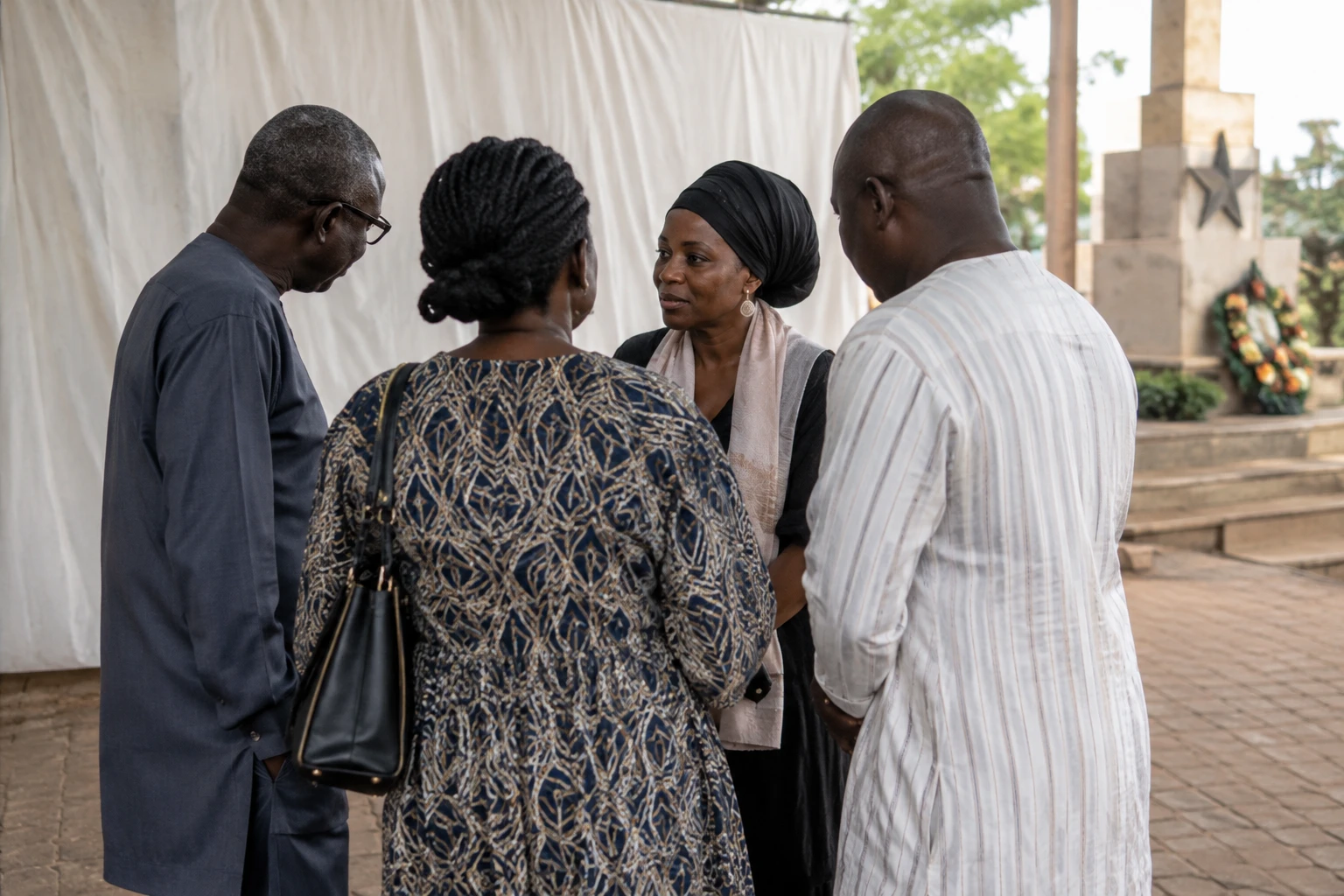
In Ouagadougou, Thomas Sankara’s name is not confined to history books. It circulates in political speeches, music and places of remembrance. Nearly four decades after his death, his legacy remains a symbolic resource — but also a subject of debate about power, social justice and sovereignty.
A revolution shaped by the Cold War
In the 1980s, Burkina Faso was still Upper Volta, a landlocked Sahelian country where changes of regime were frequent. On 4 August 1983, Thomas Sankara came to power after a coup backed by a popular mobilisation. He led the country until 15 October 1987, when he was killed in a new coup in Ouagadougou.
This trajectory unfolded amid international rivalries. The Cold War divided alliances, while several African countries debated their economic room for manoeuvre after independence. Sankara championed a revolutionary, socialist and pan-Africanist line. He criticised dependence on former colonial powers and structural adjustment programmes, which made loans conditional on economic reforms.
On 4 October 1984, before the United Nations General Assembly, he presented Burkina Faso as a country seeking to “assert itself and take responsibility for its history”. His speech defended peoples’ right to set their own priorities. The address helped make his thinking known beyond the continent. The United Nations archives preserve a record of his speech.
Concrete reforms, a controversial experiment
In power, Sankara made economic autonomy and the fight against privilege central to his agenda. His government promoted local production and consumption, launched vaccination and literacy campaigns, and sought to expand public services. The renaming of Upper Volta as Burkina Faso in 1984 also marked a determination to break with a name inherited from colonial rule.
The revolution claimed to bring decision-making closer to people’s daily lives. Committees for the Defence of the Revolution, or CDRs, were established locally and worked across a range of areas, from sanitation to political mobilisation. But this organisation did not mean that power was shared within a pluralist framework. The CDRs were also accused of abuses and violent excesses. The experiment therefore contained a central contradiction: an avowed commitment to popular participation accompanied by authoritarian practices and restricted political freedoms.
This nuance matters. Sankara’s memory cannot be reduced either to unreserved celebration or to a condemnation that erases the social aspirations of the time. It invites scrutiny of the policies pursued, their results and limitations, and the cost of the methods employed.
Women’s place: symbolism and change
The emancipation of women had an explicit place in the revolutionary discourse. Sankara appointed women to positions of public responsibility and, on 8 March 1987, delivered a speech devoted to their liberation. He also called on men to take part in domestic tasks, a gesture intended to challenge the division of labour within families.
These positions left their mark on debates about equality. They are not, however, enough to establish that social relations were profoundly transformed. The impact of a speech must also be measured by its lasting effects on institutions, access to resources and daily life. The text of the 8 March 1987 speech makes it possible to place this commitment in Sankara’s own words, without conflating a political pledge with equality achieved.
A memory invoked in Burkina Faso today
The former president’s memory has also become a contemporary political issue. Burkina Faso is going through a period of military transitions and security crisis. In this context, public figures, artists and activists have taken up the ideas of sovereignty and national autonomy associated with Sankara. Their use today does not mean that past and present policies are identical.
On 17 May 2025, a mausoleum dedicated to Sankara and twelve of his companions was inaugurated in Ouagadougou. The ceremony, reported by the Senegalese Press Agency and the African Press Agency, gave this work of remembrance an official dimension. It also serves as a reminder that the 15 October 1987 assassination left a lasting mark on the country’s political history. APS covered the inauguration, which was also reported by APA.
Justice, too, has helped shape this evolving memory. In 2022, a Burkinabe military court convicted former president Blaise Compaoré in absentia for his role in the assassination. The verdict marks a judicial milestone; it does not close debate about responsibility, the circumstances of the killing or its political consequences.
A West African legacy to examine
Sankara’s significance extends beyond Burkina Faso’s borders, but it should not obscure the differences between countries in the region. His call for co-operation and control over economic choices resonates in a West Africa where debates on sovereignty, external partnerships and regional integration remain lively. The Economic Community of West African States (ECOWAS), a co-operation organisation for West African states, remains a major forum for these discussions, even though Burkina Faso, Mali and Niger withdrew from it in 2025.
For younger generations, who did not experience his government, Sankara is often a figure of commitment and intellectual independence. But his legacy is best passed on with its tensions intact: social ambition, centralisation of power, concrete reforms and democratic limitations. It is through this fuller reading, rather than through veneration or rejection, that his experience can inform Burkinabe and pan-African debates on dignity, justice and political responsibility.



